Tag: publishing

  • Publishing in an ad blocker world

    Publishing in an ad blocker world

    The latest release of Apple’s mobile operating iOS with an inbuilt ad blocker has again raised the issue of blocking website advertising.

    Some see it as good for the advertising industry, believing it will force advertisers to think beyond intrusive pop up ads while others point out that ad blocking will devastate most of today’s online publishers.

    While both views are probably right, it underscores how the media world is still waiting for a modern David Sarnoff to appear as the current model that sees publishers’ revenues declining is clearly not sustainable.

    In the meantime though we’re almost certainly going to see more aggressive ‘native content’ – adverts posing as articles – as publishers try to find revenue and advertisers attempt to get their message across readers can expect more desperate attempts to get attention.

    Those cheering for the end of the current advertising model should be careful of what they wish for though, the scramble for revenue and eyeballs is going be unseemly as we enter the era of the blocked advert.

    Similar posts:

    • No Related Posts
  • Your own little part of the internet

    Your own little part of the internet

    Five years ago I did a presentation describing how a website was essential for every business’ online strategy.

    The Business Cornerstone was delivered at the time where many advisers proclaiming Google Places and Facebook as adequate for building an internet presence.

    Over time, the importance of having your own domain and website has been proved as different platforms have messed users around with changing terms, arbitrary rulings and often simply closing down services.

    The importance of doing things your own way was underlined yesterday with the announcement by Medium, and Twitter, founder Ev Williams that the company is restructuring and shouldn’t be considered a publishing platform.

    For those who’ve published pieces on Medium that the service is not a publishing platform would have come as a surprise given the company has spent the last 18 months encouraging people to contribute to their site.

    That Medium is pivoting into something else – a Facebook, an Instagram or a Google Plus – shouldn’t be surprising but once again it illustrates the interests of this services are not necessarily the same as yours and when they conflict it’s your interests that will come off second best.

    While platforms like Medium, Facebook and LinkedIn are useful for distributing your message, the best long term online presence you can have is your own website. It’s a lesson those who rely on free third party services keep having to learn.

    Similar posts:

  • What happens when others control your traffic?

    What happens when others control your traffic?

    Quartz magazine is held up as one of the most innovative news websites and one of the models for the future of online publishing however its president Jay Lauf suggested at the Digital Media Strategies conference in London yesterday that web users are increasingly shifting towards social sites to find their content.

    This isn’t new, most sites have been dependent upon referrals from the popular social media services and companies like Buzzfeed have built their entire strategies upon traffic from Facebook.

    Lauf suggests that sites like Quartz and Buzzfeed are increasingly losing control of their own audiences which raises risks for publishers and readers as they become dependent upon the social media gatekeepers.

    Quartz’s traffic from LinkedIn is a good example of how a gatekeeper can control traffic with referrals falling away as the social site pivots into a publishing platform of its own.

    It could turn out that control of traffic backfires however as people find those services deliver less value or relevant information.

    Ultimately it may be the gatekeepers who suffer from restricting traffic as readers decide they aren’t getting the news they want.

    Similar posts:

    • No Related Posts
  • A non toxic form of midlife crisis — Audible CEO and founder Don Katz

    A non toxic form of midlife crisis — Audible CEO and founder Don Katz

    “I had what my wife describes as non toxic form of midlife crisis,” says Don Katz of Audible, the company he founded in 1994 and remains CEO of today. In an interview with Decoding The New Economy, Katz describes a startup journey that covers all the bases.

    As Rolling Stone’s European correspondent Katz was engaged to write a book in the early 1990s about how digital technologies were changing music and what he realised was the industry was about to go through a fundamental change.

    “I had a wonderful career as a writer, I was a long form magazine writer in the glory days of ten thousand word articles,” Katz says of his life in journalism. A book commission lead him to research the future of digital distribution of written works.

    Survival in the digital economy

    One of the driving ideas was how creators can sustain themselves in the digital economy, “my content was already being ripped off on the Unix internet and I thought ‘how will the profession creative class sustain themselves if there’s no ability to control the distribution?’”

    Having founded Audible in 1995 at a time when few people were downloading or even using the net, Katz was in the box seat of the first tech boom and subsequent tech wreck in 2001.

    At the peak of the dot com boom  Audible was floated on the NASDAQ stock market, “In 1999 good companies that were leading categories went public and got massive amounts of free capital.” Katz recalls, “It was one of those weird moments, there were 1500 publicly listed internet companies at the beginning of 2000 and there were 140 by 2003.”

    Surviving the dot com bust

    Katz puts the company’s survival during that period to a conservative attitude towards capital and the alliances he had created with the industry’s major players — at one stage Microsoft held a 37% share in the company and Katz was one of Steve Jobs’ confidants during the early development of the iPod.

    Eventually one of those alliances became critical when Katz became bored with running a listed company, “it was an amazing adventure being a public company CEO for nine and a half years. It was very exciting and an honour to serve shareholders.”

    Katz’s patience ran out with being a public company CEO when automated trading came to dominate the daily operations of management, “suddenly you had this metaphysical sense of ‘who are you working for if someone wants volatility?’ That suddenly got old.”

    Audible already had a relationship with Amazon who had taken five percent of the business in 2000  in return for bundling audio book links on the ecommerce giant’s book pages. Katz also found Amazon founder Jeff Bezo’s long term view towards investment and returns a much more satisfying business model than the day to day grind of meeting short term shareholder demands.

    In early 2008 Amazon bought Audible for $300 million and retained Katz as the company’s CEO.

    Building new startups

    For new startups, Katz advises “make an absolutely fearless inventory of what you know is true about this idea and what you’re good at and what you’re not good at.”

    “You need to have people you can trust and believe in. Beyond that, be very sober about business models that are sustainable. There’s a lot mistakes that people make where you’re solving a problem in a piece of a value chain that isn’t sustainable. It’s easy to get confused about who the customer is.”

    “Figure out who the real customer is. Sometime people overplay the fact that the customer is the capital, the capital will come if people have the innovation and the passion.”

    Similar posts:

    • No Related Posts
  • Jeff Weiner and LinkedIn’s Chinese cultural struggle

    Jeff Weiner and LinkedIn’s Chinese cultural struggle

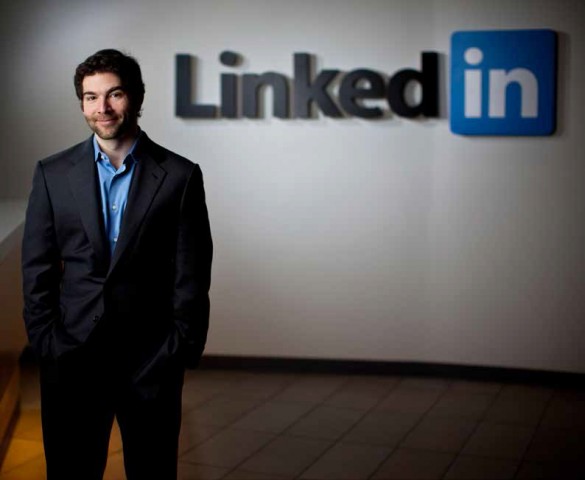
    LinkedIn CEO Jeff Weiner believes the company’s culture and values are one of its most important competitive advantages, however moving into China has tested those strengths he told a conference in Sydney two weeks ago.

    During the fireside chat Weiner went over the company’s development, the challenges he faced taking over from LinkedIn founder Reid Hoffman as CEO and the importance of the company’s ethical base.

    “It’s important for companies to define what culture and values mean to them before they get to what the specific values and culture are,” Weiner said in an answer to an audience question.

    Defining values and culture

    “At LinkedIn we think culture is the collective personality of our organisation and it’s not only who we are but who we aspire to be and that aspirational component is really important,” Weiner continued.

    “Oftentimes you’ll see company executives get onstage to introduce culture and values or talk about changing  culture and values and it’s not necessarily something the company already does and it loses the trust of the employees and the audience when that material being presented because people know is not necessarily true.

    “If you allow yourself to include this aspirational dimension when defining the culture it gives everyone an opportunity to play up to where your setting that bar and I think that’s important,” stated Weiner.

    “Values are the first principles upon which we make day to day operating decisions, that’s how we make the distinction.”

    Culture as a competitive advantage

    “I think once an organisation has defined for itself what it means by culture and values it’s then obviously important to codify its culture and the pillars of the culture and the specific values that it operates with.

    “Its not enough to codify it, we went to the trouble of defining it and then putting it in our public registration when we filed to go public and that’s a good start but all too often we see people talking the talk with regard to culture and values and not walking the walk.”

    For Weiner, that commitment to the company’s culture is the company’s strength in the marketplace: “Today, I’ll tell you it’s our most important competitive advantage.”

    The China Problem

    LinkedIn’s culture though has been tested by its entry into the Chinese market where its aspirations of being a content publisher met the limitations of the country’s censors.

    When asked by this writer about the quandary LinkedIn finds itself in the PRC, Weiner reconciled this with the company’s mission to connect the world’s professionals.

    “China’s one of our largest opportunities in terms of the value we can create for members in China and for companies in China.”

    “One in five knowledge workers and students reside in China so it’s a huge part of connecting the world’s professionals and to achieve that kind of scale so we can create value for people who are living in China it’s important that we’re able to do business there.”

    “At times means complying with law that forces us to do things that are very challenging and difficult and we always knew the importance of operating in China and for us we wanted to be extremely thoughtful in terms of how we did that.”

    Favoring freedom of expression

    “Obviously we are very much against the idea of censorship and very much in favor of freedom of expression but in terms of operating there and creating economic opportunities for what could be potentially a 144 million people from time to time we may have to make some very difficult decisions. That’s the reality of doing business there.”

    In being asked if this creates a struggle with the company’s culture, Weiner answered “that was one of the things we took so much time on.”

    “From the time we decided we needed to be in China and how important it would be in creating the global platform and adding value for members and the time we entered into China with the local language version of the site it was of the order of 18 to 24 months.”

    “Discussions took place among our executives asking some very difficult questions in terms of our culture, our values and where we would be willing to compromise and where we would draw hard and fast lines and that will continue to be an ongoing process.”

    For LinkedIn and Jeff Weiner the challenge of being a trusted global publishing platform and a leader in the Chinese market raises some serious ethical questions; it’s a challenge that is going to test the company more in coming years.

    Similar posts:
    • No Related Posts