Tag: windows

  • The business of baffling choices

    The business of baffling choices

    In his Daring Fireball blog, John Gruber’s takes to task the view that Apple suffers through not having a wide product range.

    John makes the valid point that Samsung seems to stealing market share from HTC rather than Apple but the whole theory of offering too many choices strikes to the heart of two industry’s business models.

    Those two industries are the mobile telco business and the Windows personal computer sector.

    In the PC world, the wide range of models has been both an advantage and a weakness; it’s allowed Dell and others to create custom machines to meet customer needs but also leaves consumers – both corporate and home buyers – confused and suspicious they many have been taken advantage of.

    All too often customer were being had; frequently buyers found they’d bought an underpowered system stuffed with software that either was irrelevant to their needs or an upgrade was necessary to get the features they hoped for.

    The entire PC industry was guilty of this and Microsoft were the most obvious – the confusing range of operating systems and associated software like the dozen version of Microsoft Office was deliberately designed to confuse customers and increase revenue.

    For the PC industry, the “baffle the customer” model reached its zenith, or nadir, with Windows Vista where Microsoft deliberately put out an underspecced ‘Home’ edition designed to push sales up the value chain.

    Compounding the problem, most of the manufacturers followed Microsoft’s lead and put out horribly underpowered systems in the hope that customers would upgrade with more memory, better graphics card and bigger, faster hard drives.

    Most customers didn’t upgrade and as a result the Vista operating system – which was horrible anyway – enhanced its well deserved reputation for poor performance.

    In the telco sector, consumer confusion lies at the heart of their profitable business model; a bewildering range of phones and plans often leaves the customer spending too much, either through an overpriced plan or paying punative charges for ‘excess’ use.

    Having a hundred different types of Android phone adds to the confusion and, by restricting updates, they can cajole customers into ‘upgrading’ to a new phone and another restrictive plan every year or so. This is why you get phone calls from your mobile phone company offering a new handset deal 18 months into a two year plan.

    Apple’s model has been different; in their computer range there has never been a wide choice, just a few configurations that meet certain price points. The same model has used for their phones and iPads.

    For Apple, this means a predictable business model and a loyal customer base. They don’t have to compete on price and they don’t have to fight resellers and telcos who want to ‘own’ the customer. It’s one of the reasons mobile phone companies desperately want an alternative to the iPhone.

    Companies using the baffling choices business model – Microsoft, HP, Dell and your local mobile telco – may well continue to do okay, but that business model is coming under challenge as new entrants are finding new niches.

    For all of us as consumers all we can do is make the choices that are simple are reject complexity. Warren Buffett has always maintained he doesn’t invest in businesses he doesn’t understand, perhaps we should have the same philosophy with the purchases we make.


    Similar posts:

  • Avoiding industrial nightmares

    Avoiding industrial nightmares

    The Iranian nuclear program is crippled by a virus that infects their control systems while a hacker claims a Texas waterworks can be accessed with a three word password.

    Any technology can be vulnerable to the bad guys – obscure systems like office CCTV networks and home automation services can be as vulnerable as the big, high profile infrastructure targets.

    While there’s good reasons to connect our systems to the web, we need to ensure our networks are secure and there’s a range of things we can do to protect ourselves.

    Does this need to be connected?

    Not everything needs a Internet or network connection, if there’s no reason for a device or network to be connected then simply don’t plug it in.

    Keep in mind though that threats don’t just come through the web, both the Iranian malware attack and the Wikileaks data breach weren’t due to hackers or Internet attacks.

    Get a firewall

    No server or industrial system should be connected directly to the public Internet, an additional layer of security will protect systems from unwanted visitors.

    All Internet traffic should go through a firewall that is configured to only allow certain traffic through, if the router or firewall can be configured to support a Virtual Private Network (VPN), then that’s an added layer of security.

    Disable unnecessary features

    The less things you have running, the fewer opportunities there are for clever or determined hackers to find weaknesses.

    Shut down unnecessary services running on systems – Windows servers are notorious for running superfluous features – and close Internet ports that aren’t required for normal running of your network.

    Patch your systems

    Computer systems are constantly being updated as new security problems and flaws are found.

    Unpatched computers are a gift to malicious hackers and all systems should be current with the latest security and feature updates.

    This is a lesson the Iranians learned with the Stuxnet worm that was almost certainly introduced through an unpatched system – probably one running an early version of Windows XP or even 98 – which was vulnerable to known security problems.

    Have strong passwords

    Passwords are a key part of a security policy, they have to be strong and robust while being different to those you use for social media and cloud computing services.

    It’s also important not to share passwords and restrict key log in details and administrator privileges to those who require them for their work.

    With online services like social media, cloud computing and other web tools becoming a part of business and home life, we have to take the security of our systems seriously. Hardening them against threats is a good place to start.

    Similar posts:

  • ABC Nightlife: The next wave of smartphones

    ABC Nightlife: The next wave of smartphones

    The world of mobile phones is getting busy again as a whole new range of smartphones appear. Paul Wallbank joined Rod Quinn for ABC Nightlife on October 20 to discuss what the new smartphone wars mean for home and business users.

    We’ll be going to air from 10pm, Eastern Australian time across Australia on ABC Local Radio’s Nightlife to look at the following questions;

    • Why were people disappointed with Apple’s iPhone 4S that was released a few weeks ago?
    • The big competition are the Google Android phones, what are they doing?
    • What’s happened to Nokia? They seemed to have lost their domination.
    • Microsoft were the other big player, what are they doing?
    • How are the smartphones changing business?
    • Shopping centres seem to be jumping on board with various social media checkins. What are those?
    • There’s been a push to online payments, how are the smartphones affecting this?
    • Are smartphones going to be the big buy for Christmas?
    • What are the best plans for consumers and business?
    • How do people deal with telco disputes?

    The podcast from the program is available from at Nightlife website, and some of the information we mentioned can be found here;

    Dealing with Telco complaints

    We’ll be adding more resources in the next few days, the next ABC Nightlife spot is on 23 November and our events page will have more details. If you have any suggestions for future programs or comments on the last show, please let us know as we love your feedback.

    Similar posts:

  • Apple after Steve Jobs: ABC Weekend computers

    Apple after Steve Jobs: ABC Weekend computers

    The September 11 ABC 702 Sydney Weekends segment discussed what Steve Jobs’ stepping down as Apple CEO means for Mac users.

    Simon Marnie and Paul Wallbank looked at why Steve Jobs was important to Apple, who will be taking over and whether this affects whether you should buy an Mac computer, iPhone or iPad.

    Listeners’ Questions

    As usual, we had plenty of great questions from listeners and some of them we promised to get back to, these included the following.

    Removing Mackeeper

    Cheryl called about MacKeeper warnings that keep popping up on her Apple computer.

    MacKeeper, and other variants like MacProtector and MacSecurity, are known as malware – software designed for malicious reasons – which has been the bane of Windows computer users for years.

    Removing Mackeeper is relatively easy and Apple has released a security patch to fix it. Details and download are available at the Apple Support website.

    Wiping an old computer

    The most valuable thing on a computer is the data, so it’s important to wipe any system before disposing of it. Deborah asked how to wipe her old Mac system before she left it out for her council’s e-waste collection.

    If you have an OS X or OS 9 disk, you can completely wipe and “zero” the disk to make it extremely difficult for someone to recover any data from the old computer. Apple have detailed instructions on this at their How To Zero All Data On A Disk page.

    Warning! Before following these instructions, make sure you have backed up all important and valuable data.

    How to disable automatic Windows Updates

    Updating your computer, whether you have a Windows or Mac computer, is very important as new security bugs are found all the time. Gary though was finding his system automatically installing Windows Updates often disrupts his work.

    It isn’t a good idea to totally disable the Windows Update service as those updates and patches are important, but you can change the settings so they are downloaded but not installed until you choose to do so.

    Microsoft’s Knowledge Base describes how to change the Windows Update Settings, we recommend the download updates but let me choose when to install them option.

    Next 702 Weekends tech spot

    Our next Weekends spot is scheduled for 23rd October when we’ll be discussing how to backup your valuable data. Check the Events Page or subscribe to our newsletter for any changes to the 702 Sydney programs and any other upcoming radio shows.

    Similar posts:

  • Microsoft’s lost decade

    Microsoft’s lost decade

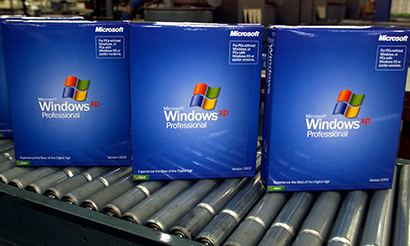
    Amid the discussion of Steve Jobs standing down as Apple CEO last week, a quiet milestone was passed. Ten years ago last Wednesday, Microsoft released to manufacturers their latest operating system, Windows XP.

    Windows XP turned out to be the most successful computer operating system ever and probably marked the peak of the personal computer era.

    The glitz and glamour of the Windows XP launch showed the power of Microsoft at the time – their products dominated the desktop markets, Apple were crawling their way back to profitability and relevance with the iMac while mobile phones were barely capable of sending anything more than SMS messages.

    In 2001 the business model of Microsoft was built upon the perpetual upgrade cycle, as computers were expected to last three to five years which would then be replaced by new systems requiring an updated operating system with the latest office software.

    Ensuring maximum revenue from the upgrade cycle, Microsoft encouraged retailers to sell XP systems with bundled software locked to the individual computer, these “deals” made sure users would have to buy new programs when the existing machines were replaced.

    The three year upgrade coupled with the need to buy new software every time made Microsoft’s model seemingly unstoppable in 2001, but problems were already developing for this strategy.

    A major part of breaking the “upgrade every few years” mentality was the late running of Longhorn, Windows XP’s successor, which was released as Vista three years behind schedule and the product’s poor quality meant customers were reluctant to upgrade.

    Unfortunately the market rejection of Vista and the wait for the next version of Windows saw the rise of reliable and affordable cloud based services, that ran on web browsers which made the need to upgrade less pressing. Today many people are quite happily running seven and eight year old computers that meet their needs adequately.

    It would be foolish to write Microsoft completely as their revenue is still strong and in the past they have seen off major threats like Netscape and the web in 1995 and the rise of cheap Linux based netbooks in 2007. Google’s takeover of Motorola and HP’s abandonment of WebOS may open new opportunities for Microsoft on tablets and mobile phones.

    For businesses, the immediate lesson is to look closely at upgrading options however for managers and owners there’s a much bigger lesson when looking at how Microsoft lost its way in the last decade despite a seemingly untouchable and lucrative business model.

    Similar posts: