Tag: google

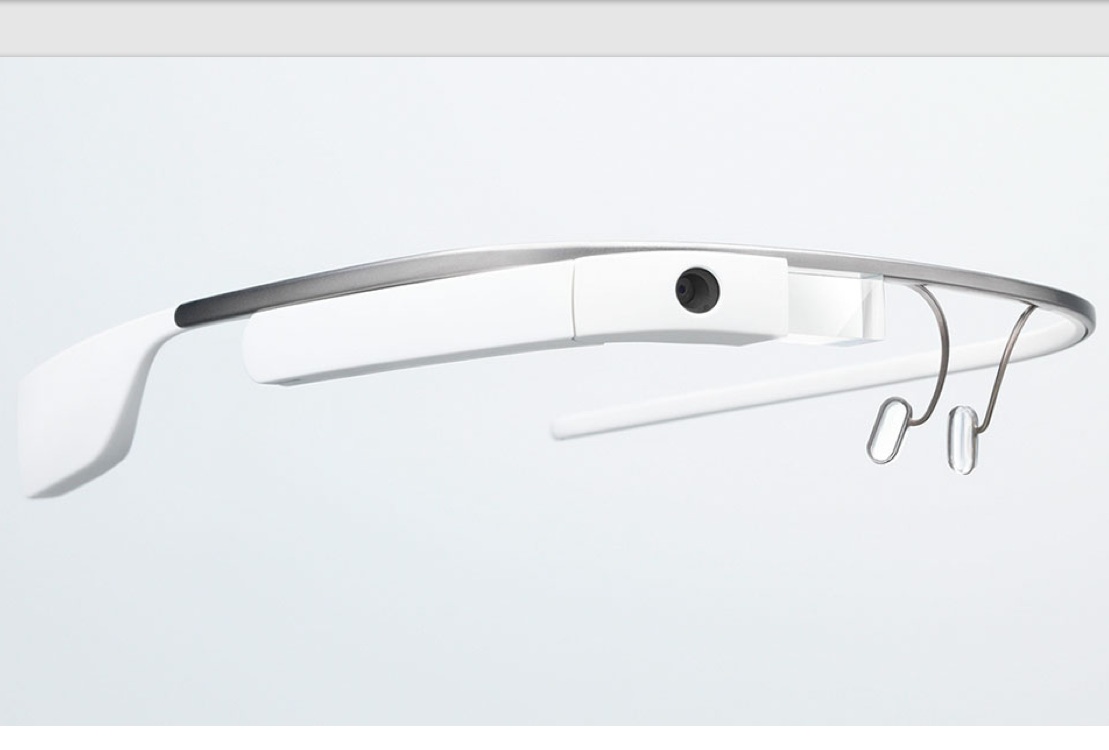
  • Falling out of love with Google Glass

    Falling out of love with Google Glass

    Media hype is normal in the tech industry, it’s common for a new product to receive swooning coverage in its early days but when the press falls out of love with a device, it can be a harsh breakup.

    Google Glass is suffering one of those harsh breakups with with writers and bloggers who were formerly gushing over the product now being publicly unimpressed with the product.

    First out the blocks was Wired’s Matt Honan who described his year as a ‘glasshole’.

    Honan is enthusiastic about the future of wearable devices but doesn’t see Google Glass as being ready for prime time.

    Which is to say, I’m really, really excited about where Glass is going. I’m less excited about where it is.

    Adding to the anti Google vibe was tech maven Robert Scoble who after his year of using the device decided it was too expensive and clumsy.

    Scoble’s point is the current generation of wearable tech is too clunky and user unfriendly to solve the problems it hopes to address.

    Daring Fireball’s John Gruber — who wasn’t one of those gushing over Google Glass — points out this is the exactly why Windows XP tablets were such a failure in the marketplace.

    Gruber also points out another similarity between Google Glass and Microsoft’s attempts at a tablet computer. Each company’s staff were reluctant to use them.

    When your own employees don’t use or support your product, the problem is with the product, not the employees.

    The eating your own dog food mantra cuts both ways; if your own staff find your products unattractive, then you can’t expect customers to warm to them.

    In some ways it’s ironic that Google are receiving press scorn as the company plays the tech media like a violin with privileged insiders getting early access to products create an aura of exclusivity.

    Glass was a classic example of this with a small group of tech journalists getting access to the product, unfortunately those insiders are turning out to be less than impressed.

    Even if it turns out the Google Glass is a failure, it will have been one of the company’s brave moon shots and no doubt what they’ve learned in usablity and mobile data will be very useful to other parts of the business.

    Similar posts:

    • No Related Posts
  • Demand Media’s closed window of opportunity

    Demand Media’s closed window of opportunity

    A few years ago content farm Demand Media was being hailed in some quarters as the future of the media industry.

    Today its stock is languishing, revenues are falling and any thought that the cheap, low quality writing that Demand Media delivered will be the future of media is laughable.

    Variety magazine recently published a feature describing the of the fall of Demand Media  with a focus on how Google’s changes to its search engine algorithm undermined the content farm’s busines model. Variety’s story is an interesting case study on not relying on another company for your business plan and extends the hope that low quality writing is not the future of online media.

    Dodgy business

    Demand media evolved from the eHow and eNom businesses, both of which relied on dubious – if not downright dishonest – online practices.

    eNom was particularly irritating, basically just registering domain names around popular search terms that led to   pages full of advertising that delivered nothing of value to someone searching the web for information on a topic.

    It was very profitable for a while though, as Variety reports;

    Early on, Demand used eNom’s 1 million generic domain names (such as “3dblurayplayers.com”) to serve up relevant ads to people searching for specific topics. These “domain parking” pages were immensely profitable, generating north of $100,000 per day, according to a former Demand exec who requested anonymity. “That’s $35 million-$40 million per year without doing any work,” the exec said.

    The eHow business wasn’t any better, relying on low quality, cheap articles that only worked because they were stuffed full of the keywords that Google would base their search results on.

    On January 26 2011 Demand Media went public and the criticism of both the newly listed company and Google became intense.

    This story from Business Insider – which ha featured some gushing and dreadful analysis of Demand Media previously – illustrated the problem the company had of being overwhelming dependent on Google, although the writer believed Google were making too much money from content farms to really act against them.

    Google’s problem with the content farms was real, the quality of search results was falling and users were finding their pages were full of low value rubbish rather than authoritative sources which opened the search giant’s core business  to disruption from Microsoft’s Bing and other search engines. Something had to be done.

    Jason Calacanis, whose Mahalo was a competitor to Demand Media, flagged the risks to content farms in a presentation early in February 2011, “the one rule of working with Google is don’t make them look stupid. If you make ‘The Google’ look stupid, they’ll f- you up.” He said. “eHow makes Google look stupid.”

    Eventually Google decided they were sick of looking stupid and changed their algorithms and the rules for getting a page one search result suddenly changed.

    Demand Media’s business was doomed from the moment Google made that change, as Variety reports;

    By April 2011, third-party measurement services were reporting that the Google changes had reduced traffic to Demand sites by as much as 40%. Demand issued a statement that the reports “significantly overstated the negative impact” of the change, but the stock took a dive — plummeting 38% over two weeks — from which it has not recovered.

    As Demand Media was affected, so too was the entire Search Engine Optimisation (SEO) industry where thousands of consultants found their strategies of placing low quality pages and link rich website comments now damaged their clients’ businesses.

    For web surfers, Google’s change was good news as suddenly search results were relevant again.

    Demand Media was, in essence, a transition business that prospered during a brief windows of opportunity that quickly closed along with the company’s prospects.

    That window of opportunity was also dependent on someone else’s business strategy, which is always a dangerous position to be in.

    Demand Media’s lesson is that while there are opportunities to be had in markets that are being disrupted by new technologies, there’s no guarantees those opportunities will last. What works in SEO, digital media or social marketing today may not work tomorrow.

    It’s also a hopeful lesson that websites regurgitating low quality content is only a transition phase in the development of online media and that providing good, original writing and video is the best long term strategy for survival on the net.

    Should that lesson be true, then it’s good news for both writers and readers.

    Similar posts:
  • It’s tough in YouTube land

    It’s tough in YouTube land

    For owners of YouTube channels life has been tough in the last few months as Google plays with the service and its features.

    The first irritant for YouTube administrators was the integration of Google Plus into the comments that now requires commenters to have an account on Google’s social platform.

    Google’s reasoning for this is some transparency in YouTube’s comments will improve the services standards of conversation and there’s no doubt that YouTube comments truly are the sewer of the internet with offensive and downright deranged posters adding their obnoxious views to many clips.

    Unfortunately the objective of improving YouTube’s comment stream doesn’t seem to have worked which casts the effectiveness of Google’s identity obsession into doubt, but it has had the happy – and no doubt totally unintended – effect of boosting user numbers for the struggling Google Plus service.

    The latest blow for YouTubers has been Google’s copyright crackdown where the service is removing posts it claims are in breach of owners rights. Many channels, particularly game review services, are being badly hit.

    Of course the Soviet attitude to customer service that Google shares with many other Silicon Valley giants doesn’t give these folk many options of getting their problems resolved.

    All of which illustrates the risks of being dependent on one social media service which the poor YouTubers are finding this the hard way.

    Watching this play out, it’s hard not wonder how vulnerable services like YouTube are to disruption, while they have the network effect of being the leader it’s not hard to see how alienating the people who create the platform’s content opens up opportunities for new players.

    Similar posts:

    • No Related Posts
  • A tour of Google’s London Campus workspace

    A tour of Google’s London Campus workspace

    Google’s London campus is credited by many in the City’s Silicon Roundabout district as being one of the catalysts for the explosion in the local tech centre.

    One of the features of the London facility is the free co-working space the company offers which has become an important landmark for the city’s startup and small business community.

    Getting into the basement co-working space requires pre-registration and, in theory, you’ll be able to pick up an access card when you first arrive.

    In practice the cards are long out of stock, so just showing your registration confirmation with it’s code to the rather rude and brusque receptionists will get you buzzed in.

    The coworking space takes up the entire basement with four distinct coworking spaces – a courtyard, an array of tables, a lounge area and a shared bench.

      Google-campus-london-workbench

    Immediately inside the door is the communal bench that seats around twenty people. These are probably the best if you’re happy to socialise while you work. Even if you don’t it’s worthwhile grabbing a spot here if you see one available during busy times.

    Google-campus-london-device-lab

    Directly beside the workbench area is the Android demonstration station. This is a clever initiative by Google to showcase their mobile platform and encourage their developer community.

    Across from the Android test bench is the lounge area, this will be your best bet to find a place should you arrive when the coworking space is busy. It isn’t the most comfortable and quiet place in the room though as it gets lots of foot traffic and is across from the café.

    Google-campus-london-cafe

    The café serves a standard range of sandwiches, coffees and drinks with specials on certain days. Prices aren’t dissimilar from most of the coffee shops in the neighbourhood although you might find better range and a quieter spot eating elsewhere.

    One of the missed opportunities in the cafes is the opportunity to sell computer accessories like chargers and cables, during each visit this reviewer noticed how there was always someone asking to borrow other users’ accessories to charge their phones or synch their devices.

    Google-campus-london-outdoor-working-area

    Alongside the coffee shop is the courtyard; on nice day this would be a good place to work or to enjoy a beer and a chat with fellow geeks in the afternoon. During this visit in November, the weather was dark and dank with the outdoor area only being used by people making phone calls.

    Google-campus-london-working-area

    Beside the courtyard is the desk area where the serious workers hunker down. These spaces tend to get taken early and some people seem to arrive shortly after opening at 9am and don’t leave until the room closes at 6pm. Get there before ten if you want a spot.

    Google-campus-london-powerboard

    One of the problems in the room is the fight for power sockets. By mid-morning it’s almost impossible to find a spare plug so if you’re looking to recharge a device you may want to consider a local café.

    Another problem with the coworking space is it gets very crowded and some of the regulars have a habit of spreading out or hogging power sockets. It may be necessary to be quite pushy to get a seat or power socket when someone is taking up too much space.

    Overall, Google’s London Campus is a good facility that many other cities could use. However with its congestion mobile workers may find it easier to set up in one of the many geek friendly cafes in the neighbourhood like the nearby Ozone or Shoreditch Grind right on the Silicon Roundabout itself.

    Similar posts:

  • Google, Facebook and the Silicon Valley paradox

    Google, Facebook and the Silicon Valley paradox

    One of the great advertising campaigns of the 1980s featured entrepreneur and Remington Shaver CEO Victor Kiam telling the world “I liked the product so much I bought the company”.

    The modern equivalent of Victor Kiam’s slogan is “eating your own dogfood” where businesses use their own products in day to day operations. It’s a great way of discovering weaknesses in your offerings.

    One of the paradoxes of modern tech companies is how they don’t always eat their own dogfood when it comes to their business philosphies – they expect their customers to take risks and do things they deem unacceptable in their own businesses and social lives.

    The best example of this are the social media services where founders and senior executives take great pains to hide their personal information, a phenomenon well illustrated by Mark Zuckerberg buying his neighbours’ houses to guarantee his privacy.

    Just as noteworthy  are the policies of Google’s IT department, for past five years most tech evangelists – including myself – have been expounding the benefits of business trends like cloud computing and Bring Your Own Device (BYOD) policies.

    Now it turns out that Google doesn’t trust BYOD, Windows computers or the Cloud, as the company’s Chief Information Officer, Ben Fried tells All Things D of his reasoning of banning file storage service Dropbox;

    The important thing to understand about Dropbox,” Fried said, “is that when your users use it in a corporate context, your corporate data is being held in someone else’s data center.”

    This is exactly the objection made by IT departments around the world about using Google’s services. It certainly doesn’t help those Google resellers trying to sell cloud based applications.

    Fried’s view of BYOD also echoes that of many conservative IT managers;

    “We still want to buy you a corporate laptop, get the benefits of our corporate discounts, and so on. But even more importantly: Control,” Fried said. “We make sure we know how secure that machine is that we know and control, when it was patched, who else is using that computer, things like that that’s really important to us. I don’t believe in BYOD when it comes to the laptop yet.”

    Despite these restrictions on Google’s users, Fried doesn’t see himself or his department as being controlling types.

    “But the important part,” Fried said, “is that we view our role as empowerment, and not standard-setting or constraining or dictating or something like that. We define our role as an IT department in helping people get their work done better than they could without us. Empowerment means allowing people to develop the ways in which they can work best.”

    Fine words indeed when you don’t let people use their own equipment or ask for a business case before you can use Microsoft Office or Apple iWork.

    That Google doesn’t give its staff access to many cloud services while Facebook’s managers restrict their information on social media shows the paradox of Silicon Valley – they want us to use the products they won’t use themselves.

    Back in the 1980s, Victor Kiam liked what he saw so much that he bought the company. You’d have to wonder if Victor would buy Google or Facebook today.

    Similar posts:

    • No Related Posts