Tag: windows

  • How much did Vista really cost Microsoft?

    How much did Vista really cost Microsoft?

    Microsoft Vista was the company’s despised stepchild – released way past schedule, clunky, slow and disdained so much by the market that PC manufacturers started offering “downgrades” to Windows XP to attract customers.

    Despite the embarrassment, Microsoft retained its position as the world’s leading software company and does so today. But Vista certainly did hurt Microsoft and today’s marketplace shows the deep, long term effects of that damage.

    Research website Asymco earlier this week looked at the ratio of Windows PCs sold to the sales of Apple Macs over the last 30 years. The ratio peaked at 56 to 1 in 2004.

    Today that ratio is 18 and when phone and tablet sales are added in, the ratio is approaching 1:1. Apple has caught up.

    It’s no accident 2004 is the peak of the Windows-Apple ratio. In 2004 Windows XP had matured after three years on the market, the older computers running Windows 98 or ME (another hated operating system) were being retired and a new version of Windows – codenamed Longhorn – taking advantage of newer technologies and with improved security was due to be released.

    On August 27, 2004 things started to change with Microsoft’s announcement Longhorn would be delayed two years. This effectively broke the product roadmap that underpinned the business models of Microsoft and their partners.

    To make matters worse, Apple were back in the game with their OSX operating system well established and a steady stream of well designed new products coming onto the market.

    For consumers and businesses one of the advantages Windows systems had over Apple was the cost difference. The “Apple Tax” started to be eroded by the company’s move to Intel CPUs which delivered economies of scale coupled an aggressive program of tying up the supply chain with key manufacturers.

    Then Longhorn – now known as Microsoft Vista – was released.

    Despite the cheerleading of the Microsoft friendly parts of the technology media, consumers weren’t fooled. The product was slow and buggy with a new interface that confused users. Making matters worse was Microsoft’s ongoing obsession with multiple versions offering different features, something mocked by Steve Jobs,  which further confused the marketplace.

    Vista languished, customers decided to stick with Windows XP or to look at the faster and better designed Apple computers, and Microsoft’s market share started to slowly erode.

    By the time Windows 7 was released Apple had clawed back their market position, launched the iPhone and caught the shift from personal computers to smartphones.

    Probably the biggest embarrassment of all to Microsoft was the launch of the iPad, the market had been gagging for good tablet computer since the late 1990s and Microsoft’s partners had failed to deliver, partly because Windows XP, Vista and 7 didn’t perform as well as Apple’s iOS on the tablet form factor.

    Microsoft’s completely blowing a decade’s lead in the tablet market is almost certainly due to the misguided priorities and feature creep that dogged Vista’s development. This is now costing the company dearly.

    Asymco’s conclusion of Microsoft’s new market position is stunning and accurate.

    The consequences are dire for Microsoft. The wiping out of any platform advantage around Windows will render it vulnerable to direct competition. This is not something it had to worry about before. Windows will have to compete not only for users, but for developer talent, investment by enterprises and the implicit goodwill it has had for more than a decade.

    It will, most importantly, have a psychological effect. Realizing that Windows is not a hegemony will unleash market forces that nobody can predict.

    Vista’s cost to Microsoft was great, it meant the company missed the smartphone surge, the rise of tablets and – possibly most dangerous of all to Microsoft – the move to cloud computing.

    A lot hangs on Microsoft’s next operating system, Windows 8. Another Vista could kill the company.
    Similar posts:

  • FUD on the Desktop

    FUD on the Desktop

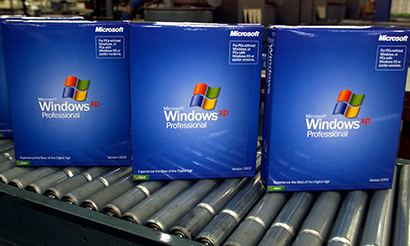
    “User productivity costs jump up a staggering 40 percent“, “return on investment over 130 percent over a three-year period” and an eighty four percent drop in IT support costs are some the latest claims from Microsoft in their campaign to wean users off Windows XP.

    These, undoubtedly true, claims are pretty impressive and compelling for cash strapped IT managers, but do they really matter anymore?

    With the rise of Bring Your Device policies and cloud computing, what operating system employees use is rapidly becoming irrelevant.

    In large organisations that supply workers’ computers, most systems are run on SOEs – Standard Operating Environments – which means users have limited accounts and can’t install rogue software.

    For those organisations wedded to supplying staff with desktop or laptop computers XP is fine and almost all of them are well advanced in their plans to redeploy to Windows 7 or 8 when the XP support period runs out in April 2014.

    We’re seeing fewer organisations locked into the SOE model as the financial sums and business benefits of moving over to an employee Bring Your Own Device – BYOD – model start to look compelling.

    Developing an SOE is a complex, time consuming task for an organisation – the package has to be tested to work on the company’s hardware which might include dozens of different types of printers, laptops and other devices. Then it has to be tested on all the software employees use.

    In a big organisation developing new operating environments is not done lightly. It’s a complex, expensive process.

    With a BYOD policy the company can develop a standard desktop environment that runs on a web browser. Staff can then bring their own device running on Mac OSX, Android, Linux or even Windows XP and, as long as their browser is up to date, they can run on the corporate network.

    The IT department no longer has to care about what the staff member has on their desk and can focus on more important business technology issues – although sadly the password issue doesn’t go away.

    For Microsoft, this evolution in corporate IT is a problem. Increasingly big organisations aren’t placing orders for big fleets of centrally managed desktops. The IT industry has moved to the cloud.

    In a perverse way Microsoft are winning the desktop battle, most of those workers in companies implementing BYOD policies will choose Windows 7 or 8 systems because they are cheap and work well in a business environment. The problem is that’s where the profit no longer lies.

    While we’ll see more FUD – Fear, Uncertainty and Doubt – about cloud computing, BYOD and Windows XP over the next year, the battle has been fought and won.

    Increasingly Microsoft are looking like an exhausted army that has won an irrelevant battle while the real war has moved elsewhere.

    The challenge for Microsoft is to find its way back to relevance in an era where the operating system doesn’t really matter.

    Similar posts:

  • Ending the era of Mac complacency

    Ending the era of Mac complacency

    The news that the Flashback Trojan has infected an estimated 600,000 Apple Mac computers has been greeted with joy by the dozens of industry experts that have predicted a virus holocaust for smug Mac users for nearly a decade.

    While the Flashback malware – the earlier versions could be described as a computer Trojan Horse while the later editions are more like a computer worm – is a real risk to Mac users and it’s important to take this risk seriously.

    The Netsmarts business site looks at how Mac and Windows users can protect themselves from Flashback and its variants.

    One of the key things in the advice is to make sure anybody using the computer has limited rights; as a Managed User on the Mac and as a Limited User in Windows. This dramatically reduces the opportunity for bad things to happen while online.

    I’ve discussed previously while user privileges are one of the reasons why the Mac has historically been less prone to infection to virus infections than their Windows cousins.

    Microsoft made the decision in the 1990s not to tighten Windows’ security settings and their customers paid the price for the next decade. This was compounded by some poor implementations of various technologies in Microsoft Windows.

    This isn’t to say the Mac, or any other computer system, doesn’t have security bugs. Every operating system does and it’s a conceit of everybody immersed in new technologies, be it cloud computing back to horse drawn chariots, to believe their products are magically infallible.

    Part of the crowing from the security experts and charlatans who’ve been desperately predicting a “Macapocalypse” for nearly a decade overlook this.

    Even with the proven problem of the Flashback virus, its unlikely we’re see the deluge of malware like that of the early 2000s simply because the Mac OSX, Windows 7 and all the other mobile and computer operating systems don’t have the structural flaws that Windows 98, ME and early versions of XP had.

    Much of the Mac versus PC argument in security is irrelevant anyway; the main game for scammers and malware writers has moved to social media services like Facebook and this is where computer users need to be very careful.

    However the stereotype of the “Smug Mac” user was true, one caller to my radio show claimed he didn’t have a problem with spam because he had a Mac. Nothing could convince him that email spam wasn’t related to the type of computer you used.

    To be fair to Apple they never made the claim their computers were invulnerable to malware, apart from the odd dig at Microsoft. Their users did it for them.

    That type of smug Mac user are those who do need a wake up call. For the industry though, it’s business as usual although some will be feeling a little smug their hysterical predictions of the last decade came true in a small way last week.

    Similar posts:

  • The high stakes of Lumia

    The high stakes of Lumia

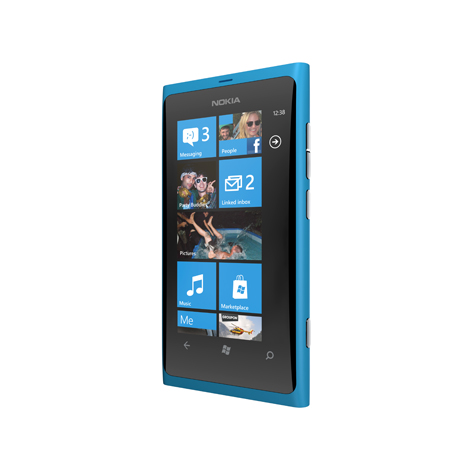
    Yesterday Nokia and Microsoft gave a preview of their upcoming Lumia 710 and 800 phones for the Australian market. It’s make or break time for both companies in the mobile space.

    The phone itself is quite nice – Windows Phone 7.5 runs quite fast with some nice features such as integrated messaging and coupled with good hardware it’s a nice experience. Those I know who use Windows Phones are quite happy with them (I’m an iPhone user myself).

    Whether its enough to displace the iPhone and the dozens of Android based handsets on a market where both Nokia and Microsoft have missed opportunities remains to be seen.

    The battle is going to be on a number of fronts – at the telco level, in the retail stores and, most importantly, with the perceptions of customers.

    Probably the biggest barrier with consumers is the perceived lack of apps, to overcome this Nokia have bundled in their Maps and Drive applications while Microsoft include their Mixed Radio streaming features along with Microsoft Office and XBox integration.

    As well the built in services, both parties are playing up their application partners with services like Pizza Hut, Fox Sports and cab service GoCatch. Although all of these are available on the other platforms.

    While application matter, the real battle for Nokia and Microsoft is going to be in the retail stores where the challenge shouldn’t be underestimated.

    Apple dominate the upper end of the smart phone market and Android is swamping the mid to low end. How Windows Phone devices fit remains to be seen.

    In Australia, if they going to find salvation it will be at the tender hands of the telco companies.

    The iPhone is constant source of irritation for the telcos as not only do Apple grab most of the profit, but they also “own” the customer.

    On the other hand, Android devices are irritating customers who are bewildered by the range of choices and frustrated by inconsistent updates that can leave them stranded with an outdated system.

    So the Windows Phone does have an opportunity in the marketplace although one suspects commissions and rebates will be the big driver in getting sales people at the retail coal face to recommend the Microsoft and Nokia alternatives.

    Overall though, it’s good to see a viable alternative on the market. For both Microsoft and Nokia the stakes are high with the Lumia range – it could be Nokia’s last shot – so they have plenty of incentives to get the product right.

    Microsoft has consistently missed the boat on mobile computing since Windows CE was launched in 1996 while Nokia were blind-sided by the launch of the iPhone in 2007 and have never really recovered.

    To make things worse for Nokia, the market for basic mobile phones where they still dominate is under threat from cheap Android based devices. So even the low margin, high volume market isn’t safe.

    For both, the Lumia range is critical. 2012 is going to be an interesting year in mobile.

    Similar posts:

  • Is it time for Microsoft to make a clean break?

    Is it time for Microsoft to make a clean break?

    Over the weekend Christina Bonnington in Wired magazine looked at how Microsoft is struggling to decide whether to have separate operating systems for their tablet and desktop products – as Apple have – or design one that works on both.

    Creating another version of Windows risks further confusing the marketplace given Microsoft already has between its four different versions of Windows and six flavours of Office.

    Although Apple haven’t suffered at all by having different operating systems. Mac OSX is more popular than ever and iOS dominates its markets.

    Perhaps its time for Microsoft to copy something else Apple did and have a clean break – rework all the Windows code and build a new system.

    Apple did this when they introduced OSX in 2001. Among other things it didn’t support floppy disks, the Apple Device Bus, floppy disks or the networking standards used by the older systems. At the time there were howls of protest from long suffering Apple true believers who had invested a lot into the earlier versions of Mac OS.

    Despite the protests and early hiccups – we sometimes forget that the first version of OSX, named Cheetah, was terrible – Apple’s clean break with the past was a great success.

    Microsoft’s selling point has been backward compatibility; software designed for one version of Windows is expected to work on the next version.

    Backward compatibility is the reason for the spyware epidemic of the early 2000s as Microsoft ignored Windows XP’s security features so that they wouldn’t have to ditch older code in other products like Office.

    Similarly, the contradiction of redesigning the Windows operating system while minimizing disruption to existing users was one of the reasons why Microsoft Vista was such a disaster.

    Perhaps it’s time for Microsoft to bite the bullet and bring Windows into the 21st Century.

    Whatever they decide to do, they better hurry as Apple and Google are carving out dominant positions; waiting until 2013 or 14 for the next version of Windows and Windows Phone may be too late in a market where Microsoft is quickly becoming irrelevant.

    Similar posts: