Author: Paul Wallbank

  • Customer lock in as a business asset

    Customer lock in as a business asset

    US booksellers Barnes and Noble has been struggling for years and things aren’t getting better reports the New York Times.

    An important part of the New York Times story is the quote from a Forrester industry analyst,

    “The problem is not whether or not the Nook is good,” said James L. McQuivey, a media analyst for Forrester Research. “What matters is whether you are locked into a Kindle library or an iTunes library or a Nook library. In the end, who holds the content that you value?”

    Locking in customers lies at the heart of the Kindle and iTunes business model. Once users have a substantial investment in their book or music collections on one platform it’s unlikely they will go elsewhere as the costs, and risks, of moving are too great.

    This doesn’t always end well for the customer and it gives online businesses great power which they often misuse.

    Every online business tries to lock their customers into their ecosystem – Google, Amazon, Facebook and Apple are the most successful but every single social media and cloud service tries to make it hard for users take their business elsewhere.

    In some respects this is no different to the phone company or bank which have historically tried to lock customers into their services, but the online social media, cloud computing and e-commerce platforms make a much more ambitious grab for their users’ data and assets like music and book collections.

    The New York Times article illustrates just how critical that user lock in is to the success of online businesses. The question for us as consumers is how much we want to be locked inside the web’s walled gardens.

    Similar posts:

  • 2UE Weekend Computers, 5 January 2013

    2UE Weekend Computers, 5 January 2013

    This Saturday from 3.10 pm I’ll be discussing tech with John Cadogan on Radio 2UE as the stand in for regular guest Trevor Long who’s in the US for the Consumer Electronics Show.

    We’ll be taking calls on the Open Line, 13 13 32 or tweet to @paulwallbank while we’re on air. 2UE can be heard online or on 954 AM in the Sydney region.

    Some of the things we’ll be covering include the following which we’ll be covering after John speaks to Trevor Long in Las Vegas.

    R18 + video games

    An adult’s only rating category for computer games has come into effect across Australia. The new R18+ will make it illegal for people under 18 to hire, buy or view any games given the rating, while it will be illegal for retailers to sell R18+ games without the new markings.

    The new laws bring computer games into line with the classification system for films and other material and make Australia more consistent with international standards.

    Google is working on an X phone

    Google is working with Motorola on a handset code-named ‘X Phone’ that’s aimed at grabbing market share from Apple and Samsung.

    Google acquired Motorola in May 2012 for $US 12.5 billion to bolster its portfolio as its Android operating system competes with Apple and Samsung.

    It’s believed that the handset will feature an imaging and gesture-recognition software developer. The new handset is due out next year.

    The first civil lawsuit against Instagram

    A Californian Instagram user has levelled breach of contract and other claims against the company.

    The lawsuit, filed by Finkelstein and Krinsk, says that customers who do not agree with Instagrams terms can cancel their profile, but they then forfeit their rights to photos they had previously shared on the service.

    Instagram, which allows people to add filters and effects to photos and share them easily on the Internet, was acquired by Facebook earlier this year for $US 715 million.

    It announced its revised terms of service last week and also announced its mandatory arbitration clause that forces users to waive their rights to participate in a class action lawsuit except under very limited circumstances.

    Easing of restriction on Internet use on flights

    The Federal Communications Commission (FCC) has approved an application process for airlines to obtain broadband Internet licenses aboard their planes. Previously airlines have been granted permission on an ad-hoc basis.

    Airlines need the FCC’s permission to tap into satellite airwaves while in flight so that passengers can connect to the Internet.

    They also need permission from the Federal Aviation Administration, which oversees the safety of inflight Internet systems.

    The death of Netbooks

    Netbooks have been overtaken by tablet computers and vendors are seeking to push more expensive items to their customers.

    The Internet’s TCP/IP language celebrates its 30th birthday

    Known as ‘flag day’ January 1, 1983 was the first time that the Us Department of Defence-commissioned ‘Arpanet network’ fully switched to use the Internet protocol suite communications system.

    It began as a military project in the U.S in the late 1960’s and it paved the way for the arrival of the World Wide Web.

    Summer sales of mobile phones are creating e-waste stockpiles

    Over a third of Australians have bought or will consider buying a new mobile phone over Christmas and the summer sales.

    This is contributing to the 22 million old mobile phones in Australia.

    If these 22 million phones were recycled, they would divert nearly 120 tonnes of plastic from landfill.

    Four out of 10 Australians have two or more old mobile phones lying around the home father dust.

    Mobile Muster is the official recycling scheme of mobile phones.

    You can drop your mobile phone off at a Mobile Muster Collection Point or pick up a reply-paid environment at any Australia Post store and post it in.

    Your views, comments or questions are welcome so don’t be shy about calling in on 13 13 32 and Trevor Long will be back next week.

    Similar posts:

  • Big data, mobile apps and smarter logistics – why Avis is buying Zipcar

    Big data, mobile apps and smarter logistics – why Avis is buying Zipcar

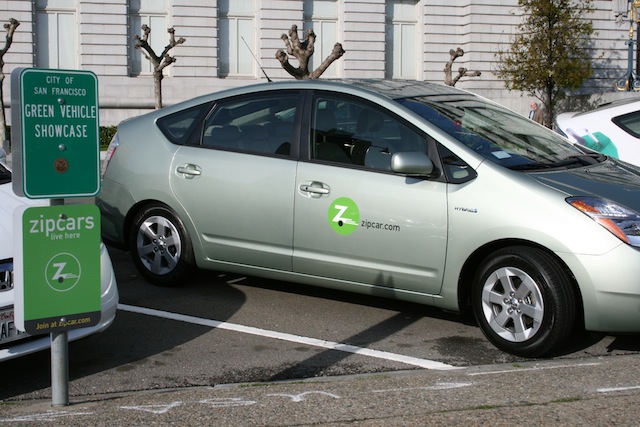
    With no bad press over New Year’s Eve it looks like hire car service Uber avoided the surge pricing traps of 2011 and the good news continues for the online booking industry with the news that Avis is buying car sharing service Zipcar.

    Assuming the acquisition isn’t another example of the greater fool investment model, Avis’ purchase of Zipcar makes good sense in expanding the hire car giant’s footprint into the share car business.

    Regrettably Avis use the 1980s term “synergies” four times in their media release but it does seem the businesses are a good fit both in fleet sharing and improving both company’s services.

    Zipcar’s technology is another asset which Avis can use,  with the car sharing service’s ability to track vehicle locations meaning better fleet management for the hire car business.

    Car sharing logistics

    The logistics angle of car share services is something that’s been highlighted by Uber’s CEO Travis Kalanick at various times, most recently at the service’s Sydney launch last November.

    Another aspect of the car sharing and hire car booking services is their Big Data advantages which the online startups bring.

    Historically, car hire companies have been reasonably good at gathering data on their customers with loyalty schemes, direct mailing and plugging into airline frequent flier programs. However they have been left behind by the Big Data boom in recent years.

    Companies like Zipcar, Uber and taxi hailing apps like GoCatch have big data in their DNA, having been founded in the era of cloud computing and social media they have access to more information and a better ability to use the knowledge they gather.

    Predicting the price surges

    At Uber’s Sydney launch Kalanick described how Uber’s traffic volumes increase in San Francisco when the Giants win a game, the interesting thing is that the surge happens three hours before the match starts.

    Insights like the traffic patterns around football games and holidays are gold to a high inventory business like hire car services. They are also important to the entire logistics industry.

    This latter point is probably the most overlooked part of all with the current rush into social and mobile based apps – the market intelligence that these services gather.

    While it’s tempting to dismiss that market intelligence as just monitoring who likes cats or cheeseburgers, the application of that data is transforming supermarkets, airlines and even concert venues.

    Avis seem to have understood that it will be fascinating to see how they will use Zipcar’s data and whether their competitors will figure out the importance of what these services offer.

    Similar posts:

  • Was the netbook the Trabant or Model T of the computer world?

    Was the netbook the Trabant or Model T of the computer world?

    Taiwanese technology website Digitimes reports Asustek have shipped their last eeePC netbooks, bringing to an end a product that promised to change the computing world when they were first released in 2007.

    At the time the eeePC netbook picked up on a number of trends – cheap hardware, the maturity of the open source Linux operating system, affordable wireless access and, most importantly, the accessibility of cloud computing services.

    There’d been a pent up demand for usable portable computers for years but Microsoft and their hardware partners consistently released clunky, overpriced tablet computers that simply didn’t deliver on their promises.

    For users wanting a cheap, fairly robust portable computer then netbooks were a good choice, at the price you could even risk having one eaten by lions.

    into the lions den with an Asus eeePC netbook

    Unfortunately for netbook a few things went against the idea.

    Customers don’t like Linux

    An early blow to the eeePC was that retail users don’t like Linux. Most computer users are happy with Windows and MacOS and weaning them off what they know is a very hard sell.

    Sadly on this topic I have first hand knowledge having suffered the pain of co-founding a business in the mid 2000s that tried to sell Linux to small businesses.

    Asustek discovered this when they found customers preferred the more expensive Windows XP version over the original Linux equipped devices.

    Unfortunately Microsoft’s licenses damaged the economics of the netbook and held the manufacturers hostage to Microsoft who, at the time, wasn’t particularly inclined to encourage customers to use cloud services.

    Manufacturer resistance

    Microsoft weren’t the only supplier unhappy with netbooks. Harry McCracken at Time Tech describes how chip supplier Intel worked against the products.

    For manufacturers, the netbooks were bad news as they crushed margins in an industry already struggling with tiny profits. However all of them couldn’t ignore the sales volumes and released their own netbooks which cannabilised their own low end laptop and desktop ranges.

    In turn this irritated the army of PC resellers who found their commissions and margins were falling due to the lower ticket prices of netbooks.

    The rise of the tablet

    The one computer manufacturer who stayed aloof from the rush into low margin netbooks was Apple who had no reason to rush down the commodity computing rabbit hole. It was Steve Jobs who launched the product that made netbooks irrelevant.

    “Netbooks aren’t better at anything… they are just cheaper, they are just cheap laptops” Jobs said at the iPad launch in January 2010.

    Immediately the iPad redefined the computer market; those who’d been waiting a decade for a decent tablet computer scooped the devices up.

    Executives who wouldn’t have dreamt of replacing their Blackberries with an iPhone, let alone using an Apple computer proudly showed off their shiny iPads.

    The arrival of the iPad in boardrooms and executive suites also had the side effect of kick starting the Bring Your Own Device movement as CIOs and IT managers found that their policy of Just Say No was a career limiting move when the Managing Director wanted to connect her iPad to the corporate network.

    Rebuilding PC margins

    Around the time of the iPad’s released the major PC manufacturers declared a detente over netbooks and joined Intel in developing the Ultrabook specification.

    Intel designed the Ultrabook portable computer specification

    The aim of the Ultrabook was to de-commodify the PC laptop market by offering higher quality machines with better margins.

    While the Ultrabook has worked to a point, competition from tablet computers and the demands of consumers who’ve been trained to look for sub $500 portables means the more expensive systems are gradually coming down to the netbook’s price points.

    Today’s Ultrabook will be next month’s netbook.

    For the PC manufacturers, the lesson is that computers have been a commodity item for nearly a decade and only savvy marketing and product development – both of which have been Apple’s strengths – is the only way for long term success in the marketplace.

    Those US based manufacturers who haven’t figured this out are only go to find that Chinese manufacturers – led by companies like Taiwan’s Asustek – will increasingly take the bottom end of the market from them.

    The car industry is a good comparison to personal computers in commoditisation – with the passing of the netbook, the question is whether we’ll remember the eeePC  as a Trabant, Model T Ford or a Volkswagen Beatle.

    Similar posts:

  • The Lives they Loved – Another future for journalism?

    The Lives they Loved – Another future for journalism?

    The New York Times’ wrap up of the year’s obituaries may give us an idea of one of the many futures for journalism.

    It’s easy to fall into the trap of thinking that obituaries are just dry recantations of the lives of dead white men and they often are – particularly when about celebrities or undistinguished politicians and businessmen.

    Good obituaries though are masterpieces and those of society’s genuine unsung heroes are moving and educational. A well written obit of an obscure but deserving person is usually a rewarding read.

    As part of the their summation of 2012, The New York Times has taken their obituaries one step further by asking readers to submit photos and stories of their loved ones who’ve passed away during the year.

    The Lives They Loved is the result, a wonderful collection of touching photographs and stories of parents, partners, children and friends who have passed away in the last year.

    User Generated Content – UGC – is one of the foundation stones of new media. The idea is the audience themselves provide the content which frees services like Facebook, YouTube or I Can Haz Cheeseburger from the costs and irritations of actually creating things that people are interested in.

    The New York Times project may well show that traditional news channels with their dedicated audiences and relevance to communities may do UGC as well as any hot new Silicon Valley startup.

    While User Generated Content isn’t the future of journalism, it almost certainly will be one of the them. Whether it turns out that old media use it better than the newer upstarts remains to be seen.

    Similar posts: