Author: Paul Wallbank

  • Sydney’s Mayoral Tech Race – the ALP’s Linda Scott

    Sydney’s Mayoral Tech Race – the ALP’s Linda Scott

    A few weeks back I wrote about how the tech sector had become an issue in the Sydney Lord Mayoral election to be held on September 10.

    Following that post, I approached the four major candidates to get their policies on how Sydney can do better in attracting tech startups to the city. The idea was to get an overview published in one the major newspapers but sadly my pitches were ignored.

    However the issues raised are important to Sydney so over of the next few days I’ll publish each of the candidates’ responses to my questions along with any other conversations I’ve had with their teams.

    The first candidate we look at is Linda Scott, the Australian Labor Party candidate. Councillor Scott was elected to the City of Sydney Council in 2012 and is a researcher at The University of Sydney and lives in the inner city suburb of Newtown with her husband and two young children.

    “As a Labor Councillor, I moved that the City conduct a feasibility study into the possibilities for implementation of smart technologies for City infrastructure and services. The current Lord Mayor and her team voted against it, defeating the measure.

    I’ve also held a start up Roundtable for City of Sydney start ups with Labor Ministers Chris Bowen and Ed Husic to hear ideas for how every level of government can improve our support for the start up communities.”

    What are your policies relating to encouraging tech  startups?

    “As a Labor candidate for Lord Mayor, my Labor  team and I are committed to  delivering smart technology to the City’s infrastructure and services for the future.

    “From more efficient watering of our parks to parking to better planned traffic flows, the Internet of Things has the potential to revolutionise our City – and it’s an opportunity we can’t afford to miss.

    “We are committed to working with our start ups and universities to support  the continuation and creation of Tech  Startup  precincts, and will ensure planning policies foster these precincts.

    “Labor will also deliver a dedicated, City-owned work space to form part of a Tech  Startup  precinct and open up City spaces for tech startup networking events and will host an annual festival to promote Sydney as an international tech  startup  hub.

    “If elected, we will explore establishing dedicated innovation and commercialisation ‘landing pads’  with our sister cities, and neighbouring and regional councils here in New South Wales.

    “Labor  will also work to support the continuation and expansion of existing university-based hubs and accelerators in  the City of Sydney along with hosting an annual festival to promote coding among young people. “

    What do you see as Sydney’s strengths in this sector?

    “Our people. Sydney is a great global city, and rightly is the first port of call for international trade and investment. Many of our nation’s and the world’s major firms have their Australian headquarters based in Sydney.

    “We  have the critical mass  of creativity,  capital  and access to services  to provide fertile ground for tech startups.”

    What is Sydney not doing well at the moment?

    “The Lord Mayor has rejected Labor’s moves to embrace smart technology.  It’s time for change at the City of Sydney.

    “We also need more affordable space for start ups, and Labor is committed to delivering this.

    What are we doing well?

    “Sydney has great  hubs and accelerators that  Labor  will continue and expand where possible.”

    How do you see the City’s relations with state and Federal government affecting current efforts?

    “As a Labor Councillor, I already work closely with my state and federal colleagues and governments to ensure I secure what’s best for the City of Sydney. The state and federal governments have the financial strength and capabilities to assist the City in delivering its tech  startup strategies.

    “For example, a federal Labor  Government committed to create a 500 million dollar Smart Investment Fund and a nine million National Coding in Schools program – both measures I will continue to secure for the future.”

    Currently Victoria and Queensland are doing better at attracting businesses.  Should we do anything to counter that and, if so, what?

    “Sydney’s strength and appeal as a tech  startup  hub should be the size and diversity of creativity, capital and access services it can achieve.

    “With all the measures listed above, and working with stakeholders, Labor is committed to doing better for the future of our start ups.”

    How can Sydney compete globally against cities like Singapore, Shanghai and even Wellington?

    “Our City needs to continuously increase its exposure to new challenges and new ideas from around the world as well as at home.

    “Exploring opportunities for establishing innovation and commercialisation landing pads with sister cities around the world as well as neighbouring and regional councils  will be an important first step in that effort.

    “Most importantly, increasing the availability of affordable work space in the City of Sydney will also be critical, and attracting angel investors to Labor’s annual showcase event in the City.

    How does your tech industry policy fit in with other key Sydney employment sectors like the creative industries, financial services and education?

    “Labor is committed to the creation of a fun, fair, affordable and sustainable City for the future for all businesses and residents. “

    It’s hard to see the Labor Party getting a great deal of traction in the council elections, Scott herself only received ten percent of the mayoral vote when she ran for the 2012 election and was the only ALP councillor elected.

    The benefit though of the Labor ticket is that Scott’s positions fit nicely with her party’s state and Federal. However, given the party will remain in opposition at both levels for at least two and a half years – although nothing is certain in the farce that Australian Federal Politics has become, that co-ordination means little for the City of Sydney.


    Similar posts:

  • Google scraps Project Ara

    Google scraps Project Ara

    Project Ara, Google’s experimental modular phone, seems to be doomed reports Reuters.

    Sadly this isn’t surprising as the indications of Ara’s demise have been around for a year.

    In some ways this isn’t surprising as Google retreated from the smartphone market at the beginning of 2014 with its sale of the Motorola handset business, the company’s notorious attention deficit disorder wouldn’t have helped the project’s survival chances either.

    Should Reuter’s report be true, then Google’s management will have shown again that the company isn’t prepared to stick with long term research projects and that journalists, not to mention researchers and developers, need to treat the company’s programs with some scepticism.

    For the Ara team, they’ve no doubt learned a lot in developing this project and it will be interesting to see how that knowledge is applied to other products, few of which will belong to Google.

    Similar posts:

    • No Related Posts
  • Risks in the disruption machine

    Risks in the disruption machine

    At last year’s Dreamforce, Uber founder Travis Kalanick sat down with Marc Benioff to discuss the ride sharing service’s history and its aspirations to reinvent public transit.

    Those aspirations are coming to fruition reports The Verge as local governments across the US sign agreements with Uber to supplement their public transport networks.

    In entering those arrangements local officials are finding a number of problems, not least the service’s obsession with secrecy that falls foul of US public data practices and legislation.

    That clash between the Silicon Valley obsession with hoarding intellectual property and US open government beliefs is one that will become more common as agencies attempt to ‘Uber-ize’ their services.

    However the Uber model isn’t working well in some markets as the fate of Washio shows.

    A month ago Mic Magazine wrote about how Washio was a symptom of the ‘disruption’ being wreaked on communities by the tech industry as high priced services displaced undercapitalised smaller business.

    Washio’s success, like Uber and most of the tech startups following the Silicon Valley greater fool model, required capturing enough of the market to have a dominant position in the marketplace making it hard for new competitors to enter while driving out existing players who can’t afford to make losses indefinitely. This is path followed by Amazon, Microsoft and even IBM.

    However this strategy is risky if there’s not enough capital, which Washio has now found with the service entering bankruptcy this week.

    The sad thing is Washio’s unprofitable and unsustainable business model let them kill other companies whose owners, managers or investors were unable or unwilling to compete with a loss making enterprise.

    For small businesses in particular the effects of a well funded megalith intent on driving them out of business is particularly cruel – as we saw with booksellers and Amazon.

    Local governments need to be particularly aware of the risk of making Uber the only provider of neighbourhood public transport, leaving them the sole player that owns all their data could well prove particularly costly, one only wonders what could happen had a local hospital done a laundry deal with Washio.

    Similar posts:

  • Automating the back office

    Automating the back office

    US retail giant is to slash 7,000 back office jobs reports The Wall Street Journal as the company looks to focus on customer service. The process that’s seeing those jobs lost are part of a bigger shift in management.

    The automation of office jobs isn’t new – functions like accounts payable have been steadily computerised since the early days of computers – but now we’re seeing an acceleration of white collar and middle management roles.

    As increasingly sophisticated automation and artificial intelligence increasingly affects middle management roles, we can expect further changes to organisations’ management structures.

    The opportunity to streamline and flatten management will be something company boards will have to focus on if they want to keep their enterprises competitive and responsive in rapidly changes markets.

    For managers, there’s a lot more disruption to come for their roles. Those stuck in 1980s or 90s ways of doing things are very much at risk.

    Similar posts:

  • Huawei’s attempt to shape the cloud

    Huawei’s attempt to shape the cloud

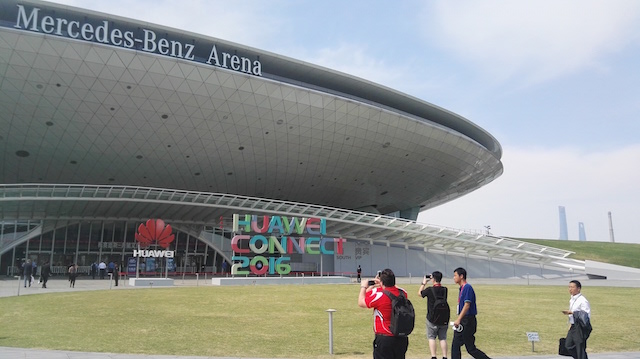
    For the last two days Chinese network equipment vendor Huawei has been holding its first Huawei connect conference in Shanghai.

    There’s alway plenty to announce at these conferences and Huawei had consultancy partnerships with both Accenture and Infosys, their IoT strategy and their big push into cloud computing.

    Ken Hu, the company’s current CEO, even had a new word – cloudification – to describe how business processes are going onto the cloud. Although during the segment on their relationship with SAP, the Huawei executives were at pains to emphasise that in their view most enterprises are a long way from going to a public cloud and will be hosting their own services for some time yet.

    Despite the clumsy buzzwords, Huawei does have an interesting selling point in the market with its tie up with telcos giving it both a strong sales channel and a unique selling point. How well they execute with telecommunications companies that are notoriously poor at selling these services remains to be seen.

    Huawei’s internet of things services are a similar proposition. Being close to the carriers means the company is well positioned to compete in the market, particularly in M2M applications, but again that closeness to telcos could be a hindrance.

    The big message from Huawei Connect is that Chinese companies are genuine competitors to European and North American companies like Ericsson and Cisco, something illustrated on Tuesday when Tencent previewed their new head office in Shenzhen that will act as a live R&D lab for their IoT offerings.

    Overall Huawei Connect was a good example of the Chinese government’s efforts to shift the nation’s economy up the value chain.

    Similar posts: