Category: China

  • Taiwan enters the startups race

    Taiwan enters the startups race

    Battered by a declining Chinese market for its manufacturing goods, Taiwan is having to look elsewhere for its economic growth.

    Startups are one idea report Reuters News describing how the Taiwanese National Development Council set up HeadStart a year ago to create an tech entrepreneur ecosystem by relaxing regulations for registering start-ups, matching funds invested into projects and creating tech hubs.

    So far HeadStart has attracted around $US 438 million in funds and now Alibaba founder Jack Ma says he wanted to set up a $300 million fund to support Taiwanese entrepreneurs.

    While the Reuters piece focuses on the ecosystem built around fading smartphone maker HTC and the major computer chip fabricators, Taiwan’s strength may well lie in its small business roots as much of the island’s industrial strength has been built, like Japan’s, on its army of small family firms supplying the larger companies.

    That Taiwan needs to diversify its economy is a warning to other less advanced economies that depending on a narrow band of exports leaves a nation open to external risks. It might be time for others to be looking at how to encourage their entrepreneurs.

    Image of Taiwanese bronze buddha by Shirley B through freeimages.com

    Similar posts:

  • Chinese companies fall out of love with America

    Chinese companies fall out of love with America

    The emergence of Chinese companies and their listing on US stock exchanges has been one of the features of the country’s rise over the last decade.

    Now Reuters reports the tide may be turning as disaffected Chinese companies shift back to local stock market listings to counter what they believe are under valuations from US investors.

    Two of the notable things about the Chinese stock markets have been the lack of transparency and their volatility.

    It may be the current attractive valuations are part of that volatility with the Shanghai Composite stock index having more than doubled this year as opposed to the S&P 500 being up a comparatively disappointing five percent.

    For Chinese companies, the relative transparency and discipline of US market listing rules also promised to raise their internal management standards.

    The US markets also gained from the Chinese listings as these cemented the nation’s position as the world’s tech centre, with the attraction of American markets fading an opportunity opens for European and Asian exchanges.

    Overall, the withdrawal of Chinese companies from US stock exchanges would be a shame for both countries as it makes each of them stronger.

    Similar posts:

    • No Related Posts
  • Hydrogen trams take to the street

    Hydrogen trams take to the street

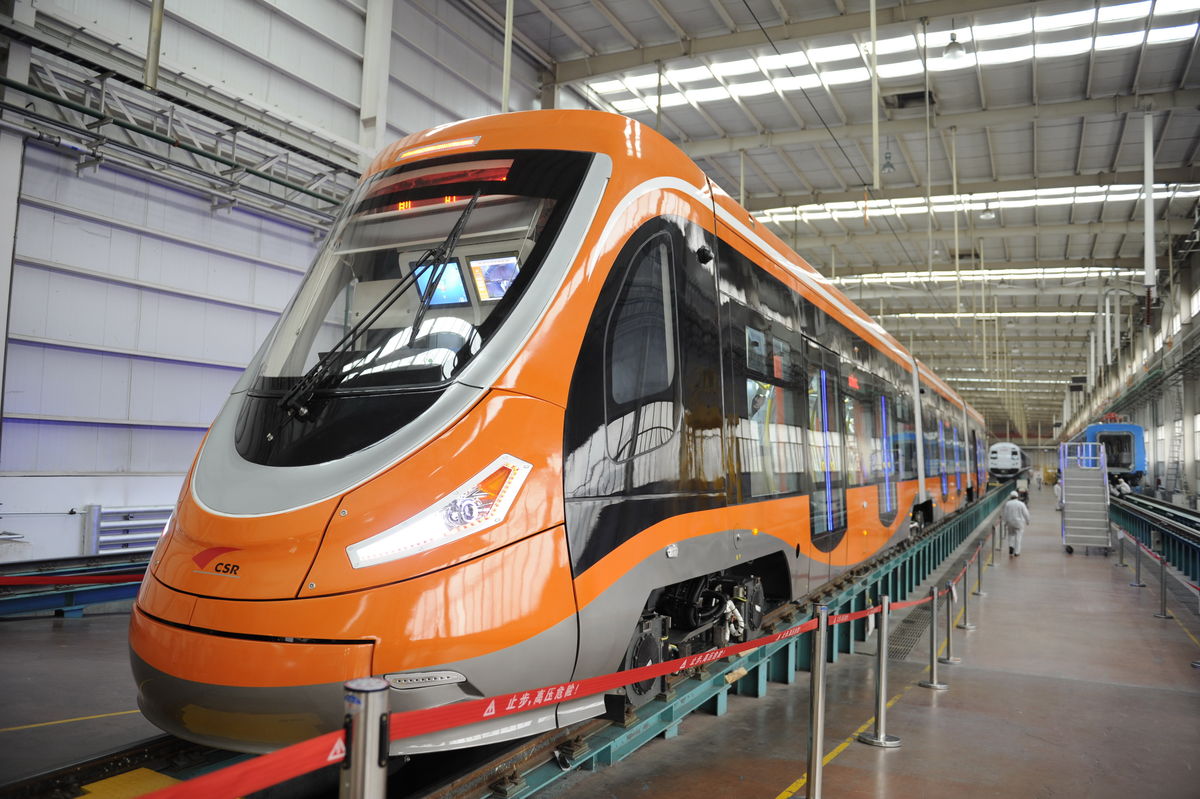
    China doesn’t have many trams but that might change soon as the coastal city of Qingdao rolls out their new streetcar system.

    What makes Qingdao’s system particularly notable is the trams will run on hydrogen with water being the only by-product of the vehicle.

    The Qingdao city leaders hope the hydrogen trams will reduce the chronic air pollution the city, like most Chinese urban centres, suffers.

    Should the trams be successful, hydrogen fuel cells will be another shift from mains electricity and motor vehicles. As we’re seeing, being off the grid might soon be a viable option.

    Similar posts:

    • No Related Posts
  • We’re crazy, not stupid

    We’re crazy, not stupid

    “We’re crazy, not stupid” is how Jack Ma describes his Alibaba team in an interview at the World Economic Forum in Davos, Switzerland, yesterday.

    Much has been written about Jack Ma and the spectacular success of Alibaba and the WEF session with Charlie Rose is an opportunity for Ma to flesh out the story and destroy some of the myths.

    One of the fascinating anecdotes Ma tells is how US cherry growers are preselling their harvests to Chinese customers through Alibaba and cites various other primary producers doing similar campaigns as how American small businesses can sell into the PRC market.

    Ma’s interview is a fascinating snapshot of how global trade is going through a radical period of change, the shifting of China’s economy and where the future lies for many industries.

    Similar posts:

  • Daily links – Chinese tourists, mars landers, Zappos management

    Daily links – Chinese tourists, mars landers, Zappos management

    Where do Chinese tourist like to travel to? One of today’s links looks at where the modern PRC tourist likes to go. Other links include how jaywalking became a crime, Samsung’s attack on the low end Indian smartphone and how disguised Starbucks may be popping up in your suburb.

    Kicking off today’s links is an examination of how Zappos’ CEO and founder Tony Hsieh is carrying out a daring experiment on the management structures of his company.

    Zappos’ strange management experiment

    No-one can accuse Zappos’ founder Tony Hsieh of thinking inside the box, his experiment with new form of management called holacracy is another example of how he tries to do things differently. Whether it will be successful or not remains to be seen.

    How Jaywalking became a crime

    Vox tells of how cars took over our cities’ streets during the early Twentieth Century. It’s an interesting description of the political, social and economic forces at work as the effects of the automobile started to be felt by our communities.

    Lost spacecraft found on Mars

    “It was a heroic failure.” Britain’s Beagle space mission to Mars ended in mystery when the lander vanished just before Christmas 2002. Now it’s been found. I find this story quite touching.

    Your local cafe might be a stealth Starbucks

    Like McDonalds, Starbucks is facing structural changes in its market. One of the ways both companies are responding by launching experimental new stores. Some of which might be near you without you knowing.

    Samsung launches a sub $100 Tizen phone in India 

    Just as the car changed the Twentieth Century the smartphone may well be one of the critical technologies that shapes this era. Cheap phones in emerging markets are the equivalent of the Ford Model T a hundred years ago.

    Samsung’s move is a response to the Chinese manufacturers who are dominating that market. That Samsung is using their own Tizen operating system rather than Android which most of the Chinese companies use is something worth watching.

    Where are Chinese tourists going

    As Chinese manufacturers look to emerging markets as their economic future, the country’s tourists are exploring the world. This article laments how those PRC travellers are ignoring London and the UK but also has some interesting observations about the destinations they prefer.

    Similar posts:

    • No Related Posts