Category: telcos

  • Locking in the mobile market

    Locking in the mobile market

    Mobile phone carrier Vodafone yesterday announced its purchase of Cable and Wireless, the company that rolled out the telegraph and phone networks that connected Britain’s empire.

    Vodafone’s purchase is one of the final phases of the telco industry’s long term restructure where customers – both home and business users – have switched from land lines to mobile devices.

    It’s long been acknowledged the profit in this market lies in devices and data usage which is why Cable and Wireless steadily declined over the past quarter century.

    While there’s good money to be made in running undersea cables, which is what C & W did, the big profit is in delivering the data over the “last mile” to the customer.

    For most customers, that last mile is the radius around a cellphone base station.

    In Australia, this is best illustrated by Telstra’s undisguised glee at being able to offload their legacy copper network and backbone services to the government owned National Broadband Network allowing the former land line monopoly to focus on the mobile, data customer.

    That data aspect is important too, one of the big changes in telecommunications over the last 25 years has been the rise of data.

    A quarter century ago, voice communications were the main traffic of these networks. For companies like Cable and Wireless, data was a profitable sideline with services like Telex and ISDN being lucrative business niches.

    Those rivers of gold distracted incumbent telcos in the early years of the public Internet as they tried to protect those expensive data plans and discouraged customers from using the net.

    Over time, a new breed of Internet Service Providers rose who could supply those data services customers wanted.

    Ironically, the same thing has happened with mobile phone manufacturers and the rise of the smartphone. Unlike the incumbent telcos, they haven’t adapted.

    The incumbents phone manufacturers like Nokia and Motorola missed the rise of data communications and the mobile web as the iPhone and Android devices delivered the portable utility that “dumb phones” couldn’t deliver.

    For Nokia, that miss appears fatal with the company rapidly running out of cash as their smartphone devices fail in the marketplace and margins collapse in the sectors they still dominate.

    Research In Motion – the manufacturers of the Blackberry phone – are in the same trap. While their devices were data orientated they were more akin to corporate “feature phones” where they did one or two things well but couldn’t deliver the full features mobile phone users increasingly wanted.

    The rise of the iPhone threatened Blackberry’s market and the arrival of the iPad with applications like Evernote killed most of the product’s demand.

    Blackberry and Nokia’s decline while companies like Telstra and Vodafone survive – not to mention massive profits of companies like Mexico’s Telefonica – illustrate the value of government licenses to telcos and the breathing space it gives the management of these licensees.

    We shouldn’t underestimate though the risks to all these businesses if they don’t adapt.

    Similar posts:

  • Towards heterogeneous networks

    Towards heterogeneous networks

    A new idea might cut the size of many phone bills, as usual though the devil is in the detail.

    One of the hallmarks of the technology industry is the use of jargon; every few months a new buzzword or phrase comes along that captivates the industry and dominates the tech media.

    A phrase that’s going to become common in the next few months is Heterogeneous Networks, the concept that mobile phones will be able to switch between phone systems and wireless networks without the user noticing.

    Overnight the two major standards organisations agreed to work towards a common framework for phones to run these networks which also go by the name of HetNets.

    For consumers the benefit with heterogeneous networks is they can reduce costs as phones automatically switch to cheaper, and usually faster, Wi-Fi hotspots.

    The benefit for mobile phone network operators is that data demands are swamping their networks that were originally designed for voice communications. By offloading some of the load to private Wi-Fi systems they hope to manage their systems better.

    Of course one should never underestimate a telco’s desire to make a buck and most telecommunications companies see the opportunity to make a few dollars out of offering the feature.

    A major concern in putting together these systems is going to be security, using anybody’s Wi-Fi network requires a degree of trust and if a smart phone or tablet computer is accessing these without the owner knowing the risks are substantially higher.

    These risks are even higher still if the banking and telco industries manage to convince people to use their mobile phones as an electronic wallet.

    Seamlessly connecting to networks is one of the holy grails for mobile device manufacturers and software designers and it’s something that consumers will probably welcome when it becomes reliable.

    For the moment we can expect to hear breathless articles about developments in the area and the promises from suppliers about the technology.

    As usual the early adopters will leap in and suffer the usual disappointments and heartbreak that is life on the bleeding edge of technology.

    Eventually though, long after the hype has settled down, these systems will become commonplace and expected by consumers.

    Whether it makes more money for telcos though is another matter.

    Similar posts:

  • The high stakes of Lumia

    The high stakes of Lumia

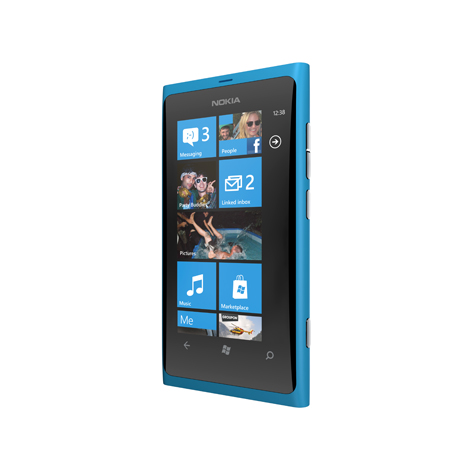
    Yesterday Nokia and Microsoft gave a preview of their upcoming Lumia 710 and 800 phones for the Australian market. It’s make or break time for both companies in the mobile space.

    The phone itself is quite nice – Windows Phone 7.5 runs quite fast with some nice features such as integrated messaging and coupled with good hardware it’s a nice experience. Those I know who use Windows Phones are quite happy with them (I’m an iPhone user myself).

    Whether its enough to displace the iPhone and the dozens of Android based handsets on a market where both Nokia and Microsoft have missed opportunities remains to be seen.

    The battle is going to be on a number of fronts – at the telco level, in the retail stores and, most importantly, with the perceptions of customers.

    Probably the biggest barrier with consumers is the perceived lack of apps, to overcome this Nokia have bundled in their Maps and Drive applications while Microsoft include their Mixed Radio streaming features along with Microsoft Office and XBox integration.

    As well the built in services, both parties are playing up their application partners with services like Pizza Hut, Fox Sports and cab service GoCatch. Although all of these are available on the other platforms.

    While application matter, the real battle for Nokia and Microsoft is going to be in the retail stores where the challenge shouldn’t be underestimated.

    Apple dominate the upper end of the smart phone market and Android is swamping the mid to low end. How Windows Phone devices fit remains to be seen.

    In Australia, if they going to find salvation it will be at the tender hands of the telco companies.

    The iPhone is constant source of irritation for the telcos as not only do Apple grab most of the profit, but they also “own” the customer.

    On the other hand, Android devices are irritating customers who are bewildered by the range of choices and frustrated by inconsistent updates that can leave them stranded with an outdated system.

    So the Windows Phone does have an opportunity in the marketplace although one suspects commissions and rebates will be the big driver in getting sales people at the retail coal face to recommend the Microsoft and Nokia alternatives.

    Overall though, it’s good to see a viable alternative on the market. For both Microsoft and Nokia the stakes are high with the Lumia range – it could be Nokia’s last shot – so they have plenty of incentives to get the product right.

    Microsoft has consistently missed the boat on mobile computing since Windows CE was launched in 1996 while Nokia were blind-sided by the launch of the iPhone in 2007 and have never really recovered.

    To make things worse for Nokia, the market for basic mobile phones where they still dominate is under threat from cheap Android based devices. So even the low margin, high volume market isn’t safe.

    For both, the Lumia range is critical. 2012 is going to be an interesting year in mobile.

    Similar posts:

  • The business of baffling choices

    The business of baffling choices

    In his Daring Fireball blog, John Gruber’s takes to task the view that Apple suffers through not having a wide product range.

    John makes the valid point that Samsung seems to stealing market share from HTC rather than Apple but the whole theory of offering too many choices strikes to the heart of two industry’s business models.

    Those two industries are the mobile telco business and the Windows personal computer sector.

    In the PC world, the wide range of models has been both an advantage and a weakness; it’s allowed Dell and others to create custom machines to meet customer needs but also leaves consumers – both corporate and home buyers – confused and suspicious they many have been taken advantage of.

    All too often customer were being had; frequently buyers found they’d bought an underpowered system stuffed with software that either was irrelevant to their needs or an upgrade was necessary to get the features they hoped for.

    The entire PC industry was guilty of this and Microsoft were the most obvious – the confusing range of operating systems and associated software like the dozen version of Microsoft Office was deliberately designed to confuse customers and increase revenue.

    For the PC industry, the “baffle the customer” model reached its zenith, or nadir, with Windows Vista where Microsoft deliberately put out an underspecced ‘Home’ edition designed to push sales up the value chain.

    Compounding the problem, most of the manufacturers followed Microsoft’s lead and put out horribly underpowered systems in the hope that customers would upgrade with more memory, better graphics card and bigger, faster hard drives.

    Most customers didn’t upgrade and as a result the Vista operating system – which was horrible anyway – enhanced its well deserved reputation for poor performance.

    In the telco sector, consumer confusion lies at the heart of their profitable business model; a bewildering range of phones and plans often leaves the customer spending too much, either through an overpriced plan or paying punative charges for ‘excess’ use.

    Having a hundred different types of Android phone adds to the confusion and, by restricting updates, they can cajole customers into ‘upgrading’ to a new phone and another restrictive plan every year or so. This is why you get phone calls from your mobile phone company offering a new handset deal 18 months into a two year plan.

    Apple’s model has been different; in their computer range there has never been a wide choice, just a few configurations that meet certain price points. The same model has used for their phones and iPads.

    For Apple, this means a predictable business model and a loyal customer base. They don’t have to compete on price and they don’t have to fight resellers and telcos who want to ‘own’ the customer. It’s one of the reasons mobile phone companies desperately want an alternative to the iPhone.

    Companies using the baffling choices business model – Microsoft, HP, Dell and your local mobile telco – may well continue to do okay, but that business model is coming under challenge as new entrants are finding new niches.

    For all of us as consumers all we can do is make the choices that are simple are reject complexity. Warren Buffett has always maintained he doesn’t invest in businesses he doesn’t understand, perhaps we should have the same philosophy with the purchases we make.

    Similar posts:

  • The death of the short message service

    The death of the short message service

    The New York Times’ Bits Section looks at how in many countries text messaging (SMS) services are declining.

    For telcos, the SMS feature was a happy – and extremely profitable – accident with the Short Message Service feature designed as a control channel for the mobile voice networks.

    The Short Messaging Service cost almost nothing to develop and quickly became a massive profit centre for mobile phone companies.

    Today in markets where smartphones are dominating sales, people are moving many of their communications away from text messages over to Internet based services like email, instant messaging and social media.

    Interestingly, in the United States text messaging still growing although at a slower rate than previously. This makes sense as the US is behind countries that have fully adopted 3G networks and subscribers don’t get the full benefit from a smartphone without a reliable and fast data service.

    For developing countries, we’ll probably see SMS continue to grow as the attractions of a relatively cheap and simple communications channel like text messaging still make sense in markets where data plans are expensive and smartphones scarce.

    As revenues from text messaging drops, we’ll be seeing more telecommunications companies try to replace the lost income with other services. Expect to see more offers for various business and home service bundles and offers to upgrade to the latest phones or packages as providers try to lock profitable customers into cash generating agreements.

    The era of accidental profits for telcos is over, the quest for these companies now is to find how they can maintain profits in an era where data services are commoditising their lucrative product lines.

    For the managers of these companies, the challenge is on to successfully do this – it remains to be seen how well they do in refocusing their businesses.

    Similar posts: