Category: Uncategorized

  • A tour of Google’s London Campus workspace

    A tour of Google’s London Campus workspace

    Google’s London campus is credited by many in the City’s Silicon Roundabout district as being one of the catalysts for the explosion in the local tech centre.

    One of the features of the London facility is the free co-working space the company offers which has become an important landmark for the city’s startup and small business community.

    Getting into the basement co-working space requires pre-registration and, in theory, you’ll be able to pick up an access card when you first arrive.

    In practice the cards are long out of stock, so just showing your registration confirmation with it’s code to the rather rude and brusque receptionists will get you buzzed in.

    The coworking space takes up the entire basement with four distinct coworking spaces – a courtyard, an array of tables, a lounge area and a shared bench.

      Google-campus-london-workbench

    Immediately inside the door is the communal bench that seats around twenty people. These are probably the best if you’re happy to socialise while you work. Even if you don’t it’s worthwhile grabbing a spot here if you see one available during busy times.

    Google-campus-london-device-lab

    Directly beside the workbench area is the Android demonstration station. This is a clever initiative by Google to showcase their mobile platform and encourage their developer community.

    Across from the Android test bench is the lounge area, this will be your best bet to find a place should you arrive when the coworking space is busy. It isn’t the most comfortable and quiet place in the room though as it gets lots of foot traffic and is across from the café.

    Google-campus-london-cafe

    The café serves a standard range of sandwiches, coffees and drinks with specials on certain days. Prices aren’t dissimilar from most of the coffee shops in the neighbourhood although you might find better range and a quieter spot eating elsewhere.

    One of the missed opportunities in the cafes is the opportunity to sell computer accessories like chargers and cables, during each visit this reviewer noticed how there was always someone asking to borrow other users’ accessories to charge their phones or synch their devices.

    Google-campus-london-outdoor-working-area

    Alongside the coffee shop is the courtyard; on nice day this would be a good place to work or to enjoy a beer and a chat with fellow geeks in the afternoon. During this visit in November, the weather was dark and dank with the outdoor area only being used by people making phone calls.

    Google-campus-london-working-area

    Beside the courtyard is the desk area where the serious workers hunker down. These spaces tend to get taken early and some people seem to arrive shortly after opening at 9am and don’t leave until the room closes at 6pm. Get there before ten if you want a spot.

    Google-campus-london-powerboard

    One of the problems in the room is the fight for power sockets. By mid-morning it’s almost impossible to find a spare plug so if you’re looking to recharge a device you may want to consider a local café.

    Another problem with the coworking space is it gets very crowded and some of the regulars have a habit of spreading out or hogging power sockets. It may be necessary to be quite pushy to get a seat or power socket when someone is taking up too much space.

    Overall, Google’s London Campus is a good facility that many other cities could use. However with its congestion mobile workers may find it easier to set up in one of the many geek friendly cafes in the neighbourhood like the nearby Ozone or Shoreditch Grind right on the Silicon Roundabout itself.


    Similar posts:

  • Finding the data editors

    Finding the data editors

    Data journalism is one of the buzz words of the media industry as it deals with its own issues of extracting information from the flood of data swamping business and society.

    One of the media organisations leading the move to data journalism is The Guardian who have an excellent video on what a data journalist does.

    The question though is where are the data editors? Like traditional journalism and writing, a good sub-editor is essential to clean up copy and check that the story makes sense.

    With data, it’s even more important for other pairs of eyes to look at the numbers.

    Last week I was asked by an editor to check a story that lots of number – and those numbers didn’t make sense. In fact, the numbers as they were presented argued against the writer’s point. Had the story run, both the writer’s and the publication’s would have been damaged.

    Many news organisations are cutting back on their sub editing teams and the resulting drop in quality is hurting their publications.

    Poor checking of data is even more risky and it’s going to be interesting to see if media organisations start devoting scarce resources to editing their data driven stories.

    Similar posts:

    • No Related Posts
  • The myth of celebrating failure

    The myth of celebrating failure

    “We should celebrate failure!” One of my friends said over a beer. “If so, I have a lot to celebrate but don’t have a lot of money to dot it with.

    Like many business mantras ‘celebrating failure’ is nice to say until you’ve actually experienced it.

    Failure tastes pretty bitter and it isn’t pleasant when you encounter it. For some, it could kill their careers.

    When you hear business gurus and snake oil merchants expounding the mantra of embracing failure it’s worth considering survivor bias when you hear the case studies

    It’s also worth looking at the state of their suit and how desperately they are selling their box set of inspirational DVDx or books.

    Similar posts:

    • No Related Posts
  • Facebook and the Fax Machine

    Facebook and the Fax Machine

    The South China Morning Post reports the Chinese government is allowing access to otherwise restricted sites like Facebook to those in the Shanghai free trade zone.

    In many ways this parallels the original Special Economic Zones set up by the People’s Republic of China at the beginning of the 1980s – these areas’ separate legal, immigration and economic status attracted foreign investment and trigged the economic boom that’s seen China become one of the world’s biggest economic powers.

    Just as manufactured goods were the key to the nation’s development 30 years ago, today it’s information as the PRC leadership works on moving China up the global value chain.

    For a nation of knowledge workers to succeed, the workers have to have access to knowledge.

    It’s claimed the humble fax machine was responsible for the fall of the Soviet Union, how true that is open to debate but an open flow of information is never good for those who rule without the support of their citizens.

    With the explosion of Chinese social networking sites, it’s become harder for the government to control the flow of information between citizens and the opening of the internet in parts of Shanghai is another small change.

    How the Chinese Communist Party manages to keep the support of its increasingly affluent and better informed citizens will define the course of 21st Century history.

    As China shifts from being a low cost manufactured goods supplier to a more sophisticated, diverse and expensive economy the government has no choice to face these challenges.

    Beijing’s cadres would be hoping our children aren’t talking about Facebook in 2012 Shanghai in the same way that we talk of fax machines in 1982 Leningrad.

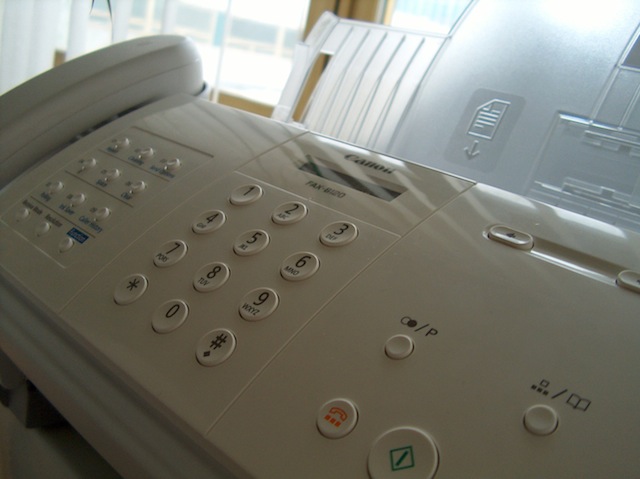
    Image of a fax machine courtesy of Kix through sxc.hu

    Similar posts:

    • No Related Posts
  • Microsoft’s version three problem

    Microsoft’s version three problem

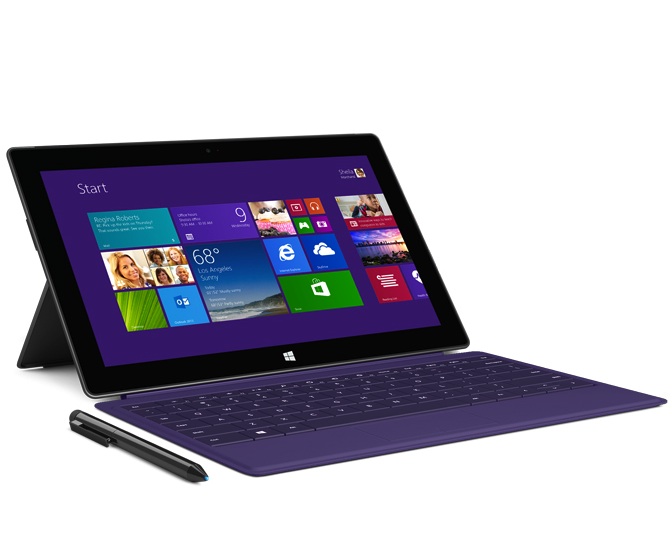
    Microsoft have released their second generation Surface tablet computers following the less than successful first versions that resulted in the company booking a $900 million write off.

    As always, the new devices boast improved battery life, better screens and more storage, all of which are important when competing against Apple’s iPad and the plethora of Android devices.

    For Microsoft, the stakes are high as the company tries to position itself as devices and services business in the post-PC world where tablet computers are one of the key markets.

    Unfortunately the PC industry’s legacy haunts Microsoft as the market believes it takes the company three attempts to get a product right.

    Microsoft Windows is the best example of this, versions one and two of the graphic operating system* were total and utter dogs. It was only with the arrival of Windows 3.0 that PC users started to migrate from DOS.

    This failure to execute lulled Microsoft’s competitors into a false sense of security, WordPerfect in particular completely flubbed the market’s move to Windows and never recovered which was a large reason for Microsoft Office’s eventual domination of the word processor and productivity suite sector.

    Strangely with Windows another pattern developed once Microsoft came to dominate the market, every second version was a dog – Window 98 was followed by the awful Windows ME which in turn was replaced by probably the most successful OS of all in Windows XP.

    XP, released at the high point of Microsoft’s powers, was followed by the disastrous Vista which was redeemed by Windows 7 that was in turn soiled by the now soon to be abandoned Windows 8.

    The problem for Microsoft is the PC industry model is in decline and the company is no longer a scrappy disrupter but instead a wounded giant wondering how to react to a rapidly changing market.

    In the face of Apple and Google’s domination of the tablet and smartphone markets, taking three cracks to get their tablet right is going to be an expensive and difficult path for Microsoft.

    Steve Ballmer’s place in business history might just depend on this version of the Surface, if it does take three attempts to get Microsoft’s tablet product right then his legacy may not be well judged.

    *Purists will argue that early versions of Windows weren’t operating systems as they sat on top of DOS which did the heavy lifting. They are right.

    Similar posts:

    • No Related Posts