Tag: apple

  • Building the Internet’s Frankenstein monsters

    Building the Internet’s Frankenstein monsters

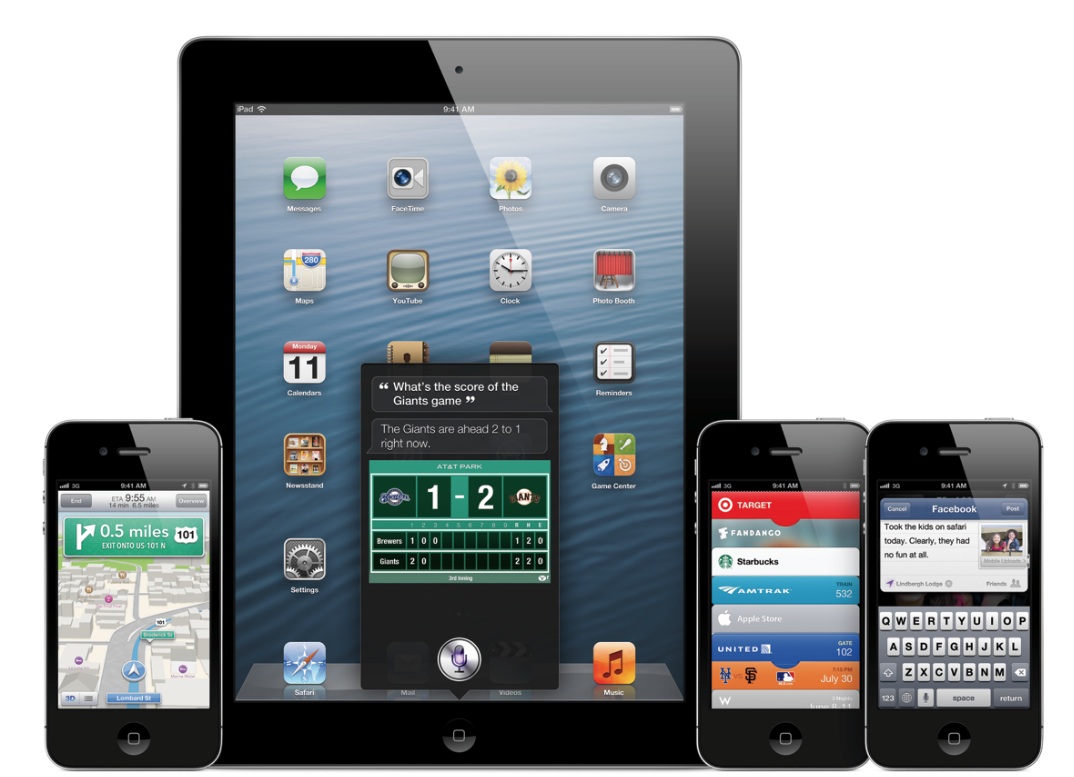
    Apple’s announcement of deep Facebook integration into their iOS6 operating system for the iPhone and iPad is the latest in the weird beasts created as the various online empires jostle for position in a changing marketplace.

    We’re used to failing companies creating alliances – most notably Microsoft and Nokia in the mobile phone sector – and almost all of these ventures fail as they are akin to the two slowest runners in a race tying their legs together believing that will make them faster than the leader.

    In other areas we see the big players buy out hot new businesses as the incumbents figure its easier to buy out the competition rather than try to compete.

    While those purchases form the basis of the Silicon Valley greater fool model, usually the new business gets subsumed into the big corporation, the technology is lost and all but the most cynical founders wander off to do something more interesting.

    Then there’s the merger of equals, and today’s announcement of Apple and Facebook’s deep co-operation is one of these.

    Facebook has been talking about building its own phone – much to the scorn of industry participants – as the company struggles to deal with user moving onto mobile phones.

    Apple is hopeless at social media, which is barely surprising from a company that employs its own secret police.

    So the two coming together make sense although it may not work well as alliances like these can be likened like mating the world’s best golfer with a Grand Slam Tennis champion and expecting the child to be an Olympic swimmer.

    Of course Apple had a successful merger of equals back in the early days of the iPhone – Google. The alliance worked well and, Google’s then CEO Eric Schmidt sat on Apple’s board for some time.

    Than Google decided to develop its own mobile software build its own phones so relationships soured between Steve Jobs and Eric.

    Now Google Maps has been ditched from the iOS phone system and steadily Google are finding their services being dropped from all of Apple’s products.

    Those moveable alliances – not dissimilar to Eurasia, Eastasia and Oceania in George Orwell’s 1984 – are something we should get used to as the Big Four maneuver for position in the changing online world.

    While it’s going to be tough time if you’re a mindless fanboi following the progeny of these strange alliances, for the rest of us it should be fascinating viewing.

    Similar posts:

  • It’s all in the timing

    It’s all in the timing

    This morning I sat in on a corporate breakfast and heard a well known presenter talk about social media for business owners and managers.

    The advice was terrible and what was valid could have come from a 2008 book on business social media marketing.

    But the room loved it and obviously the client – a major bank – thinks the speaker’s work is worthwhile. He has a market while many of us who’ve been covering this field for a decade don’t.

    Timing is everything in business. Earlier this week stories went around the Internet about how Microsoft could have invented the first smart phone.

    Microsoft could well have done it, they tried hard enough with Windows CE devices through the late 1990s and there was also the Apple Newton and the Palm Pilot.

    While all these companies could have developed the smartphone in the 1990s it wouldn’t have mattered as neither the infrastructure or the market were ready for it.

    Had Microsoft released the smartphone in the mid 199os it would have been useless on the analogue and first generation GSM cellphone networks of the time.

    Customers were barely using the web on their personal computers, let alone on their mobile phones, so the smartphone would have been useless and unwanted.

    Ten years later things had changed with 3G networks and real consumer demand so Apple seized the gap in the marketplace left by Motorola, Nokia and the other phone manufacturers with the iPhone and now own the market.

    Apple weren’t the first to market with a smartphone, just as Microsoft weren’t the first with a Windows-style operating system and Facebook weren’t the first social media platform.

    Those who were first to the market stood by while upstarts stole the market they built.

    Plenty of people have gone broke when their perfectly correct investment strategies have been mistimed – “the market can stay irrational longer than you can stay solvent” is often proved true.

    That’s the same with the speaker this morning; he’s not the first to discover social media’s business benefits but his timing is impeccable.

    Being first is no guarantee of success if your timing is wrong.

    Similar posts:

  • Rivers of gold

    Rivers of gold

    Google’s announcement that their revenues have increased by 24% over the last year shows the search engine juggernaut keeps rolling on.

    It’s tempting to think that Google is untouchable and that’s certainly how it appears when you’re on track to earn forty billion dollars a year and book close to 40% of that income as profits.

    On the same day, Sony announced a massive restructure including with 10,000 redundancies and the company’s CEO, Kazuo Hirai, spoke of a sense of urgency to address the once dominant corporation’s drift into irrelevance.

    Twenty years the thought of Sony – one of the world’s innovators in consumer electronics – would be wallowing in the wake of companies like Apple and unknown upstarts like Google was unthinkable.

    Fortunes are won and quickly lost in a time of great change and this is something we should keep in mind about Google when we look at their rivers of gold.

    “Rivers Of Gold” was a term coined to describe the advertising riches of the newspaper industry in the 1980’s. Google’s online advertising is partly responsible for destroying that business.

    Today Google is a search engine business that makes its money from the advertising that deserted print media and went online.

    It may be that manufacturing mobile phones, running “identity services” disguised as social media platforms or augmented reality spectacles are the future of Google but right now they it’s search and advertising that pays the bills and books the massive profits.

    The challenge for Google is not to lose sight of its current core business while building the future rivers of gold.

    If Google’s leaders can’t manage this, then they risk following the newspaper industry that they themselves disrupted.

    Similar posts:

  • Ending the era of Mac complacency

    Ending the era of Mac complacency

    The news that the Flashback Trojan has infected an estimated 600,000 Apple Mac computers has been greeted with joy by the dozens of industry experts that have predicted a virus holocaust for smug Mac users for nearly a decade.

    While the Flashback malware – the earlier versions could be described as a computer Trojan Horse while the later editions are more like a computer worm – is a real risk to Mac users and it’s important to take this risk seriously.

    The Netsmarts business site looks at how Mac and Windows users can protect themselves from Flashback and its variants.

    One of the key things in the advice is to make sure anybody using the computer has limited rights; as a Managed User on the Mac and as a Limited User in Windows. This dramatically reduces the opportunity for bad things to happen while online.

    I’ve discussed previously while user privileges are one of the reasons why the Mac has historically been less prone to infection to virus infections than their Windows cousins.

    Microsoft made the decision in the 1990s not to tighten Windows’ security settings and their customers paid the price for the next decade. This was compounded by some poor implementations of various technologies in Microsoft Windows.

    This isn’t to say the Mac, or any other computer system, doesn’t have security bugs. Every operating system does and it’s a conceit of everybody immersed in new technologies, be it cloud computing back to horse drawn chariots, to believe their products are magically infallible.

    Part of the crowing from the security experts and charlatans who’ve been desperately predicting a “Macapocalypse” for nearly a decade overlook this.

    Even with the proven problem of the Flashback virus, its unlikely we’re see the deluge of malware like that of the early 2000s simply because the Mac OSX, Windows 7 and all the other mobile and computer operating systems don’t have the structural flaws that Windows 98, ME and early versions of XP had.

    Much of the Mac versus PC argument in security is irrelevant anyway; the main game for scammers and malware writers has moved to social media services like Facebook and this is where computer users need to be very careful.

    However the stereotype of the “Smug Mac” user was true, one caller to my radio show claimed he didn’t have a problem with spam because he had a Mac. Nothing could convince him that email spam wasn’t related to the type of computer you used.

    To be fair to Apple they never made the claim their computers were invulnerable to malware, apart from the odd dig at Microsoft. Their users did it for them.

    That type of smug Mac user are those who do need a wake up call. For the industry though, it’s business as usual although some will be feeling a little smug their hysterical predictions of the last decade came true in a small way last week.

    Similar posts:

  • 702 Sydney Weekend computers: April 2012

    702 Sydney Weekend computers: April 2012

    On ABC 702 Sydney Weekend computers this Sunday, April 8 from 10.15am Paul Wallbank and Simon Marnie will be looking at the end of innocence for Apple Mac users, the DNS Changer Virus and how political campaigning is coming to a Facebook site near you.

    Some of the topics we’ll discuss include;

    If you’d like to learn how to protect your Mac or Windows computers from malware, visit our Netsmarts article on the Flashback virus that explains the security settings and suggests some free anti-viruses.

    Listeners’ Questions

    While we had a great range of calls from listeners, there was only one we promised to get back to. Kay clearly has a virus infection on her Windows computers and we recommend the free MalwareBytes program to clean it up.

    Our IT Queries site has more instructions on cleaning up a virus infection if you’re worried about a sick computer.

    We love to hear from listeners so feel free call in with your questions or comments on 1300 222 702 or text on 19922702.

    If you’re on Twitter you can tweet 702 Sydney on @702sydney and Paul at @paulwallbank.

    Should you not be in the Sydney area, you can stream the broadcast through the 702 Sydney website and call in anyway.

    Similar posts: