Tag: future

  • Open source manufacturing

    Open source manufacturing

    Chinese business website Caixin Online has a great video on China’s Open Source Hardware Movement, this is an area that promises to change the manufacturing industry.

    Open Source is the philosophy of sharing intellectual property and allowing anyone to improve the idea on the proviso they share their changes with the rest of the world.

    The hope is that open sourced products end up being more reliable than proprietary designs due to scrutiny from hundreds, or thousands, of reviewers.

    Until recently, open source has been largely restricted to the software world but now it’s moving into broader Engineering and manufacturing circles.

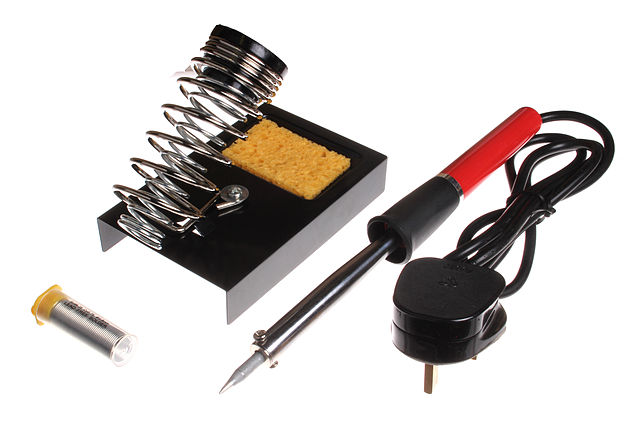
    As the Caixin video shows, the open source hardware movement is introducing geeks to a tool which many thought was dead – the soldering iron.

    I noticed this a week or so ago when I walked into a co-working space and found the lady I was meeting hunched over a soldering iron putting together a part for a quadcopter.

    Right now soldering parts to build quadcopters or game controllers is just the beginning, the really interesting things start when open source meets 3D printing – then we’ll see some real game changing things happen.

    Soldering iron picture courtesy of Bomazi through Wikimedia Commons.

    Similar posts:

  • Skills, data scientists and the decade’s big IT trends

    Skills, data scientists and the decade’s big IT trends

    As we all get buried under a tsunami of data, the challenge is managing it. The MIT Technology Review this week looks at the rise of the data scientist, a job title unknown a few years ago.

    The problem for industry is the skill sets required to become a data scientist are fairly esoteric.

    Data scientist has become a popular job title partly because it has helped pull together a growing number of haphazardly defined and overlapping job roles, says Jake Klamka, who runs a six-week fellowship to place PhDs from fields like math, astrophysics, and even neuroscience in such jobs. “We have anyone who works with a lot of data in their research,” Klamka says. “They need to know how to program, but they also have to have strong communications skills and curiosity.”

    Over the last twenty years we’ve done a pretty poor job teaching maths and statistics which is going to create a skills shortage as industry struggles to find people qualified to figure out what all of this data means.

    While Big Data might be to this decade what plastics were to the 1960s, it’s not the only technology change that’s affecting business as the McKinsey Quarterly describes the ten IT trends for the decade ahead.

    The thing that really stands out with McKinsey’s predictions is the degree of reskilling the workforce is going to need, today’s workers are going to need an understanding of programming, logic and statistics as much the kids currently at school.

    If you’re planning on being in the workforce at the end of this decade right now may be the time to consider getting some of these skills.

    Just as businesses will be separated by how they use Big Data, workers may too find those skills divide the winners from the losers.

    As the amount of data flooding into our lives explodes, we’ll all need to think about how we can get the skills to manage and understand data.

    Similar posts:

  • Rethinking the middle class

    Rethinking the middle class

    Technologist Jaron Lanier says the internet has destroyed the middle classes.

    He’s probably right, a similar process that put a class of mill workers out of a job in the Eighteenth Century is at work across many industries today.

    Those loom workers in 18th Century Nottingham were the middle class of the day – wages were good and work was plentiful. Then technology took their jobs.

    Modern technology has taken the global economy through three waves of structural change over the past thirty years, the first wave was manufacturing moving from the first world to emerging economies as global logistic chains became more efficient.

    The second wave, which we’re midway through at the moment, is moving service industry jobs and middleman roles onto the net which destroys the basis of many local businesses.

    Many local service businesses thrived because they were the only print shop, secretarial service or lawyer in their town or suburb. The net has destroyed that model of scarcity.

    The creative classes – people like writers, photographers and musicians – are suffering from the samee changed economics of scarcity.

    Until now, occupations like manual trades such a builders, truckdrivers and plumbers were thought to be immune from the changes that are affecting many service industries.

    The third wave of change lead by robotics and automation will hurt many of those fields that were assumed to be immune to technological forces.

    One good example are Australia’s legendary $200,000 mining truck drivers. Almost all their jobs will be automated by the end of the decade. The days of of relatively unskilled workers making huge sums in the mines has almost certainly come to an end.

    So where will the jobs come from to replace those occupations we are losing? Finance writer John Mauldin believes the jobs will come, we just can’t see them right now.

    He’s almost certainly right – to the displaced loom worker or stagecoach driver it would have been difficult to see where the next wave of jobs would come from, but they did.

    But maybe we also have to change the definition of what is middle class and accept the late 20th Century idea of a plasma TV in every room of a six bedroom, dual car garage house in the suburbs was an historical aberration.

    Just like the loom weavers of the 18th Century, it could well be the middle class incomes of the post World War II west were a passing phase.

    If so, businesses and politicians who cater to the whims and the prejudices of the late Twentieth Century middle classes will find they have to change their message.

    Similar posts:

  • Have we come to the end of the middle class era?

    Have we come to the end of the middle class era?

    Technology has transformed workplaces over the last century, drove huge income growth and moved many into the middle classes. Are we now seeing computers and robots displacing those middle class jobs?

    At Tech Crunch Jon Evans warns Get Ready To Lose Your Job  as “this time it’s different” – unlike earlier periods of industrialisation where jobs shifted to the new technologies such coach builders became car makers – robots and computers are making humans redundant.

    So I see no mystical Singularity on the horizon. Instead I see decades of drastic nonlinear changes, upheaval, transformation, and mass unemployment. Which, remember, is ultimately a good thing. But not in the short term.

    In The Observer John Naughton, professor of the public understanding of technology at the Open University, says Digital Capitalism Produces Few Winners.

    Professor Naughton’s view is that high volume, low margin businesses like Amazon mean there’s fewer well paid jobs available and many of the lower positions will be soon replaced by robots.

    At the other end of the digital marketplace, the high margin businesses like Apple, Google and Salesforce don’t need many staff to generate their profits, so wealth is concentrated among a small group of managers and owners.

    While the low paid and manufacturing workers have been squeezed for decades in the West, it’s now the turn of the middle classes to feel the pain of automation, outsourcing and restructuring.

    There’s two ways we can look at these changes, the optimistic is that our economy is going through a transition to a different structure; those out of work coachbuilders a hundred years ago didn’t immediately get jobs building cars and the same adjustments are happening again.

    A more pessimistic view is that the Twentieth Century was an aberration.

    It may be that Western world’s steady climb into middle class prosperity was itself a transition effect and we’re returning to the economic structures of the pre-industrialised age where the vast majority of people have a precarious income and only the fortunate few can afford middle class luxuries.

    The next decade will give us some clues, but the portents aren’t good for the optimistic case, the Pew Research Centre shows America’s middle classes has been shrinking for forty years.

    For those Americans still in the middle class, the Pew research shows their incomes have been falling for a decade.

    Regardless of which scenario is true, the dislocation is with us. As individuals we have to be prepared for changes to our jobs, however safe they look today. As a society we have to accept we are going through a period of economic and social upheaval with uncertain long term consequences.

    What’s particularly notable is how today’s political and business leaders seem oblivious to these changes and are locked in the ‘old normal’ of thirty or fifty years ago.

    One wonders what it will take to wake them up to the changes happening around them and what will happen when reality does bite them.

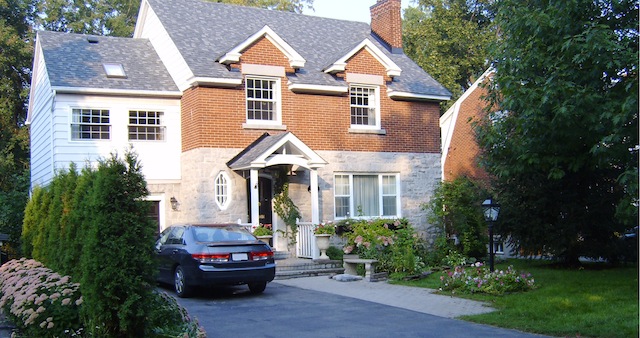
    Picture of a nice, middle class house by Strev via sxc.hu

    Similar posts:
  • Our evolving view of robots

    Our evolving view of robots

    Ahead the Ovations Speaker Showcase on Tuesday, I’ve been looking at robots as one of this decade’s trends.

    What’s interesting is how our perception of robots has evolved over the last half century.

    The idea of Robots in the 1950s and  60s were ones with human shapes – four legs, a torso, two arms, shoulders and a head – otherwise known as anthropomorphic. Lost in Space and the Day the Earth Stood Still are two good examples of those human like machines.

    How robots looked in the 1950s
    1950s robot chic – the day the Earth stood still

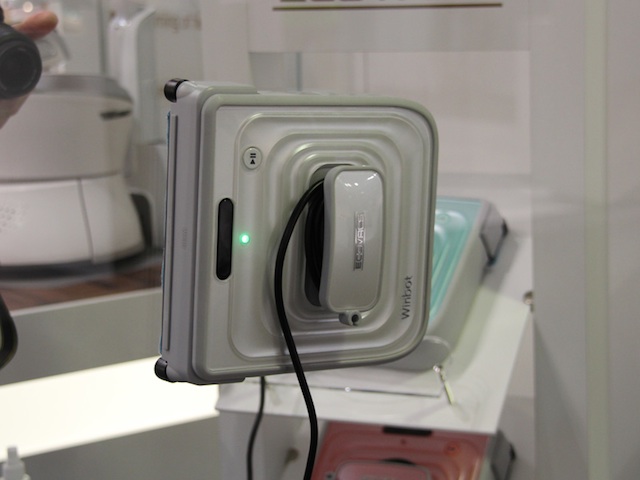
    Today’s robots have much more utilitarian shapes, like the Winbot window cleaner pictured at the beginning of this post.

    Many of the robots look like the machines we use today, mainly because they are today’s technology with the driver or operator replaced. A good example being the Google self driving cars.

    google self driving car

    The idea of a robotic car isn’t completely new though; the 1980s action series Knight Rider featured KITT, a robot car with an almost equally mechanical David Hasslehof as its sidekick.

    The Hoff and KITT

    More interesting still are the tiny robots who look, and act, like insects. Wait until these guys infest your internet fridge.

    All of these technologies had to wait until computers became small and cheap enough to fit into the systems. In the 1980s a computer with the capabilities to run KITT or a Google Car would be the size of a large warehouse, today it can fit inside a cigarette packet.

    Of course the real power for robots comes when computers talk to each other and form a collective intelligence. This is the Internet of machines.

    The terminator
    Skynet has told The Terminator to destroy us all.

    Which brings us to Arthur C. Clarke’s and Stanley Kubrick’s 2001: A Space Odyssey and the 1980s vision of Skynet which gave birth to the Terminator.

    Hopefully those visions of the future of network connected robot are just as misguided as those of 1950s movies.

    If they aren’t, we’re in a lot of trouble.

    Similar posts: