Tag: logistics

  • Zooming ahead of the supply chain

    Zooming ahead of the supply chain

    One of the least understood, but most important factors in modern industry is the logistics of moving supplies to manufacturers and goods to market.

    Mastery of the supply chain is one of the key advantages Chinese manufacturers have says PCH Industries’ CEO Liam Casey in an interview with Fortune Magazine.

    Fortune describes how Casey has become the ‘go-to’ man for companies wanting to outsource their manufacturing to China, a process that can be steep learning curve for an inexperienced startup team.

    Since first travelling to China twenty years ago, Casey has been studying how the country’s manufacturers operate and he believes they are “light-years ahead when it comes to the supply chain.” 

    That strength is something that shouldn’t be underestimated by China’s competitors and western countries hoping to rekindle their manufacturing industries as Chinese costs increase, getting goods to market is as much an value add as making the products.


    Similar posts:

    • No Related Posts
  • Amazon solves its labour problems with robots

    Amazon solves its labour problems with robots

    It looks like Amazon has found a solution to their distribution centre labour problems — replace the staff with robots.

    A wired magazine article features the e-commerce giant’s new distribution centre east of San Francisco that is run largely by robots.

    With its employment practice being an ongoing PR sore for Amazon, it looks like Jeff Bezos has found the solution to that problem.

    For the moment the warehouse in Tracy, California still employs 4,000 workers during peak periods but it’s not hard to see how Amazon is working towards dramatically reducing that head count.


    Similar posts:

    • No Related Posts
  • Uber’s Travis Kalanick on the highly valued business of disruption

    Uber’s Travis Kalanick on the highly valued business of disruption

    For a four year old business, hire car service Uber is certainly causing a lot of trouble.

    Bloomberg Businessweek’s Brad Stone has an interview with the company’s founder and CEO Travis Kalanick on his plans after announcing a 1.2 billion dollar fundraising that values the venture at $17 billion.

    Seventeen billion dollars is a hefty valuation for the business and many believe it marks the peak of the current tech bubble, although many of us though Facebook’s billion dollar purchase of Instagram two years ago was that marker.

    Kalanick’s views are interesting in his take on that valuation – as he points out the San Francisco taxi market alone turns over $22 billion each year, so Uber’s valuation isn’t beyond the bounds of possibility.

    Uber and Logistics

    Also notable is Kalanick’s view on the logistics market, something that this blog has maintained is the real business of Uber. In that field, Fedex’s stock market value is $44 billion although Kalanick is discounting the company’s potential in that field.

    Right now Uber is on a high, and regardless of any set backs they may get with their ride sharing services, it’s hard to see how the company isn’t going to grab a healthy slice of the global taxi industry and possibly disrupt the logistics industry as well.

    Even should Uber end up being the poster child for today’s tech sector irrational exuberance, the company is a stunning example of how businesses we once thought were immune from global disruption are now being shaken up.

    Similar posts:

    • No Related Posts
  • Synergies aren’t easy money

    Synergies aren’t easy money

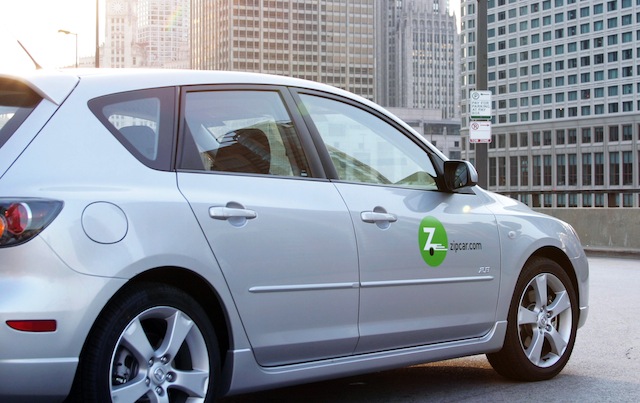
    Last year car rental giant AvisBudget acquired the vehicle sharing service Zipcar, at the time it looked like the established player was buying in the tech smarts of younger startup.

    Citing ‘synergies’ at the time of a takeover is always a warning sign that a corporate acquisition may not go well and so it has proved with Avis’ efforts with Zipcar as travel news site Skift reports;

    Speaking at the J.P. Morgan Gaming, Lodging, Restaurant & Leisure Management Access Forum in Las Vegas earlier this week, AvisBudget CEO Ron Nelson said fleet-sharing has turned out to be more complicated than the company thought because there’s a cost tied to moving the vehicles from one location to another.

    That’s a strange statement as a casual observer would be forgiven for thinking that if any organisation understood the costs of moving vehicles around it would be a car hire company.

    Apparently that’s not the case and the ‘synergies’ from acquisition will be pushed back to 2015.

    Synergies are elusive things and it may well prove that Ron Nelson would be better served by examining how Zipcar’s technology, algorithms and flat management structures can be applied to a more staid organisation like Avis.

    The real value in companies like Zipcar and Uber is the way they are applying technology to moving physical goods around – it’s no surprise that Uber’s Travis Kalanick describes his ambition for the future of his company as being the Amazon for logistics.

    For Avis, Zipcar’s opportunities lie in more that just enhancing the company’s fleet utilization; understanding the marketplace and predicting demand is where the real gains could be made.

    Similar posts:

  • What happens when the power goes out?

    What happens when the power goes out?

    Cisco gave a media and analyst briefing earlier today on the Internet of everything looking at how various technologies can help with tasks ranging from reducing traffic accidents to improving productivity which I’ll write up later.

    One of the analyst’s questions though is worth pondering – “what happens when the power goes out?”

    For most of the industrial processes discussed by Cisco and the panellists, this would be a hassle but most of the systems would, or should, be designed to fall back to a default position should the power fail.

    On a much bigger scale though this is something we don’t really think through.

    In modern Western societyour affluent lifestyle is based upon complex supply chains that get the food to our supermarkets, fuel to our petrol pumps, water to our taps and electricity to our homes.

    Those chains are far more fragile than we think and few of us give any thought to how we’d survive if the power was off for more than a few hours or if the shop didn’t have any milk and bread for days.

    It’s one of the fascinating thing with the end of the world movies. When the meteorite hits or aliens take over then our power and food supplies probably have only 72 hours before they dry up.

    After that, you’ve probably got more to worry about your neighbours trying to steal your hoard than being ripped to pieces by zombies.

    Most of us probably wouldn’t cope without the safe, comfortable certainties which we’ve become used to.

    One thing is for sure — if the power does fail, then most of us will have more to worry about than whether our smartphones are working or whether our geolocating, internet connected fridge is tweeting our wine consumption.

    Similar posts: