Tag: microsoft

  • ABC Nightlife technology – April 2013

    ABC Nightlife technology – April 2013

    For the April 2013 Nighlife spot Tony Delroy and I looked at the mobile phone turning 40, Windows 8 coming to an end, Blackberry’s chances of succeeding and what happens when the internet goes dark.

    Danny Hillis gives a great discussion of what could happen if the internet was turned off along with the history of the net in this TED talk.

    If you missed the show, you can download it from the Nightlife website.The next show will be on May 16 and we hope you can join us then.

    Similar posts:

  • Apple and the argument for hybrid cloud computing

    Apple and the argument for hybrid cloud computing

    There’s two different philosophies about cloud computing, hybrid and ‘pure’. In recent days the hybrid school hasn’t been doing so well, but the matter isn’t settled yet.

    Pure cloud computing means doing everything in the cloud with all your software running over the net with the data stored on other people’s computers and everything is accessed through web browsers.

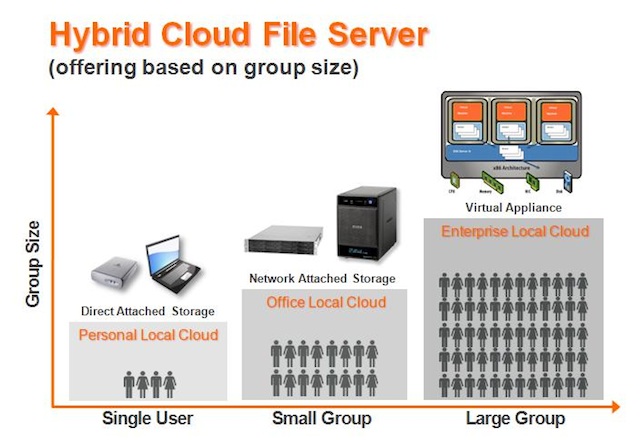
    Hybrid cloud is where some of the work is done on your computer or smartphone with data often being synchronised between the device and the cloud storage.

    Most smartphone and tablet computer apps do this and increasingly software like Microsoft Office and Apple iLife have a hybrid cloud computing angle.

    Apple’s hybrid cloud service, iCloud, promised Apple users the ability to work on any device – laptop, desktop, tablet or smart phone – with the synchronised with central servers. Every Apple product you own can then access your iCloud data.

    Recently though stories in the The Verge and Ars Technica report how Apple’s developers and customers are becoming steadily irritated by the lousy reliability of the company’s iCloud service.

    Incumbent software and hardware vendors like Microsoft and Apple are pushing the hybrid idea for a good reason, it allows them to maintain their existing PC and laptop based products while being able to offer cloud services like their competitors.

    For Microsoft and Apple, along with companies like Oracle, Dell and MYOB, the hybrid cloud gives them an opportunity to wriggle out of what Clay Christensen called The Innovator’s Dilemma.

    Customers actually like the hybrid cloud as many distrust ‘pure’ cloud offerings as they don’t trust the providers or their internet connections. Basically they like to have a copy of their data stored in house.

    The problem with the hybrid cloud is that it’s complex as Xero’s founder Rod Drury, one of the ‘pure cloud’ evangelists, said at his company’s conference last year, “hybrid technologies are cumbersome and add far more complexity into software. Cloud technologies are the right technologies.”

    Complexity is what’s bought Apple’s iCloud unstuck as even some of best developers struggle with getting their programs to work with it.

    All is not well for the ‘pure cloud’ evangelists either, as the shutting down of Google Reader has shaken many technologists and made them question whether the cloud is as safe as they would like.

    Added to this uncertainty about the cloud is lousy service by providers, arbitrary shutting down of user accounts and the corporate boycott of Wikileaks – all of which have forced people to reconsider the wisdom of saving all their data or running applications in the cloud.

    So the debate between the cloud purists is by no means over and it may well be that some form of hybrid, even just for local backup to your own computer, may turn out to be the common way we use cloud services.

    What is for sure though is cloud software is biting deeply into the revenues of established software companies as people find the attractions of running programs and storing data on other people’s computers outweighs the risks.

    Like all relatively new concepts it’s going to take a while for us to figure out how to use cloud computing most effectively in our business. The first step is how we manage the risks.

    Similar posts:

  • The Five Stages of abandoning a product

    The Five Stages of abandoning a product

    Killing a technology product is never a clean process, as Google well know. Microsoft show the way to deal with a failed project and we’re seeing their five stages of abandoning a product as they prepare to retire Windows 8.

    The stages of Microsoft are abandoning a product are well known – the failure of Microsoft Vista is the best example, but not the only one.

    As Microsoft smooths Window 8’s pillow and prepares for its imminent demise we can see the process at work.

    Denial

    At first the company denies there is a problem, the flashy advertising campaigns are boosted and the various ‘in the camp’ commentators get informal briefings from company evangelists to fuel their snarky columns about people getting Microsoft’s latest product all wrong.

    This usually goes on for around six months until the market feedback that the product is dog becomes overwhelming – usually this happens at the same time the first reliable sales figures start appearing.

    Anger

    As the consensus in the broader community becomes settled that the new product isn’t good, the company’s tame commentators turn nasty and lash out at the critics for ‘misrepresenting’ the new product.

    This is usually a touchy period for Microsoft and other vendors as they can’t risk being too aggressive but they have to allow their allies to both let off steam and try to recover the credibility they lost in hyping what’s clearly been a market failure.

    Bargaining

    Once it’s clear the perceived wisdom that the product isn’t very good isn’t going to be shaken, the vendor comes out with special offers and pricing changes to try and coax users over to the new service.

    With Windows 8 Microsoft tried something unusual, rather than cutting prices, Microsoft announced they would increase the cost of Windows 8.

    The idea was probably to panic people into buying the product and giving Microsoft a revenue and market share bounce for the quarter.

    It didn’t work – the consensus that Windows 7 is a better product meant people stayed away.

    Depression

    As the realisation that pricing tweaks and promotional stunts won’t work sends the company, and its supporters, into a funk.

    For experienced industry watchers, the silence around a product that’s been heavily hyped and defended for the previous year or two is a good indication that the next version is being accelerated.

    Acceptance

    Eventually the vendor accepts the product has failed and starts working on its own exit strategy – hopefully one that doesn’t see too many executives sacked.

    With Microsoft’s this process starts with a quiet announcement that the replacement version of Windows is on the way, in this case Windows Blue.

    At the same time, the tame commentators start talking about ‘leaks’ of the wonderful new system that is in the pipeline. Early beta versions of the new product start popping up in developers’ forums and file sharing sites.

    Eventually you get stories like this one that appeared in The Verge yesterday – Windows Blue leaks online and we can be sure the Microsoft public relations machine has subtly moved onto the next version.

    Vale Windows 8

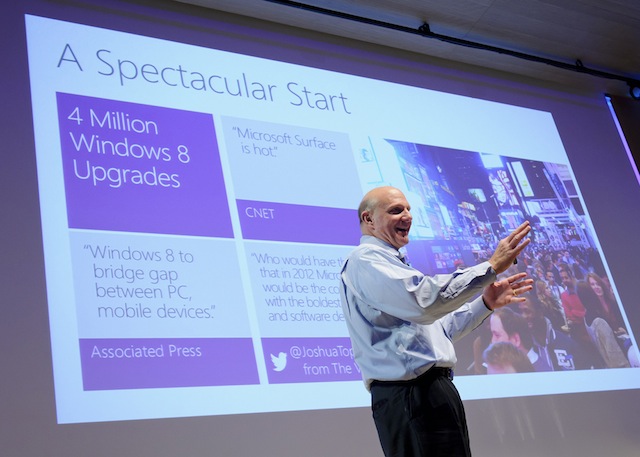
    So Windows 8 is coming to an early end. In one way this is a shame as it was a brave gamble by Steve Ballmer and his team to solve the ‘three screen’ problem.

    Computer users today are using three or more screens or devices – a desktop, a smartphone and a TV or tablet computer.

    Microsoft were hoping they could develop a system that unified all these platforms and gave users a common experience regardless of what they were using.

    It appears to have failed, probably because the different devices don’t have the same user experience so a keyboard based system doesn’t work on a touchscreen while a touch based system sucks really badly on a desktop or laptop computer – which is Windows 8’s real problem.

    Unrealistic expectations

    Another problem for Microsoft were the unrealistic expectations that Window 8 would halt the slide of personal computer sales.

    PC manufacturers have been baffled by the rise of smartphones and tablet computers – vendors like Dell, HP and Acer have miserably in moving into the new product lines and they hoped that Microsoft could help arrest their market declines.

    This was asking too much of Windows 8 and was never really likely.

    So the cycle begins again with Windows Blue, the question is whether it will be the last version of Windows as we move further in the post-PC era.

    Similar posts:

  • Microsoft’s China crisis

    Microsoft’s China crisis

    That the Chinese Public Security Bureau is blocking your messages – and may even be reading them – would make anyone pause before they used a service.

    Bloomberg Businessweek reports Microsoft Skype is doing exactly this with its Chinese customers. Anything deemed inappropriate is censored and referred to servers belonging to TOM Online, the company that runs the Skype service on behalf on Microsoft in China.

    The Bloomberg story goes onto detail how one Canadian researcher is reverse engineering the Chinese blacklists, giving us a wonderful insight into the petty and touchy minds of China’s censors and political leaders.

    What raises eyebrows about this story is how nonchalant Microsoft is about this issue, in a wonderful piece of corporate speak the software giant answered Bloomberg’s question with the following bland statement;

    “Skype’s mission is to break down barriers to communications and enable conversations worldwide,” the statement said. “Skype is committed to continued improvement of end user transparency wherever our software is used.”

    Microsoft’s statement also said that “in China, the Skype software is made available through a joint venture with TOM Online. As majority partner in the joint venture, TOM has established procedures to meet its obligations under local laws.”

    Microsoft have to fix this problem quickly, glibly saying the Chinese government eavesdropping on conversations is a matter for partners is not going to be accepted by most customers.

    It would be a shame should Microsoft’s Skype investment fail – Skype is a very good fit for Microsoft, particularly when the technology is coupled with the Linc corporate messaging platform, so squandering goodwill over protecting users’ conversation seems counterproductive.

    One of the great business issues of this decade is the battle to protect users’ privacy. Those who don’t do this, or don’t understand the imperatives of doing so, are going to lose the trust of the marketplace.

    Twenty years ago, Microsoft could have risked this. Today they can’t as they struggle with a poor response to their Windows 8 operating system and their mobile phone product.

    Losing the trust of their customers may be the final straw.

    Similar posts:

  • People like us – could poor hiring practices bring down Silicon Valley?

    People like us – could poor hiring practices bring down Silicon Valley?

    A strange little story appeared in Business Insider a few weeks back, 9 Things Your Resume Needs if you want to be Hired by Apple or Google is a curious view into the mindset of Silicon Valley.

    Purporting to be an extract from a book written by a former recruiter who claims to have worked for Apple, Google and Microsoft, the story exposes a weakness in Silicon Valley and the technological elite which may cause the very disruptions they have unleashed to work against them.

    The nine items are fascinating for the elitist, US-centric view of the world they portray and each is worth investigating on their own.

    If you graduated from an elite college, your chances of getting an interview vastly improve

    Yes, where you went to school does matter to the tech giants. Of course there are exceptions, but McDowell says an Ivy League or other top university will get you noticed.

    There’s not much more to add to this, except to note that the vast majority of students whose families can afford such an education are from the upper middle class.

    The Googles and Apples like to see relevant internship experience.

    If you waited tables when you were 19, that isn’t attractive.

    If you are lucky enough to get into a an Ivy League school on a scholarship or manage to scrape together the money you may still not make the cut.

    To the author, only those with sufficient wealth to participate in unpaid internships are going to get jobs at the top Silicon Valley companies.

    Your major matters

    Sorry liberal arts people or chemical engineers, you’ll need another way in to Google or Apple.

    This is an interesting one, Silicon Valley boosters often talk about the creative process and how coders are artists however according to the recruiter that’s just lip service.

    She encourages students to pick majors that are directly relevant to Google or Apple. Finance, accounting, marketing or computer science majors have the best shot of being noticed by a tech recruiter.  At the very least, minor in one of those fields.

    A focus on finance, accounting and marketing is the same as any old corporation – you could be going for a job with AT&T, Goldman Sachs or the government with qualifications like that. So much for unique.

    Dissing chemical engineering is particularly interesting as Chem Eng graduates have passed one of the toughest university degrees. Whats more, the demands of mobile computing devices means battery technology is one of the most pressing issues facing Silicon Valley at the moment. Chemical Engineers are the folk who will solve this problem.

    Big tech companies like to see people giving back to their communities.

    Volunteering can be a great way to buff up your resume. That said, McDowell warns: “don’t serve soup in a soup kitchen.”

    Instead she suggests hunting for a sales or marketing position, or offering to help a charity with its website and design.

    This is a really obnoxious statement – basically saying we want to you volunteer, but we don’t want you to help people.

    Just how many sales and marketing people are needed by soup kitchens, volunteer fire brigades or community pantries is open to debate.

    A bigger issue with this mentality is that it favours bureaucrats and paper shufflers rather than doers. Which again is something anathema to the public statements of Silicon Valley’s leaders.

    They also like good spellers and speakers.

    Writing and communications skills aren’t just necessary for media jobs. They’re important in any career you’ll have.

    Well, duh.

    If you are buddies with college professors, that’s a plus.

    Professors aren’t just impressed by how you do in their classes.  McDowell suggests helping them with research projects, asking for help and attending office hours, or becoming a teaching assistant.

    That doesn’t hurt, but it’s pretty basic vanilla advice and again it’s tough luck if you have to do a shift at the local fast food restaurant so you can feed yourself.

    Show you understand multiple positions at Google or Apple

    If you want to work at one of the top tech companies, it helps to have at least a basic understanding of multiple positions in the organization.  McDowell calls this being a Generalist.

    On one hand this advice makes sense but on another many technical roles are not generalist positions.

    Generally having a knowledge of the company’s structure and roles is going to look good to any interviewer, assuming you can get past the gatekeeper at the recruitment company.

    Entrepreneurs have a better shot of being hired.

    This is a funny one, if you’re a real entrepreneur then the thought of working in cubicle at Apple or Microsoft while answering to a middle manager straight out of a Dilbert cartoon ranks with getting hot pine needles thrust under  your toenails.
    One of the conceits of modern corporate life is that they value entrepreneurs and the free-wheeling spirits – the truth is they don’t and the first true hint of entrepreneurialism among the ranks will be smothered quickly with a deluge of paperwork.
    Funnily enough, being a successful tech entrepreneur is a path to getting a good job at a tech company although it’s more likely to happen as an acqui-hire than through a recruiter.

    Good news: Your GPA doesn’t matter very much

    Most people think tech companies, Google in particular, harp over candidates’ GPAs. McDowell says there is little truth to that rumor.

    This is only good news if you’ve ticked most of the other boxes, which means you’ll be considered if you’re middling graduate from Stanford or Harvard but forget it if you went elsewhere, regardless of how good your marks are.

    The danger of recruiters

    What the Business Insider story really illustrates are the risks of relying on third party recruiters as gatekeepers to filter out new employees.

    Regardless of how good the recruitment consultant is they are going to apply their own cultural filters and biases onto the selection process and as a result knock out most good candidates.

    More importantly, a company risks developing a monoculture if the recruitment process is too effective at filtering out people who don’t fit a narrow stereotype.

    A new breed of officemen?

    Reading the Business Insider story leaves one with the feeling that many of these companies are beginning to look like IBM in the 1960s – monocultures more concerned about the colour of an employee’s tie and choice of shirts rather than the talents they bring to the organisation or the value they can add to customers.

    This is probably the greatest risk of all to the tech industry, that they end up with an insular group of people with fixed mindsets.

    Should that happen, then the wave of disruption Silicon Valley has unleashed on the world will end up being the industry’s undoing as smart kids working out of garages in Michigan or slums in Delhi will out innovate the staid, comfortable incumbents.

    It’s also interesting to consider how many other industries are now suffering after several decades of similar recruiting practices where leading businesses are now dominated by insular, unworldly monocultures.

    Image courtesy of Alexfurr on SXC.HU

    Similar posts: