Author: Paul Wallbank

  • Uber’s New Year’s test

    Uber’s New Year’s test

    Update: It appears Uber passed the New Year’s Eve test without problems. There were almost no complaints at all.

    New Years Eve 2011 was a tough night for customers of the Uber hire car booking service in New York City when fares surged as partygoers headed home.

    This year, Uber hopes to overcome problems by making sure customers are aware with big warnings of prices and even a sobriety test so users can confirm they know what they are doing when they agree to catch a cab.

    Uber’s dynamic pricing matches supply with demand, which means a more reliable service but also opens the company to allegations of price gouging during busy periods.

    Those allegations are exactly what happened in New York last year and in 2012 Uber’s risks of bad publicity are far higher as the service is now international with operations in cities like London, Paris and Sydney.

    Sydney will be the first city to encounter the effects of surge pricing and big risks lie in the Harbour City as Sydneysiders are used to fixed cab fares and enjoy a good whinge when things don’t work in their favour.

    Over a million people are expected on the shores of Sydney Harbour to watch the New Year’s Eve fireworks which means cabs and hire cars are at a premium.

    If Sydney has the triple fares expected in New York then Uber’s fare from Circular Quay to Bondi Beach will be around $150. This compares to the standard cab fare of around $30.

    Those markups will be exploited by the incumbent taxi companies and booking networks. We can expect a wave of stories over the next few days from tame journalists regurgitating the incumbents’ media releases.

    How Uber’s Australian management deals with this will be worth watching. One hopes they are prepared a tough week and don’t enjoy the festivities too far past midnight.

    Another problem for Uber is going to be Sydney’s mobile data networks which are horribly unreliable during peak periods. It may well be that Uber’s customers and drivers never get a fare anyway.

    Last year I was near the Habour Bridge and didn’t have a Vodafone signal from 8pm onwards. I’ll be comparing the performance of all three Aussie networks from the same place tonight.
    Similar posts:

  • NFC and the car key revolution

    NFC and the car key revolution

    Many businesses have made easy money by ‘clipping the ticket’ of the customer, new technologies like Near Field Communications and cloud computing threaten the easy profits of many organisations.

    During yesterday’s 2UE Tech Talk Radio spot where Seamus Byrne and I stood in for Trevor Long, host John Cadogan raised the prospect of replacing car keys and even dashboards with smartphones equipped with Near Field Communications (NFC) systems.

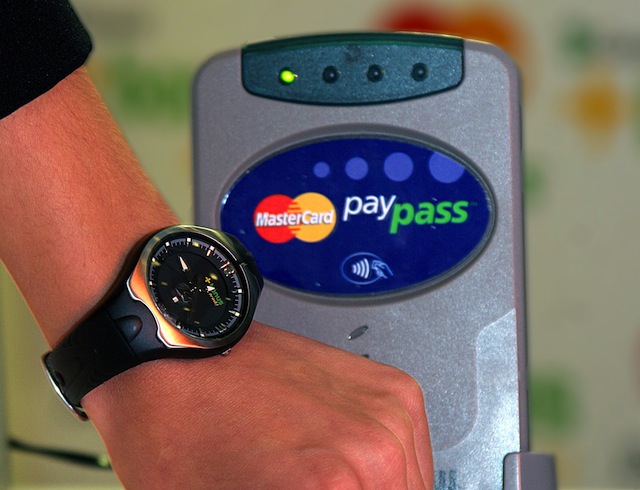
    Since NFC technologies appeared we’ve concentrated on the banking and payments aspects of these features but there’s far more to this technology than just smartphones replacing credit cards.

    With the right software an NFC equipped smartphone, tablet computer, or even a wristwatch could replace any electronic controller – this is already happening with Wi-Fi or Bluetooth enabled home sound systems, TV remote controllers and games consoles.

    An important effect of this is that it cuts out expensive custom replacements like bespoke control units or electronic car keys.

    Car keys are a good example of how what was previously a high cost profitable item becomes commodified and those business that had a nice revenue stream find new technology cuts them out.

    As keys become replaced with NFC enabled devices then then the scam of with new sets of keys costing up to a thousand dollars with fat profits for everybody involved becomes redundant.

    This is something we’re seeing across industries as incumbent businesses find their profitable activities disrupted by smart players using new technology.

    Just as manufacturing and publishing have been dealing with these disruptions for the past two decades, it’s coming to all industries and it’s going to take smart operators to deal with the changes.

    Similar posts:

  • Is Facebook the new Microsoft?

    Is Facebook the new Microsoft?

    One of the problems with dominating your field is that to find new growth opportunities involves becoming distracted with your core business and damaging your reputation. This is what hurt Microsoft over the last decade and now threatens the internet’s big four.

    App.net CEO Dalton Caldwell wrote an open letter to Facebook CEO Mark Zuckerberg describing how the social media giant is trying to wipe out competitors through bullying them into being acquired.

    If a business doesn’t succumb to Facebook’s seduction, then they risk being wiped out by the social media giant setting up their own version of the product which they can push out to a billion subscribers.

    Jason Calacanis explores this strategy with Facebook’s launch of Poke, designed to compete with the instant messaging service Snapchat.

    In many ways this is the same model that Microsoft employed in the 1990s as it worked towards dominating the desktop computer market – bully innovators into selling to them and, if that fails, copy the product and crush the opposition.

    It worked for Microsoft because they controlled the distribution channels through their tight relationships with computer manufacturers.

    Microsoft created their own applications, or features in their products, which would be bundled onto Dell, Gateway or Compaq computers. Once users had functionality built into Windows or Microsoft Office then they didn’t have to buy a third party app.

    Bundling network protocols destroyed the business models of LANtastic and Novell, in the browser wars Microsoft killed Netscape by putting Internet Explorer on the desktop and in the office suite predatory pricing killed WordPerfect and Lotus while resulting in acquisitions of companies like Visio.

    This way of business cemented Microsoft’s domination of their desktop, office productivity and server markets at the turn of the century. It was a true river of gold that continues to flow today.

    Unlike the personal computer software markets, bullying or buying your way into market dominance doesn’t work online as the barriers to entry that protected Microsoft from competitors are nonexistent on the web.

    Both AOL and Yahoo! learned this the hard way as their acquisition sprees through the dot com boom didn’t prevent them from sliding into irrelevance.

    A good example of how hard it is for the Internet giants to execute a plan for world domination is the rise and fall of Google’s Knol as described by Seth Godin, who thought his own Squidoo startup would be crushed by the Internet giant. It turned out not to be so.

    For the web incumbents the fundamental problem are, as Jason says, that they are not focusing on their core businesses and they have plenty of Plan Bs as Seth Godin described.

    The manager who fails with Knol or Poke moves onto another division with a pat on the back and a safe claim on their bonus. The startup founders on the other hand are fighting for survival.

    All four of the Internet’s giants have similarities to Microsoft in the 1990s as every single one dominates its niche and wonders how to expand outside their core business – for Google, and possibly the other three, there’s the added problem of managerialism as a large cadre of managers worries more about maintaining privileges over competing in the marketplace.

    Managerialism ended up crippling Microsoft and continues to do so today, whether Facebook and Google can avoid that fate remains to be seen.

    A bigger problem for Facebook is losing trust – Microsoft’s conduct, particularly with WordPerfect and Netscape in the late 1990s made a generation of developers and entrepreneurs cautious about dealing with the company.

    For many that suspicion remains and is one of the barriers the company now has to overcome in the smartphone and cloud computing markets where it is one of the crowd of scrappy challengers.

    In the social and online worlds, collaboration is one of the keys to success. If Facebook, or any of the others, lose the trust of the community then they’ll become irrelevant a lot faster than WordPerfect or LANtastic did.

    Becoming irrelevant is the real worry for Facebook’s tenured managers and their investors.

    Similar posts:

  • 2UE Weekend Computers, 29 December 2012

    2UE Weekend Computers, 29 December 2012

    This Saturday from 3.10 pm Seamus Byrne and myself will be standing in for regular guest Trevor Long to discuss tech with John Cadogan on Radio 2UE.

    We’ll be taking calls on the Open Line, 13 13 32 or tweet to @paulwallbank while we’re on air.

    Some of the things we’ll be covering include the following.

    What type of smart phone?

    We have the iPhone, Android and Windows phones. Which ones are better?

    • The iPhone’s been dominating for the last few years, but now  Android is overtaking it. Why’s that?
    • Microsoft are pretty late with a mobile phone, can they catch up?
    • What’s happened to the other makes like Nokia, Blackberry and Motorola?
    • So what if you don’t want a smartphone, what if you just want something to make phone calls?

    Checking your phone and Internet plans

    There’s was story this week about how people are spending too much on their mobile phone and Internet plans. What should people be looking at and how often should they check their plans?

    Paying for stuff with your mobile

    You can use your phone as a boarding pass on some airlines, now Telstra and Vodafone are looking at ways to use your mobile to pay for groceries with your mobile phone.

    • How does the system work?
    • Who takes the money?
    • Is this safe?
    • How far is this away?

    Your views, comments or questions are welcome so don’t be shy about calling in.

    Similar posts:

  • Has Yahoo got its mojo back?

    Has Yahoo got its mojo back?

    One of the disappointments with Yahoo in recent years has been management’s inablity to effectively use the impressive portfolio of online assets that they’ve built up over the last 15 years. Could this be about to change as Marissa Mayer finds her feet as CEO at Yahoo?

    A first step may be Yahoo’s free offer of Pro accounts on their Flickr photo sharing service which is coupled with a new iPhone app and a marketing drive.

    Their timing is exquisite as Instagram, the file sharing service of the moment, struggles with privacy concerns. Flickr offers far better control over photographers’ rights than Instagram or most other social media services.

    While the Flikr offer won’t reverse Yahoo’s long term decline on itself, it could be the start on a long journey of re-establishing the company’s credibility as one of the leading web companies.

    2013 promises to be a turbulent year for the big four online empires as Apple adapts to life without Steve Jobs, Amazon fights on a number of fronts, Facebook tries to justify its massive market valuation and Google digests Motorola while dealing with declining internet advertising rates.

    If Mayer and her management team can get a coherent strategy that realises the strengths of Yahoo’s product portfolio, then the company might be in a position to challenge the Internet’s big four.

    Similar posts: