Category: mobile

  • The rise of new business models

    The rise of new business models

    As always Mary Meeker’s State of the Internet report hits us with mass of information, this year compressed onto a 355 slide Powerpoint presentation.

    There’s a wealth of detail in the report but two big trends stood out – that global internet advertising spend will overtake TV ad revenues and music industry revenues have reversed a 16 year decline as subscription services gain market share.

    Subscriptions becoming the main revenue source for music companies suggests ]new internet business models are slowly evolving although how that lessons can be applied to other industries remains to be seen.

    In the world of advertising, that online is now attracting a greater spend than TV is a major milestone in the shifting marketplace. Although Facebook and Google’s dominance – Meeker estimates 85% of revenue growth is going to the two companies – will present challenge to advertisers and agencies.

    Also notable is how mobile revenues and handset sales are slightly better than flat, indicating the biggest market of last decade is now mature.

    There’s many other insights in this report so it’s worth spending a few hours on it to reflect on how some of these trends may affect your industry.
    Similar posts:

    • No Related Posts
  • A gigabit milestone for mobile networks

    A gigabit milestone for mobile networks

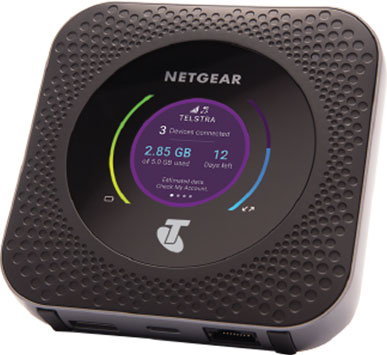
    Yesterday communications vendors Qualcomm, Netgear, Ericsson and Telstra, unveiled their Australian gigabit LTE service that gives users high speed internet connections over the 4G mobile network.

    Billed as a world’s first, Telstra will offer customers the Netgear supplied hotspots that can connect up to twenty devices over WiFi.

    Listening to the Telstra spiel yesterday, it wasn’t hard to conclude the company is making a pitch for the market frustrated by the National Broadband Network’s tardy rollout and patchy service.

    The service doesn’t come cheap though, as Finder’s Alex Kidman points out, an hour’s movie streaming on one device could easily cost $4500 dollars on Telstra’s current plans with one of the company’s executives emphasising the product is “aimed at the premium end of the market.”

    Being aimed at the premium end of the market is shame for Qualcomm as their spokespeople were keen to show off the gaming, AR and VR potential of the Snapdragon CPUs driving these devices. It would be a brave or very affluent family that bought one of these devices for their kids given the data costs.

    While the Telstra Gigabit LTE service might be an NBN replacement for deep pocketed customers, telco veteran John Lindsay points out the mobile network can’t support too many people doing so unless many more cells are deployed.

    For the moment the Telstra service is going to be attractive for companies needing high speed. low volume connections in the central business district and as the gigabit LTE upgrades roll out across the country, it will be useful for travellers as well as frustrated NBN customers.

    Ultimately the gigabit LTE product is another step toward the 5G networks that we’ll be seeing appear at the end of the decade, something that both the Ericsson and Telstra PR folk were keen to highlight.

    The key message for consumers and businesses is the rate of innovation in the mobile communications market is not slowing and another generation of connected devices is coming that will change things as dramatically as the smartphone did.

    Similar posts:

    • No Related Posts
  • Google scraps Project Ara

    Google scraps Project Ara

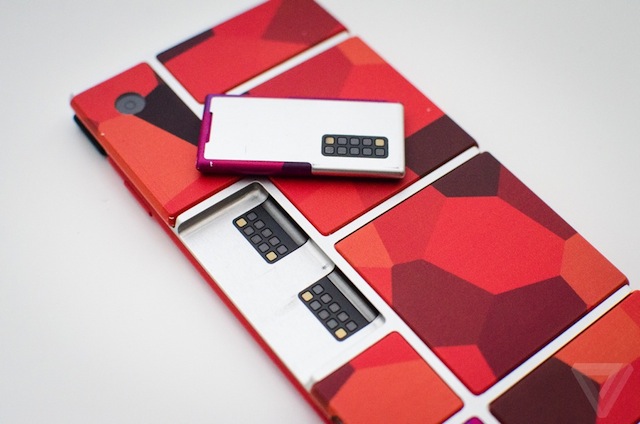
    Project Ara, Google’s experimental modular phone, seems to be doomed reports Reuters.

    Sadly this isn’t surprising as the indications of Ara’s demise have been around for a year.

    In some ways this isn’t surprising as Google retreated from the smartphone market at the beginning of 2014 with its sale of the Motorola handset business, the company’s notorious attention deficit disorder wouldn’t have helped the project’s survival chances either.

    Should Reuter’s report be true, then Google’s management will have shown again that the company isn’t prepared to stick with long term research projects and that journalists, not to mention researchers and developers, need to treat the company’s programs with some scepticism.

    For the Ara team, they’ve no doubt learned a lot in developing this project and it will be interesting to see how that knowledge is applied to other products, few of which will belong to Google.

    Similar posts:

    • No Related Posts
  • Lenovo and the hunt for profitable smartphone markets

    Lenovo and the hunt for profitable smartphone markets

    With Google’s Project Ara seemingly stalled, it was interesting to see Lenovo announce the Moto Z modular phone this week.

    The question remains though whether this concept is a solution looking for a problem however if Lenovo open the device up to third party accessory makers, we could see a surge of innovation similar to the ‘plug compatible’ IBM days which may drive consumer interest.

    Lenovo is still struggling to find its feet in the mobile phone market, so finding a compelling product to drive sales and improve margins in a largely unprofitable industry is a priority.

    It may be the other smartphone announced by Lenovo in San Francisco, the clumsily named Phab 2 Pro, could be where the manufacturer finds its niche with Google’s Project Tango 3D sensing technologies.

    The Phab 2 Pro’s 3D capability may be the beginning of accessible virtual and augmented reality systems however hands on reviews of the device indicate it may be some way from being ready for public release.

    Lenovo’s announcements show how the smartphone markets is currently in a state of transition as vendors try to find the next new profit and growth centres. To complicate matters, all the Android manufacturers are waiting to see what Apple’s next move will be.


    Similar posts:

    • No Related Posts
  • The advertising revolution still awaits

    The advertising revolution still awaits

    As usual Mary Meeker’s internet trends report lays out the current state of the online world.

    Two things that stand out in the mass of statistics are how the smartphone market is now commoditised and that the advertising funded media model is redundant on mobile with adblockers proliferating in China, India and Indonesia – the world’s three biggest emerging markets.

    While Mary Meeker flags those changes, she also continues to point out how broadcasting still gets a disproportionate spend of advertising revenue, something she’s been flagging for five years.

    For advertisers sticking with the media they know is understandable but it does open some opportunities for a great disruptions.

    The design of Meeker’s slides leave some people unimpressed though.

    Similar posts:

    • No Related Posts