Tag: disruption

  • Uber’s New Year’s test

    Uber’s New Year’s test

    Update: It appears Uber passed the New Year’s Eve test without problems. There were almost no complaints at all.

    New Years Eve 2011 was a tough night for customers of the Uber hire car booking service in New York City when fares surged as partygoers headed home.

    This year, Uber hopes to overcome problems by making sure customers are aware with big warnings of prices and even a sobriety test so users can confirm they know what they are doing when they agree to catch a cab.

    Uber’s dynamic pricing matches supply with demand, which means a more reliable service but also opens the company to allegations of price gouging during busy periods.

    Those allegations are exactly what happened in New York last year and in 2012 Uber’s risks of bad publicity are far higher as the service is now international with operations in cities like London, Paris and Sydney.

    Sydney will be the first city to encounter the effects of surge pricing and big risks lie in the Harbour City as Sydneysiders are used to fixed cab fares and enjoy a good whinge when things don’t work in their favour.

    Over a million people are expected on the shores of Sydney Harbour to watch the New Year’s Eve fireworks which means cabs and hire cars are at a premium.

    If Sydney has the triple fares expected in New York then Uber’s fare from Circular Quay to Bondi Beach will be around $150. This compares to the standard cab fare of around $30.

    Those markups will be exploited by the incumbent taxi companies and booking networks. We can expect a wave of stories over the next few days from tame journalists regurgitating the incumbents’ media releases.

    How Uber’s Australian management deals with this will be worth watching. One hopes they are prepared a tough week and don’t enjoy the festivities too far past midnight.

    Another problem for Uber is going to be Sydney’s mobile data networks which are horribly unreliable during peak periods. It may well be that Uber’s customers and drivers never get a fare anyway.

    Last year I was near the Habour Bridge and didn’t have a Vodafone signal from 8pm onwards. I’ll be comparing the performance of all three Aussie networks from the same place tonight.

    Similar posts:

  • NFC and the car key revolution

    NFC and the car key revolution

    Many businesses have made easy money by ‘clipping the ticket’ of the customer, new technologies like Near Field Communications and cloud computing threaten the easy profits of many organisations.

    During yesterday’s 2UE Tech Talk Radio spot where Seamus Byrne and I stood in for Trevor Long, host John Cadogan raised the prospect of replacing car keys and even dashboards with smartphones equipped with Near Field Communications (NFC) systems.

    Since NFC technologies appeared we’ve concentrated on the banking and payments aspects of these features but there’s far more to this technology than just smartphones replacing credit cards.

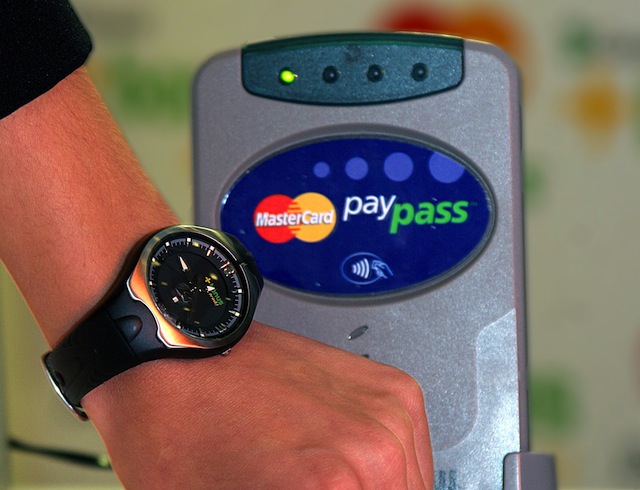
    With the right software an NFC equipped smartphone, tablet computer, or even a wristwatch could replace any electronic controller – this is already happening with Wi-Fi or Bluetooth enabled home sound systems, TV remote controllers and games consoles.

    An important effect of this is that it cuts out expensive custom replacements like bespoke control units or electronic car keys.

    Car keys are a good example of how what was previously a high cost profitable item becomes commodified and those business that had a nice revenue stream find new technology cuts them out.

    As keys become replaced with NFC enabled devices then then the scam of with new sets of keys costing up to a thousand dollars with fat profits for everybody involved becomes redundant.

    This is something we’re seeing across industries as incumbent businesses find their profitable activities disrupted by smart players using new technology.

    Just as manufacturing and publishing have been dealing with these disruptions for the past two decades, it’s coming to all industries and it’s going to take smart operators to deal with the changes.

    Similar posts:

  • Disruption and leadership

    Disruption and leadership

    As new communications tools appear, the challenge for managers is to deal with the disruptions these technologies bring to their businesses.

    Launching Deloitte Digital’s release of Taking Leadership in the Digital Economy last week the Executive Director of Telstra Digital Consumers, Gerd Schenkel, described how business is changing as consumers are being empowered by smartphones.

    A good example of this is the taxi industry where applications like GoCatch, InGoGo and Uber give passengers the opportunity to fight back against poor service from protected operators.

    Sydney is an attractive market for taxi industry disruptors as the current protected market fails both passengers and drivers. Travis Kalanick, the CEO of Uber, said at the Sydney launch of his service earlier last week that the city is one of the more ‘problematic” markets they’ve entered alongside San Francisco and Paris.

    That letting down drivers along with passengers is an also an important point – drivers get 80% of Uber’s charges while InGoGo and GoCatch free operators from poor booking systems that frustrate everybody involved in the industry while making the system as unaccountable as possible.

    Similar changes are happening in other industries as technology changes the way suppliers, customers and staff work.

    A good example of changing work practices is the adoption of Bring Your Own Device (BYOD) policies in the workplace. A few years ago in most businesses it was unthought of that staff could be allowed to bring their own computers to work. Today it’s common and soon the companies that don’t have a BYOD policy will be exception.

    BYOD has happened because of the arrival of cheap consumer devices like smartphones and tablets along with IT departments rolling out web based services.

    We’ve seen this before – probably the greatest influences on the shape of modern society had been electricity and the motor car. These, and many other technological changes have shaped today’s workplace.

    Many businesses though suffer for those changes as we’re seeing with the drying up of the newspapers’ “rivers of gold”.

    For Telstra this is seen in the demise of their phone directory business; Sensis was a true river of gold in the days of printed phone directories, but a number of management mis-steps over the last 15 years meant they totally missed the transition to digital.

    The tragedy for Telstra that Sensis’ strength in the local advertising market should have been a positive given Google’s failure to execute on their local search strategy.

    On reflecting about the struggle to deal with transitions to new technology, just how many business are like Sensis and Fairfax in having leaders that aren’t equipped to deal with these changes.

    The leaders of the 1980s whose business models were based on the assumption of economic growth underpinned by easy credit, cheap energy and demographic growth and now finding those factors are moving against them at the same time technology change is disrupting their industries.

    For the upcoming generation of leaders, both in business and government, having the ability to adapt to the changed power relationships between customers, suppliers and workers is going to be essential. For those steeped in last century’s certainties, it’s going to be a tough time.

    Similar posts:

  • Disrupting the education ripoff

    Disrupting the education ripoff

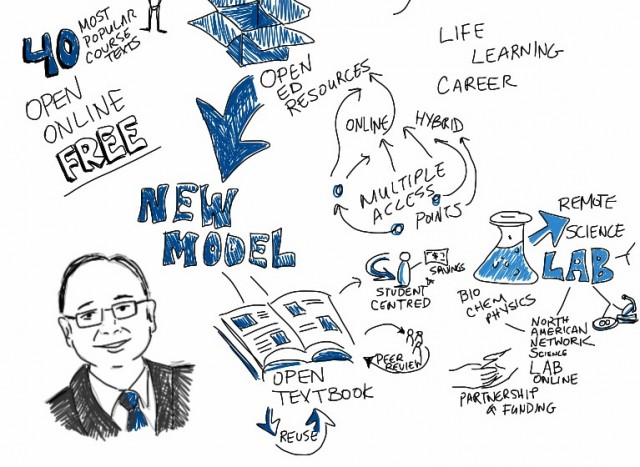
    British Columbia’s government has announced they are going to make most undergraduate textbooks free online or printed at low cost as part of their BC Campus program.

    One of the first lessons for university students is that they are going to be robbed at the campus bookshop – text books are one of the greatest rorts on the planet.

    This scam takes several forms with faculties stipulating the latest editions as course material through to individual professors having a nice little earner in demanding their, often poorly written and out-of-date, textbooks being essential reading for any unfortunate student taking their classes.

    Naturally all of these books are sold at eye wateringly high prices far in excess of what equivalent texts are selling for outside the university bookshop.

    Given all of this it’s no coincidence that the publishers who specialise in academic texts have been the least affected by the online models that have undermined the business models of the mainstream book sellers.

    Over the years there’s been a range of business ideas to setup exchanges to circumvent this legally sanctioned extortion racket and most have failed as the universities and faculty members have protected their cash cows with various tricks to prevent students from buying reasonably priced textbooks.

    That British Columbia’s government now sees that this is a barrier for cash strapped and debt ridden students is an encouraging sign and one that recognises the 1990s model of treating students – particularly international students – as easy money is over.

    For the Canadian and Australian education sectors which had come to depend upon an expensive “bums on seat” model of financing their faculties, the waves of change and competition is now threatening them.

    Probably the biggest threat to this model is from the top tier universities offering courses online. This is radically changing higher education as it’s making it easier for poorer people to access the best institutions.

    For the second rate institutions, this means they have to be providing real value for the fees they charge. A certificate purporting to be a degree is not going to be good enough.

    While it’s too early to call the end of the textbook ripoff – people don’t let juicy little rorts go easily – its days are numbered. Although we may find the old scams replaced by something DRM related.

    Image from Visual Notes of Honourable John Yap’s announcement at #opened12 / Giulia Forsythe / CC BY-NC-SA

    Similar posts:

  • Throwing down the gauntlet

    Throwing down the gauntlet

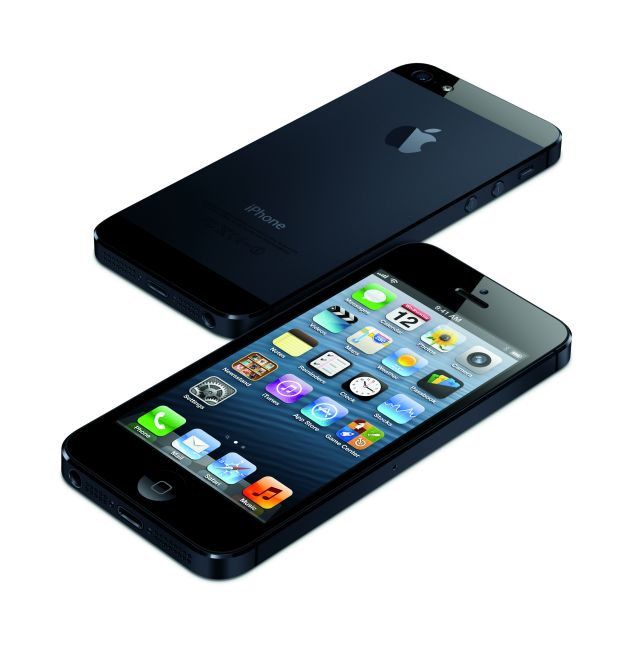
    The interesting thing with Apple’s announcement of  the new iPhone and iPod was the emphasis on gaming with two demonstrations showing off the capabilities of the new devices.

    While the iPod and iPhone can’t compete with gaming consoles in a straight out hardware comparison, customers like the idea of being able to play advanced games on their handheld devices.

    More worryingly for the console manufacturers is the pricing in the App stores. The traditional gaming model of expensive games subsidising devices starts to fall over when 99 cent, or even $19.99 downloads kill the fat margins.

    It’s not just games companies threatened by the iPhone and Android smartphones, probably the biggest threat from today’s launch is to Microsoft.

    Last week’s botched Lumia 920 launch throws into stark relief how Windows Phone is struggling to meet its October release date.

    The pressure is now right on Microsoft to deliver, the continued evolution of the iPhone is also leaving Blackberry and Motorola increasingly looking flat footed and vulnerable in a market that’s leaving them behind.

    Similar posts: