Tag: payments

  • Changing the payments industry

    Changing the payments industry

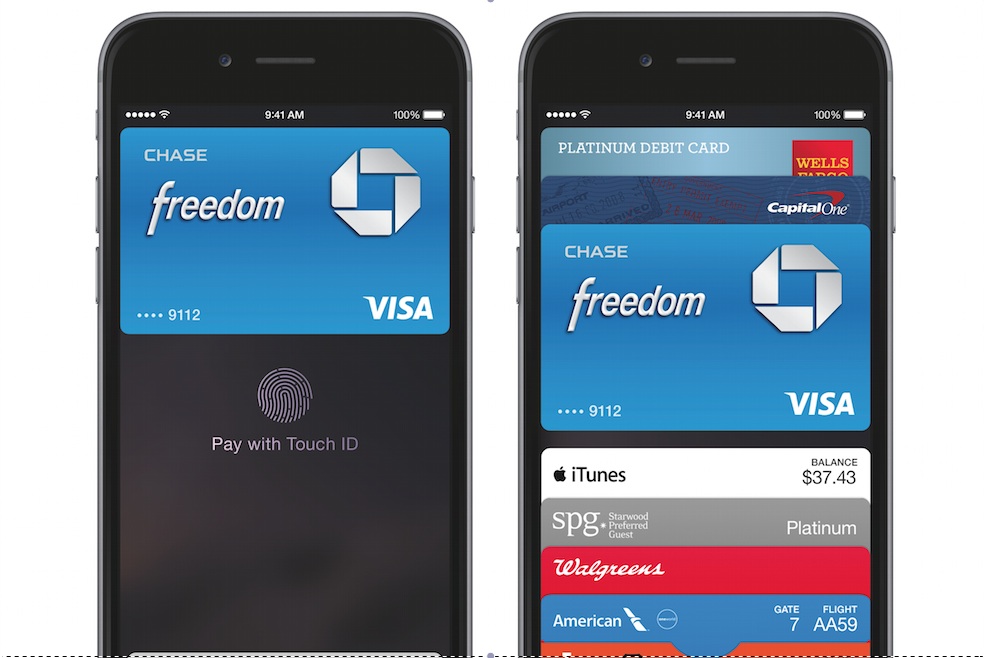
    It didn’t take long for the effects of Apple’s payment service to be felt by the industry, within a day of the announcement Bloomberg reported Apple is negotiating with US banks to shift transaction fees from merchants.

    At the same time Bank Innovation reports the major credit card companies are considering changing the definition of ‘cardholder present’ rules which would make app based purchases cheaper.

    The changes Apple Pay is bringing in is part of a wider move to easier, frictionless commerce as Stripe co-founder John Collison discussed on this site last week.

    For the banks and credit card companies this means a very different operating environment. What was once a very profitable business is now changing rapidly and profits may not be so easy to come by.

    Similar posts:

  • Apple and the long game

    Apple and the long game

    As expected, Apple announced their new range of iPhones and a smart watch today with many digital trees being felled as the tech media falls over to describe all the shiny features of the new devices.

    Buried in Apple’s announcements though are the company’s real long game in payments and the Internet of Things.

    For the IoT, the various ‘kits’ Apple have announced in the last year — HomeKit, HealthKit and now CloudKit — are the serious plays in this space as they bundle together programs, devices and data streams across health and smarthome applications.

    CloudKit moves Apple onto another level as it makes it easier for developers to build back end applications that tie into smart devices; even if someone isn’t using Apple equipment they still may find themselves firmly in the walled garden of Cuptertino.

    The long awaiting release of Apple Pay leverages iTunes’ strength as a payment platform, bundling a secure chip into the new iPhone adds to the company’s pitch of being a trusted partner to merchants and payments processors.

    What today’s announcements of new hardware, software and APIs indicate is Apple’s shoring up the perimeters of its walled garden.

    For it’s competitors, this raises the ante; Google Wallet has nothing like the market penetration or customer acceptance that iTunes has and earlier this week Amazon effectively admitted the Fire smartphone has been a failure by slashing prices. Facebook has made promising noises about payments but still remains locked in an advertising driven business model.

    While there’s no doubt the new iPhone will be a success, although the jury is out on the smart watch, Apple’s real game is in controlling a large part of the payments industry and the internet of things. Today’s announcements are a key step in that strategy.

    Similar posts:

    • No Related Posts
  • Beating the 1980s business model

    Beating the 1980s business model

    Interviewing Stripe co-founder John Collison in the company’s crowded, noisy lunch room in San Francisco’s Mission District is a good place to appreciate how quickly the online payment service has grown since it was founded three years ago.

    Stripe was founded after twenty-four year old Collison and his brother Patrick encountered problems with online payments in their previous businesses, “we came to Stripe because we had built apps and webservices before and it was phenomenally difficult to take a product you had built and turn it into a business.”

    “At the time you had two options; you could turn your business over to PayPal, which was problematic for a whole bunch of reasons, or you’d build something from scratch.”

    “It was clear to us that neither of the options were very good so we went about building something better.”

    Silicon Valley’s strengths

    Since its establishment Stripe has grown from ten employees to 150, something the founder believes shows the strength of California’s Bay Area over areas like Collison’s native Ireland.

    “One of the things that I like about Silicon Valley is that people here tend to be relatively risk tolerant. Joining an unknown internet payments company three years ago, most people would say ‘you’re out of your mind’. But the psyche around here is that’s a reasonable thing to do.”

    Another aspect that attracts Collison to San Francisco is that most of his employees at Stripe have run their own businesses or startups themselves. Having a workforce of risk tolerant, independent self starters makes it easier to manage a fast growth company.

    Pitching for funding

    The Bay Area’s appetite for risk is reflected in how investors look at businesses; “in the startup world, people like to maximize the opportunity rather than reduce the risk,” observes Collison.

    Collison’s advice for startups seeking funding is to get have users on board that validates the idea, “when we pitched Peter Thiel we had production user for four or five months. What made us think there was something here was that those users were really passionate.”

    The other attraction for Thiel and other members of the ‘PayPal mafia’ – Thiel’s fellow PayPal founders Elon Musk and Max Levchin are also investors in Stripe – was their first hand dealings with the problem of online payments.

    “With the PayPal guys specifically, they really get this. Early on this was what they were trying to do with PayPal – make it easy for people to move money around the world.”

    Entering the era of mobile commerce

    The problem today that Collison sees with PayPal is that it is a product based on a desktop view of online commerce in a time where the industry is moving to mobile.

    “One of the things that has held online commerce back for so long is the purchasing experience has such a high barrier to it.”

    ”We’ve replicated the mail order form on the internet. It feels to me that in five to ten years time we will not be in the same world with people like Google and Facebook improving the identity story. That’s exciting because that helps merchants sell more.”

    “That whole model comes from a desktop era so if your building a lyft or a mobile site it doesn’t make much sense.”

    Beating the 1980s business model

    For the credit card and banking industry, the payments sector is even further behind. Collison believes that until recently the payments industry was based upon a 1980s business model where the costs of inefficiency were pushed onto merchants and small business.

    “All the banks and companies that offered services at the time were operating in the 1980s,” says Collison. “The business model was based on the old way of your customers being people within a fifteen block radius, on the internet your customer base is the whole world.”

    Building new industries

    With Stripe Collison sees an opportunity for new industries to develop out of easier ways of collecting payments, particularly given much of the world’s population in areas like Africa and China doesn’t have credit cards.

    “If we just building a business to take transactions from PayPal and get them onto Stripe, that’s not that interesting. What is interesting is if we can create new types of transactions that would not have existed otherwise.”

    “By providing better infrastructure for anyone to build a global business. That will change the kind of things people will build.”

    Similar posts:
    • No Related Posts
  • Is NFC ready for prime time

    Is NFC ready for prime time

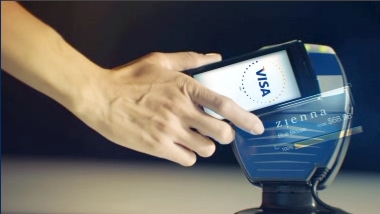
    One of ‘coming real soon’ technologies of our times is Near Field Communications (NFC), a short range radio service connecting suitably equipped electronic devices.

    NFC has been tipped to arrive ‘real soon now’ for several years as mobile phone companies, banks and telcos fight to control the payments system.

    The service hasn’t taken off for a number of reasons; it’s clunky to use, the technology itself isn’t consistently applied and many smartphones don’t have the feature, the most notable being the iPhone.

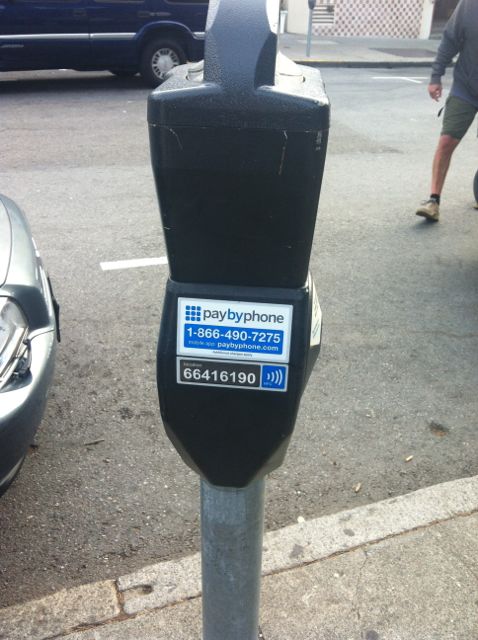
    Most of the applications cited for NFC are contactless payment services where a customer can wave a phone to pay for things, a good example is this parking meter in San Francisco.

    NFC-parking-meter-detail

    On the other side of the Pacific, Google are running a campaign in Australia encouraging commuters to try the NFC features that are built into most Android phones.

    IMG_4447

    Unfortunately the technology doesn’t work, as the comments to this blog post indicate. The users’ problems illustrate why NFC is struggling; it’s clunky, unreliable and customers don’t understand it.

    It’s notable the Google campaign includes a QR code, another technology that’s been pending for nearly a decade.

    Both are doomed though while customers struggle to use them.

    We may well see both QR codes and NFC succeed eventually, but right now they are the classic case of a technological solution searching for a problem to solve.

    Similar posts:

    • No Related Posts
  • 2UE Weekend Computers, 29 December 2012

    2UE Weekend Computers, 29 December 2012

    This Saturday from 3.10 pm Seamus Byrne and myself will be standing in for regular guest Trevor Long to discuss tech with John Cadogan on Radio 2UE.

    We’ll be taking calls on the Open Line, 13 13 32 or tweet to @paulwallbank while we’re on air.

    Some of the things we’ll be covering include the following.

    What type of smart phone?

    We have the iPhone, Android and Windows phones. Which ones are better?

    • The iPhone’s been dominating for the last few years, but now  Android is overtaking it. Why’s that?
    • Microsoft are pretty late with a mobile phone, can they catch up?
    • What’s happened to the other makes like Nokia, Blackberry and Motorola?
    • So what if you don’t want a smartphone, what if you just want something to make phone calls?

    Checking your phone and Internet plans

    There’s was story this week about how people are spending too much on their mobile phone and Internet plans. What should people be looking at and how often should they check their plans?

    Paying for stuff with your mobile

    You can use your phone as a boarding pass on some airlines, now Telstra and Vodafone are looking at ways to use your mobile to pay for groceries with your mobile phone.

    • How does the system work?
    • Who takes the money?
    • Is this safe?
    • How far is this away?

    Your views, comments or questions are welcome so don’t be shy about calling in.

    Similar posts: