Tag: sales

  • Don’t mess with Elon Musk

    Don’t mess with Elon Musk

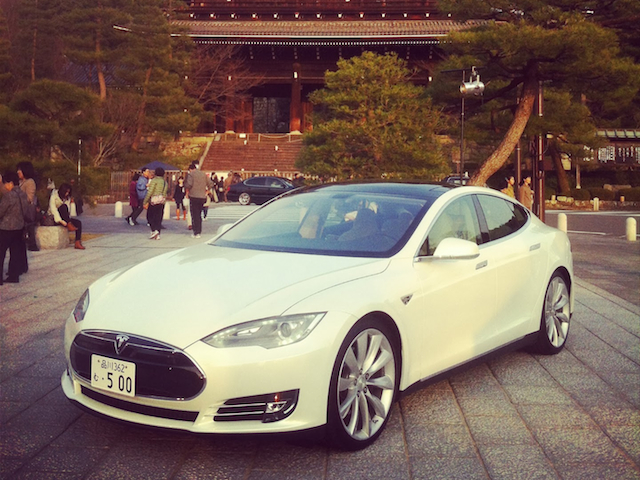
    Criticise Tesla’s launch parties and your car order may be cancelled, reports The Guardian.

    Stewart Alsop, an Californian venture capitalist, wrote an open letter to Tesla’s founder Elon Musk claiming the launch of the Tesla X was ‘a disgrace’.

    Musk responded by cancelling Alsop’s Tesla order.

    There’s a range of arguments about the customer always being correct, the customer’s right to criticise a product or the risks of making online comments but what it definitively shows is the power of being the seller of something people want.

    I suspect Stewart Alsop will get his Tesla eventually, but the boss will make him squirm.

    Similar posts:

  • Amazon and the customer focus

    Amazon and the customer focus

    I’m currently attending the Amazon Web Service Re:Invent conference in Las Vegas.

    One of the constant themes in writings about Amazon is founder Jeff Bezos’ focus on delivering the best service and cheapest prices to the customer, even if it does sometimes rely on some less savoury tactics to chase out smaller competitors.

    That ethos is on show at this convention with AWS Senior Vice President, Andy Jassy saying at the post opening keynote press conference,  “our strategy is to be customer focused, not only do all of our strategies and tactics work backwards from what our customers want but ninety percent of our roadmap is driven by what customers tell us matters to them.”

    He did however fall for the temptation of dissing some of his competitors in the IT market saying, “most technology companies, particularly old guard companies, have lost their will and the DNA to invent. They acquire most of their invention that’s expensive and it really doesn’t fit that well together.”

    “We’re extremely long term orientated,” Jassy continued. “We don’t call you on the last day of the quarter and say ‘boy, have we got a deal for you’. You won’t see us auditing our customers and fining them. We’re trying to build relationships with our customers that will outlast everyone in this room.”

    Jassy’s points are pertinent to the current business world, the old model of seeing your customer as being a milk cow – something the older software companies were terribly guilty of – is dying. The future needs a lot more focus on treating the customer with respect.

    Similar posts:

    • No Related Posts
  • Shifting the cloud business model

    Shifting the cloud business model

    “What’s the biggest risk to your business?” was one of the questions asked of Netsuite CEO Zack Nelson during a post keynote discussion at the Suiteworld event in San Jose yesterday.

    Nelson’s response was the shift to transaction based businesses and cited cloud based human resources company Zenefits as an example.

    The transactions model can work two ways with either a fee being charged for each transaction – something that data analytics Splunk does – or Zenefit’s model of taking third party commissions.

    A commission driven business

    Zenefits doesn’t charge for its software instead making money from commissions paid by companies they refer users to. When a client needs workplace insurance or a new benefits package, the service gets a fee from the provider.

    Investors love the idea with the company yesterday raising $500 million in a round that values the business at $4.5 billion dollars after just two years since being founded.

    Regulators however don’t like its less than transparent commissions with the service in trouble in a number of US states and it’s clear to see how such a revenue model would hit problems in countries with strong disclosure rules.

    Both of the transaction models present a threat to current cloud computing software businesses such as Netsuite and Salesforce that charge fixed license fees based on the number of users and the features they want. Both Splunk and Zenefits on the other hand give their software away.

    Disrupted disrupters

    Just as the cloud providers’ licensing model disrupted the traditional massive negotiated contracts for enterprise software and the fixed cost box model for small business, the online companies themselves might be facing their own disruption to the way they make money.

    For executives like Zach Nelson, shifting from one lucrative model to another more uncertain revenue source will be something keeping them awake for a while longer.

    Similar posts:
    • No Related Posts
  • Links of the day – Mind games, wine growers and the Naples mafia

    Links of the day – Mind games, wine growers and the Naples mafia

    Mind games, wine growers and the Naples mafia are among today’s links along with last person in Britain who lived under Queen Victoria passing away and a touching series of portraits showing the end of the film photography industry.

    Cutting out the middle man

    Reka Haros is a wine maker in Italy’s Venuto region. Like many small producers her winery struggles with distribution and sales in a crowded market. Reba’s solution of going direct to the customer is one that many businesses should be considering in a noisy world.

    Life in protection

    I don’t fear death, I fear being discredited. The story of Italian journalist Roberto Saviano and his eight years in protection after writing about the Naples mafia.

    Picturing the decline of film photography

    Canadian photographer Robert Burley travelled the world with his 4×5 field camera to document the end of analogue photography. It’s a poignant portrayal of how an entire industry comes to and with one technological change.

    Last of the Victorians

    Ethel Lang, the last surviving Briton to live under the reign of Queen Victoria, died last week at the age 114.

    Manufacturing false memories

    A frightening physiological experiment shows a cunning interviewer can convince most of us  we committed crimes which we are totally innocent of. This truly is a disturbing story.

    Similar posts:

    • No Related Posts
  • Lowered expectations – What is the future for Apple?

    Lowered expectations – What is the future for Apple?

    Last Friday I had a story in Business Spectator on the future of Apple in light of the company’s warning of a 20% fall in revenue next quarter.

    The clear message from Apple’s executives was that the company is facing a terminal decline in iPod sales and the iPhone – it’s most profitable and highest selling product – is facing slower sales.

    So the search is on to find something that will replicate the iPhone’s success, with the biggest candidate being the iWatch.

    The problem with that is the entire wearable technology market is only forecast to be $6bn which is a seventh of Apple’s $42 billion profit last year, so the iWatch can never replace falling iPhone sales.

    It may well be for Apple that the period of massive profits and growth is drawing to an end, it doesn’t mean the company is dying – for a start they has nearly $200bn in cash reserves and a healthy $150 billion in sales each year.

    Short of Tim Cook unveiling something similar to the iPhone, the future for Apple is probably going to be a bit modest than past few years of huge growth, that’s not a bad thing.

    Rather than being the end of Apple, it’s more a revision to the role the company has held for most of it’s existence – a high profit, niche business that sells on quality and brand rather than fighting in the commodity markets.

    Similar posts:

    • No Related Posts