Tag: smartphones

  • On being evil

    On being evil

    “Don’t be evil” are the opening words of Google’s corporate code.

    When it was framed in the late 1990s there was one company in particular everyone in the tech industry thought of when the word ‘evil’ was being used.

    At the time Microsoft defined evil in the technology industry. The main reason was their crushing of real or potential competitors like Netscape, Java or the troubled IBM joint venture of OS/2.

    Topping everything though was Microsoft’s tactic of fake error messages designed to scare customers away from the competing DR-DOS system in the early 1990s.

    So it’s rather delicious that Microsoft seems to be getting a taste of its own medicine twenty years later as Google Maps returns an error message on Windows Phones.

    This is particularly galling for Microsoft as Windows Phone is essential for the company’s resurgence and, as Apple have learned, maps are a critical feature for smart phone users.

    It’s too early to accuse Google of having become evil as Microsoft did during their period of dominance as Tim Wu discusses in Why Does Everyone Think Google Beat The FTC but the search giant is flexing its muscles on many fronts.

    For Microsoft, they are learning what life’s like when you’re not the toughest, meanest kid on the block.

    Karma can be a real bitch.

    Similar posts:

  • 2UE Weekend Computers, 5 January 2013

    2UE Weekend Computers, 5 January 2013

    This Saturday from 3.10 pm I’ll be discussing tech with John Cadogan on Radio 2UE as the stand in for regular guest Trevor Long who’s in the US for the Consumer Electronics Show.

    We’ll be taking calls on the Open Line, 13 13 32 or tweet to @paulwallbank while we’re on air. 2UE can be heard online or on 954 AM in the Sydney region.

    Some of the things we’ll be covering include the following which we’ll be covering after John speaks to Trevor Long in Las Vegas.

    R18 + video games

    An adult’s only rating category for computer games has come into effect across Australia. The new R18+ will make it illegal for people under 18 to hire, buy or view any games given the rating, while it will be illegal for retailers to sell R18+ games without the new markings.

    The new laws bring computer games into line with the classification system for films and other material and make Australia more consistent with international standards.

    Google is working on an X phone

    Google is working with Motorola on a handset code-named ‘X Phone’ that’s aimed at grabbing market share from Apple and Samsung.

    Google acquired Motorola in May 2012 for $US 12.5 billion to bolster its portfolio as its Android operating system competes with Apple and Samsung.

    It’s believed that the handset will feature an imaging and gesture-recognition software developer. The new handset is due out next year.

    The first civil lawsuit against Instagram

    A Californian Instagram user has levelled breach of contract and other claims against the company.

    The lawsuit, filed by Finkelstein and Krinsk, says that customers who do not agree with Instagrams terms can cancel their profile, but they then forfeit their rights to photos they had previously shared on the service.

    Instagram, which allows people to add filters and effects to photos and share them easily on the Internet, was acquired by Facebook earlier this year for $US 715 million.

    It announced its revised terms of service last week and also announced its mandatory arbitration clause that forces users to waive their rights to participate in a class action lawsuit except under very limited circumstances.

    Easing of restriction on Internet use on flights

    The Federal Communications Commission (FCC) has approved an application process for airlines to obtain broadband Internet licenses aboard their planes. Previously airlines have been granted permission on an ad-hoc basis.

    Airlines need the FCC’s permission to tap into satellite airwaves while in flight so that passengers can connect to the Internet.

    They also need permission from the Federal Aviation Administration, which oversees the safety of inflight Internet systems.

    The death of Netbooks

    Netbooks have been overtaken by tablet computers and vendors are seeking to push more expensive items to their customers.

    The Internet’s TCP/IP language celebrates its 30th birthday

    Known as ‘flag day’ January 1, 1983 was the first time that the Us Department of Defence-commissioned ‘Arpanet network’ fully switched to use the Internet protocol suite communications system.

    It began as a military project in the U.S in the late 1960’s and it paved the way for the arrival of the World Wide Web.

    Summer sales of mobile phones are creating e-waste stockpiles

    Over a third of Australians have bought or will consider buying a new mobile phone over Christmas and the summer sales.

    This is contributing to the 22 million old mobile phones in Australia.

    If these 22 million phones were recycled, they would divert nearly 120 tonnes of plastic from landfill.

    Four out of 10 Australians have two or more old mobile phones lying around the home father dust.

    Mobile Muster is the official recycling scheme of mobile phones.

    You can drop your mobile phone off at a Mobile Muster Collection Point or pick up a reply-paid environment at any Australia Post store and post it in.

    Your views, comments or questions are welcome so don’t be shy about calling in on 13 13 32 and Trevor Long will be back next week.

    Similar posts:

  • NFC and the car key revolution

    NFC and the car key revolution

    Many businesses have made easy money by ‘clipping the ticket’ of the customer, new technologies like Near Field Communications and cloud computing threaten the easy profits of many organisations.

    During yesterday’s 2UE Tech Talk Radio spot where Seamus Byrne and I stood in for Trevor Long, host John Cadogan raised the prospect of replacing car keys and even dashboards with smartphones equipped with Near Field Communications (NFC) systems.

    Since NFC technologies appeared we’ve concentrated on the banking and payments aspects of these features but there’s far more to this technology than just smartphones replacing credit cards.

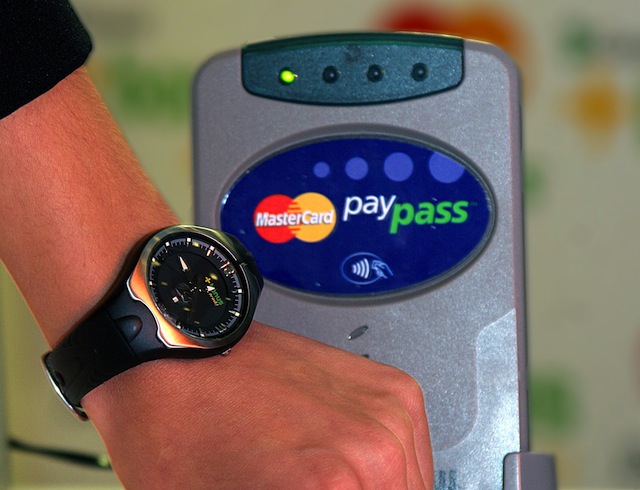
    With the right software an NFC equipped smartphone, tablet computer, or even a wristwatch could replace any electronic controller – this is already happening with Wi-Fi or Bluetooth enabled home sound systems, TV remote controllers and games consoles.

    An important effect of this is that it cuts out expensive custom replacements like bespoke control units or electronic car keys.

    Car keys are a good example of how what was previously a high cost profitable item becomes commodified and those business that had a nice revenue stream find new technology cuts them out.

    As keys become replaced with NFC enabled devices then then the scam of with new sets of keys costing up to a thousand dollars with fat profits for everybody involved becomes redundant.

    This is something we’re seeing across industries as incumbent businesses find their profitable activities disrupted by smart players using new technology.

    Just as manufacturing and publishing have been dealing with these disruptions for the past two decades, it’s coming to all industries and it’s going to take smart operators to deal with the changes.

    Similar posts:

  • 2UE Weekend Computers, 29 December 2012

    2UE Weekend Computers, 29 December 2012

    This Saturday from 3.10 pm Seamus Byrne and myself will be standing in for regular guest Trevor Long to discuss tech with John Cadogan on Radio 2UE.

    We’ll be taking calls on the Open Line, 13 13 32 or tweet to @paulwallbank while we’re on air.

    Some of the things we’ll be covering include the following.

    What type of smart phone?

    We have the iPhone, Android and Windows phones. Which ones are better?

    • The iPhone’s been dominating for the last few years, but now  Android is overtaking it. Why’s that?
    • Microsoft are pretty late with a mobile phone, can they catch up?
    • What’s happened to the other makes like Nokia, Blackberry and Motorola?
    • So what if you don’t want a smartphone, what if you just want something to make phone calls?

    Checking your phone and Internet plans

    There’s was story this week about how people are spending too much on their mobile phone and Internet plans. What should people be looking at and how often should they check their plans?

    Paying for stuff with your mobile

    You can use your phone as a boarding pass on some airlines, now Telstra and Vodafone are looking at ways to use your mobile to pay for groceries with your mobile phone.

    • How does the system work?
    • Who takes the money?
    • Is this safe?
    • How far is this away?

    Your views, comments or questions are welcome so don’t be shy about calling in.

    Similar posts:

  • Open Table and free mobile restaurant sites

    Open Table and free mobile restaurant sites

    One of the big challenges facing restaurants is how customers are moving to the mobile web, diners are using their smartphones to find establishments and expect to make bookings directly.

    To help their customers deal with this move to smartphones, restaurant booking service Open Table is offering a free mobile website for their clients so establishments can have sites that are usable on smaller screens.

    Whether this is worthwhile depends upon whether the restaurant is already using Open Table, the monthly fees are quite high at $200 per month plus a relatively low $1 commission per cover so it certainly isn’t worth subscribing to their service just to get a mobile optimised website.

    For restaurants already using their service it’s best to check if your existing website already has a mobile feature as having two online addresses is only going to confuse customers.

    Businesses using WordPress based sites just need to install a plug like WordPress Touch which detects when a smaller screen is viewing your site to change.

    Open Table itself is somewhat of an internet old timer having been founded in 1998, making it one of the Tech Wreck survivors, and listed on the NASDAQ market eleven years later.

    That a company like Open Table is recognising a mobile web presence is essential for hospitality businesses should be a further warning to restaurants, cafes and hotels that they need to take smartphones seriously.

    Just as thirty years ago it was essential to have a Yellow Pages listing, today you’re missing out on customers if they can’t find you on their phones.

    Regardless of whether you’re using Open Table or any other service, you need to have some form of mobile site working for you.

    Similar posts: