Tag: cities

  • You’re going to need a bigger app

    You’re going to need a bigger app

    “It has to be disruptive technology,” bleated the consulting firm facilitator at the Future Transport Summit in Sydney earlier this week.

    The hapless, but well paid, consultant — a depressingly frequent feature of Australia’s current ‘ideas boom’ — was protesting when one of the participants at his ‘ideation session’ had raised topics such as integrated timetables and changing commuting habits.

    Mr Consultant’s running orders for his ‘ideation session’ were to focus on ‘digital disruption’ and his employer;s cluelessness illustrates a danger for business leaders and policy makers.

    Selling the snake oil

    Digital disruption is real however it’s not just the only factor facing governments and industries. Demographics, economics, politics and climate change will have greater influences on business and society.

    Uber, the favourite lovechild of those spruiking digital disruption snake oil, is a very good case in point. While the service certainly has disrupted the taxi and motor vehicle industries, these sectors were facing major challenges as governments enacted policies to reduce carbon emissions, voters became tired of cartel like taxi companies and the Western world’s young and wealthy moved back to the cities and away from owning motor vehicles.

    If anything, Uber was the result of GenY entrepreneurs like Travis Kalanick finding existing services didn’t meet their needs rather than the result of technology desperately looking for a problem to solve finding a niche.

    Complex changes

    While the smartphone was critical in Uber’s success in disrupting the global taxi industry, technology was only one facet of a much more complex set of changes.

    The motor industry is a good example of the complexity of change. A hundred years ago it was clear the transport industry was about to be disrupted by the automobile, it was by no means obvious access to affordable personal transport would allow urban sprawl and the suburbanisation of western society.

    Coupled with the motor car and truck, the availabilty of mains electricity meant refrigeration also became accessible which lead to the rise of supermarkets after World War II. This disrupted the local corner store in ways shopkeepers could never have foreseen in the interwar years.

    Shifting demographics

    Now, the opposite is happening as the young and affluent reject long commuting times from distant suburbs and city densities start increasing.

    The social and economic factors that drove Uber are affecting public transport usage patterns and it’s no coincidence that the cities where ride sharing services have most successful, such as Sydney, also have underfunded public transport systems that are struggling to meet their population’s demands.

    Which brings us back to the foolishness of discussing the future of transport only in relation to technology. Smartphones, apps, big data and the internet of things will all be critical parts of future transportation but the social and economic factors will shape how people use the networks.

    Focusing on technology while ignoring the other big influences is a folly that will cost businesses and government dearly. Although one suspects the management consultancies will do well regardless of how well change is managed.

    Similar posts:

  • Breaking the ennui – thoughts on new projects

    Breaking the ennui – thoughts on new projects

    To snap myself out of the current ennui that has swamped me, I’ve a few ideas for a crowdfunded project. I’m interested in what people think of them, the first two are Australian focused while the others are more international.

    All five of them revolve around the changing global economy and its effects upon societies, communities and individuals.

    These are the ideas and I’d be delighted to hear some thoughts on them.

    True Australian stories

    Australia is in a time of transition. The upcoming Federal election may well determine the nation’s development over the next half century.

    The idea of this project is to get out into the regions and suburbs which aren’t being covered – if not outright ignored – by the mainstream media and talk to the communities, people and businesses about how their worlds are changing and what they are doing to deal with it.

    Re-inventing Australia

    After a quarter century of continuous growth Australia has to make decisions on where its economy goes next. Successive governments have identified resources, agriculture, tourism, finance and education as the ‘five pillars’ of the economy.

    This project talks to the people trying to make Australia’s five pillars work along with looking at those trying to build alternatives.

    The future workforce

    How does the global future workforce look? Will we be all contractors for Uber or Upwork or are there other models developing around the world.

    What does the next phase of the industrial revolution look like for workers in both the developed and emerging economies? This idea is inspired Sebastião Salgado’s work.

    The Second City project

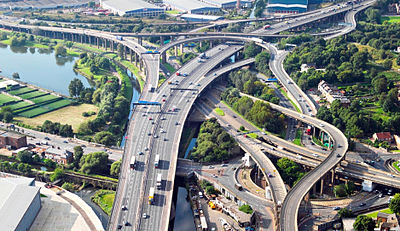
    Every major city has a less prosperous neighbour – Sydney and Newcastle, Melbourne and Geelong, London and Birmingham, Beijing and Qingdao, San Francisco and Oakland are examples.

    How are those second cities faring in a global economy that’s increasing the wealth of the rich? What are the leaders of those communities doing to reposition themselves.

    The next Silicon Valleys

    While we’re focused on today’s global centres like California’s Bay Area, London and Shanghai there are other emerging industrial centres that will be the next generation’s Silicon Valleys. Who are they and what do they look like?

    I’d be delighted to hear readers’ thoughts on these projects and any other ideas for similar ventures.

    Similar posts:

  • Barcelona fears becoming Venice

    Barcelona fears becoming Venice

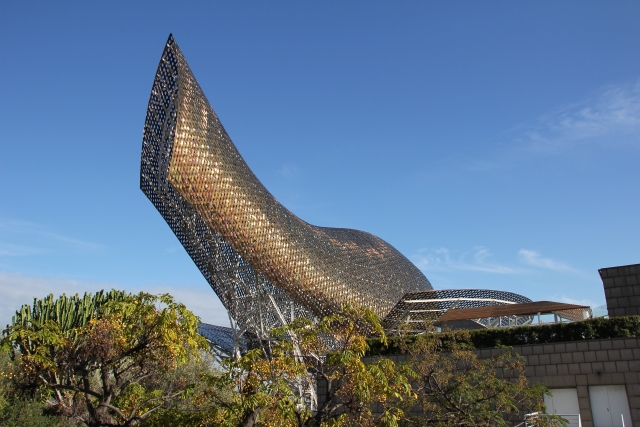
    “We don’t want to become like Venice,” is the cry from Barcelona’s new government.

    Comparing Venice to Barcelona is problematic given the Spanish city has a population of 1.6 million compared to the Italian tourist centre’s 60,000. The tourist industry has long overwhelmed Venice.

    A more relevant discussion is how does a city like Barcelona avoid a decline like Venice, in my interview with the deputy mayor Antoni Vives in 2013 he described his aim to see the city develop new industries and build on its existing strengths.

    The new mayor’s concerns about soaring property costs displacing residents are valid –and shared with every major city in the world.

    For Barcelona though the real challenge is to stay relevant in a changing global economy. For the moment the Spanish city has a long way to go, and five hundred years, before its leaders can worry about becoming the new Venice.

    Similar posts:

  • Do successful cities need to be walkable?

    Do successful cities need to be walkable?

    can Wellington become a global tech hub? raised an interesting question, how big does a city need to be in order to be successful in the new economy?

    Does a compact city with a few hundred thousand people have an advantage over several million inhabitants sprawling across a huge metropolis?

    The romantic view is the smaller cities should prevail but history, particularly given the wide sprawl of Silicon Valley, indicates the opposite.

    While Silicon Valley, and most of the other Twentieth Century industrial hubs like Detroit, were sprawling conurbations it may be this era’s centres are more compact with towns being walkable.

    Certainly this is what we’re seeing with the tech industry’s shift into San Francisco as workers find they’d rather walk or cycle to work than spend hours on freeways each day.

    So it may be the newer breed of businesses and industries that don’t need massive infrastructure also don’t need to sprawl.

    If that turns out to be true then cities like Wellington could do well.

    Similar posts:

  • Seizing the agricultural technology opportunity

    Seizing the agricultural technology opportunity

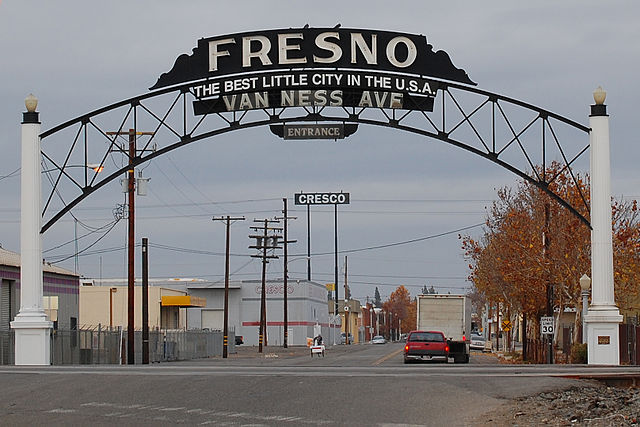
    Does the real opportunity for tech entrepreneurs lie in the agriculture sector? An article by James Fallows looking at Fresno’s startup community for the Atlantic Magazine suggests that might be the case.

    Fresno, in California’s agricultural Central Valley, doesn’t have the glamor of the global startup centres but offers a focus on neglected sectors as Fallows quotes Jake Soberal of Bitwise Industries.

    “My guess is that 5 to 10 percent of the tech need of the farming industry is now being met,” Fallows quotes Soberal as saying. “You could build a technology industry in Fresno based on that alone, not to mention the worldwide need in agriculture.”

    While there isn’t a great need for another coffee app, pizza delivery service or online store, there are far more opportunities in other sectors to address unmet needs.

    This is probably where the opportunity lies for cities like Fresno that are trying to create their own mini Silicon Valley – build a technology sector to address the needs of your existing industrial base.

    In agriculture there’s a plethora of Internet of Things, Big Data, analytics and other technological applications that addresses issues in the industry. Farming is not the only sector which presents these opportunities.

    Fresno’s ambitions aren’t unique but as Fallows points out this is not a zero sum game and there’s no reason why dozens of cities shouldn’t be able to build their own niches with new technologies.

    Picture of Fresno from David Jordan via WikiPedia

    Similar posts: