Tag: property

  • San Francisco’s stuggle with property prices

    San Francisco’s stuggle with property prices

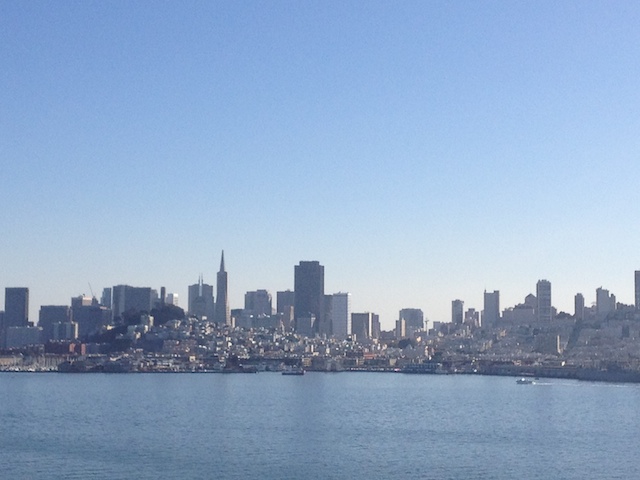
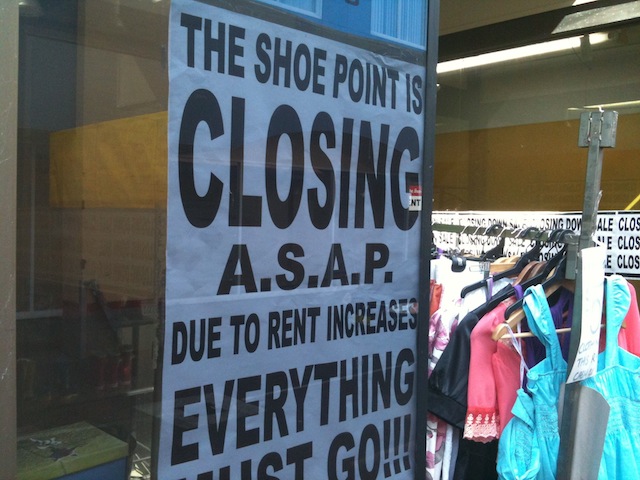
    “You’re not wanted here” is the message from San Francisco residents protesting against tech workers and tycoon moving into the city.

    Over the last year the protests against the ‘Google Buses’ that ferry tech company workers from San Francisco to Silicon Valley has steadily ratched up with protests against high profile individuals, people vomiting on the buses and Google Glass wearers getting their devices smashed.

    Around the world, from London and Berlin to Auckland and Hong Kong, cities are worrying about the diversity of their cities as the global asset bubble inflates property prices beyond the reach of ordinary citizens.

    In many respects San Francisco is probably unique in its relationship to Silicon Valley and its restricted geography, but it’s hard not to think if the current technology stock falls on the US stock markets became a Tech Wreck style bust then the city’s problems might solve themselves.

    The challenge for all major cities around the world is to manage the current boom in property prices that threaten to drive out lower paid workers essential to vibrant economies – although ultimately anything that can’t be sustained won’t be sustained and it’s hard to see how housing can run too far ahead of wages before a reversal happens.

    In the meantime though we can expect to see many cities struggle with the same issues that face San Francisco.

    Similar posts:

    • No Related Posts
  • An expensive place to do business

    An expensive place to do business

    Job search site Staff.com has an infographic showing the cost of setting up a startup business in selected cities around the world.

    Staff.com founder Rob Dawson looked at the cost of hiring two developers and one designer and paying rent on an office in eight cities around the world.

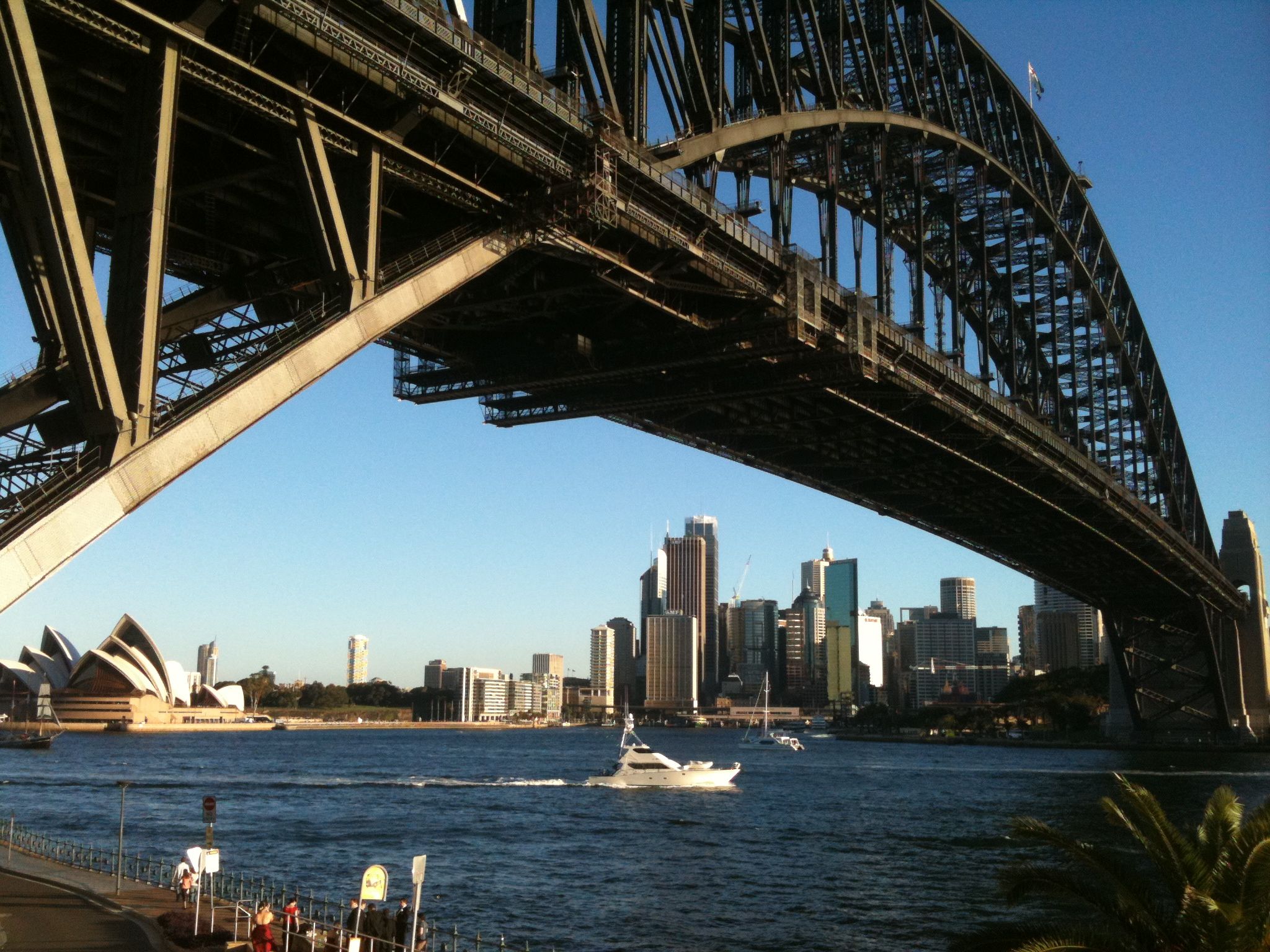
    Of the six Zurich came in the most expensive followed by Sydney, New York, San Francisco, London and Paris. Manila and Mumbai were obviously the cheapest.

    What Does It Cost to Run a Startup? Infographic
    Staff.com – Connecting Great Companies with Global Talent

    While the wages are the headline in this admittedly unscientific survey, the rents are a factor worth examining. If we arrange those cities by rents, then London jumps to the highest spot while Sydney remains second.

    Cost of renting in each city

    London 63,984
    Sydney 47,616
    New York 45,600
    Paris 38,400
    Zurich 36,000
    Mumbai 29,184
    San Francisco 22,080
    Manila 9,984


    This table illustrates a number of things; that Mumbai is a very uncompetitive location by Indian standards, being an app developer with a London startup is a miserable existence and that Australia is a very expensive place to do business.

    Last week at The Hub Sydney discussing the global workforce with O-Desk’s Matt Cooper, expatriate Aussie and founder of The Fetch Kate Kendall emphasised the high cost of doing business in Australia.

    “You don’t realise how expensive Australia has become until you get off the plane,” said Kate who pointed out the burden of massive mortgages mean labour rates have to be high so people can afford to meet their bank repayments.

    I’ve argued in the past that those high property prices are a form of economic cholesterol that sap Australia’s economic strength and these discussion illustrate that point.

    The bizarre thing is that Australian property prices are expected to go higher and, most worrying of all, the consensus among mainstream economists and business writers is that current levels are not overpriced at all.

    If we accept that the current high property prices are the long term normal for Australia, then the Aussie economy has a major adjustment to make.

    The problem for any industry that is internationally exposed, which is almost the entire service economy, is that Australian producers are hopelessly uncompetitive at current wage and cost levels.

    For startups the question is what value are they actually getting from being based in Australia and that is a question being asked by many businesses.

    Those deciding to stay in Australia are going to have to figure out how they can deliver high quality value from a cost base equal to Switzerland’s.

    At present most Aussie businesses are not prepared to deal with the problem and it’s a question that’s going to be faced by the nation’s workers, retirees and governments.

    Similar posts:

  • Kinkabool – the highrise past and future

    Kinkabool – the highrise past and future

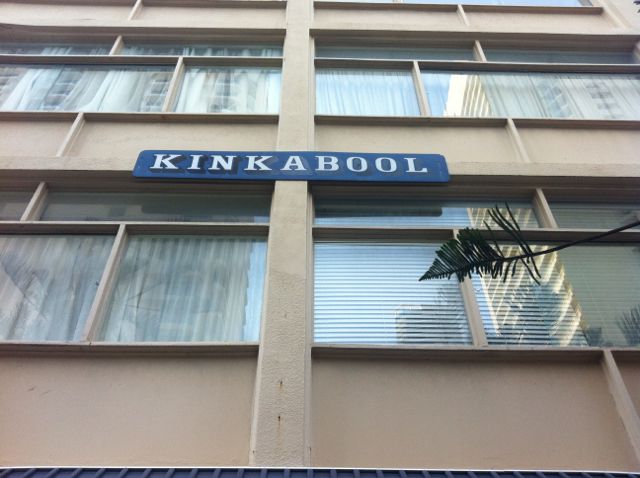
    Today high rise buildings are the norm on Queensland’s Gold Coast, but just over fifty years ago in Surfers Paradise, nine storey Kinkabool was the first of the breed to be built. Its condition today is a warning on how skyscrapers can turn into expensive liabilities for owners.

    ABC Open has an interview with one of the workers on the building and in the accompanying video Bob Nancarrow shows just how Kinkabool dominated the then sleepy seaside resort of Surfers Paradise in 1960.

    kinkabool-overshadowed

    A visit to Kinkabool today reveals a building struggling in the face of poor maintenance and an undercapitalised ownership. Luckily for the owners’ corporation,  the Queensland government pitched in to repair the roof but much of the rest of the complex is showing its age.

    kinkabool-lobby

    The rabbit warren lobby with its orange tiles indicate some of the building was upgraded in the 1970s but apart from a lick of paint, it hasn’t seen much love since.

    kinkabool-lift-lobby

    The lift is are where the building’s age and owners’ lack of investment really shows. An old, slow elevator that hasn’t been upgraded since the first residents moved in clunks its way up the building. Even Hong Kong’s Chunking Mansions – the world’s best example of a dysfunctional high rise – gets its lifts upgraded sometime.

    kinkabool-lift-interior

    Inside the lift, it’s a depressing scene and one wonders if the antiquated equipment would meet today’s building standards. Even if it does meet the regulations, the dispiriting ride on its own would knock a big chunk off the asking prices for buyers or renters.

    kinkabool-lobby-stairwell

    Stepping out of the lift, the view in the stairwell isn’t much better. The lack of maintenance or investment begins to show in old fittings, damaged glass and hints of painted over graffiti.

    kinkabool-stairwell

    While standing on the ninth floor, music from unit 1B drifts through the building – it’s lucky the occupant has a taste in cheesy 1970s music as some thumping headbanger music could to serious damage to the building along with the residents’ sanity.

    One wonders just how noisy the building would be with a party happening or a young, crying baby although it seems families aren’t really interested in these apartments or the central Surfers Paradise location.

    Though a very undistinguished building, it does have one touching little architectural feature in  the different tile patterns on each floor, although probably not enough to redeem it in the eyes of most people.

    kinkabool-tile-featurekinkabool-tile-feature-2

    Probably the saddest thing about Kinkabool is how a building that once dwarfed everything in the region is now overshadowed by its much bigger neighbours.

    kinkabool-neighbours

    Across the road, and blocking out most of Kinkabool’s sunlight, is the 1980s Paradise Centre.

    Time isn’t proving any kinder towards the Paradise Centre with the lack of maintenance beginning to show on the thirty-year old complex as this vent across the street from Kinkabool illustrates.

    kinkabool-neighbours-rusting

    Generally, if the landlord or owners’ corporation is too stingy to afford a coat of paint, then you can be sure there are more nasty surprises

    Both the Paradise Centre’s and Kinkabool’s declines illustrate a much more fundamental problem in an economy driven by property speculation and taxation allowances — there isn’t a lot of money to go around for maintaining older buildings.

    While Kinkabool’s residents can get by with a clapped out lift, inhabitants of larger and more modern complexes like the Paradise Centre will find the costs of running and maintaining their buildings an increasingly difficult burden.

    It could just turn out that Kinkabool, should it escape the wrecker’s ball, may well turn out the more desirable dwelling than its bigger, more modern neighbours.

    For the meantime though, Kinkabool marks the beginning of a far more sophisticated era in Australian and Gold Coast history. Whether that era became too sophisticated for itself remains to be seen.

    kinkabool-goodbye

    Similar posts:

  • Ordos and Detroit – A tale of two cities and two economies

    Ordos and Detroit – A tale of two cities and two economies

    This week bought news that that two cities, one in China and one in the US, had fallen into deep financial trouble.

    While the bankruptcy of Detroit is very different to the developers of the Ordos new city failing, there is a strange symmetry between the two stories.

    Detroit is the biggest US city ever to enter bankruptcy with an estimated $20 billion in debts, dwarfing the previous record of Alabama’s Jefferson Country’s $4 billion default in 2011.

    The fall of Detroit wasn’t unexpected as the New York Times tells.

    Detroit expanded at a stunning rate in the first half of the 20th century with the arrival of the automobile industry, and then shrank away in recent decades at a similarly remarkable pace. A city of 1.8 million in 1950, it is now home to 700,000 people, as well as to tens of thousands of abandoned buildings, vacant lots and unlit streets.

    Like most industrial hubs, Detroit grew became the centre of the US motor industry due to geographic and commercial advantages along with a few historical accidents but as the economy changed, the city’s importance faded.

    It’s sad for the people of Detroit but it isn’t the first industrial hub to fade away; Ironbridge, once the cradle of the English industrial revolution, is today an open air museum and a charming rural spot.

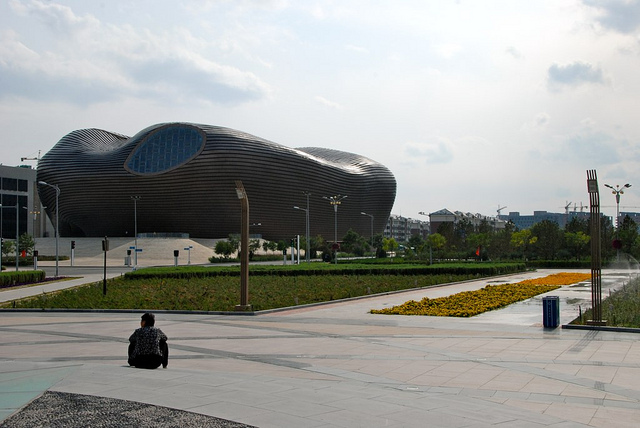
    Ordos on the other hand is an example of 21st Century government planning with the Inner Mongolian provincial leaders building the city of the basis of build it and they will come.

    They haven’t.

    The collapse of Ordos is going to be an interesting test of the Chinese economic model. Many of the country’s local and provincial governments – like Australia’s – have become dependent on the revenues from property sales. Now the market is  drying up, local councils are having trouble paying their bills as Bloomberg reports.

    Some Ordos district governments had to borrow money from companies to pay municipal employees’ salaries, Economy & Nation Weekly, published by the official Xinhua News Agency, said in a July 5 report on its website.

    So while Detroit illustrates the stresses in the US system, so too does Ordos tell us about the problems facing Chinese governments.

    The tale of these two cities also shows the difference between the US’ industrialisation of the early Twentieth Century and today’s economic development in the PRC and reminds why the results of ‘Capitalism With Chinese Characteristics’ may be very different to the modern American consumerist economy.

    For Detroit, at least there’s good news as one US city manages to works its way out of bankruptcy. For the developers of Ordos though, things must be looking very grim.

    Ordos image courtesy of Bert van Dijk through Flickr.

    Similar posts:

  • Australia’s small business crisis

    Australia’s small business crisis

    The 2013 MGI Australian Family and Private Business Survey is a disturbing document describing a sector that’s aging, pessimistic and struggling with change. It bodes poorly for what should be the powerhouse of the nation’s economy.

    Having been conducted over nineteen years, the MGI survey is a very good snapshot of how the sector has evolved over the last two decades and it’s notable how owners are older and not optimistic about their prospects of selling their businesses.

    Another key aspect is the changed focus of Australian family businesses; in 2003 forty percent were in manufacturing, this year its half that which probably tracks the decline of the nation’s manufacturing industries.

    Most striking though is the aging of the small business community with one in three proprietors being in the 60 to 69 year old bracket, up from one in five just 3 years ago.

    snapshot-of-australian-businessesThat the average age of Australian small business owners is increasing shouldn’t be surprising given the nation’s increasing obsession with property. As home prices become more expensive, it becomes more difficult for younger people to pay off their mortgages or risk their equity on building a business.

    Probably the most heart breaking comment from the report is that over half of Australia’s small business owners don’t see an immediate prospect of retiring and nearly two thirds don’t see any chance of an early exit.

    58% of family business owner-managers see themselves working in the business beyond 65 years of age, with 65% indicating that their businesses are NOT exit or succession ready.

    Part of the reason most Australian family businesses aren’t succession ready is that Generation X and Y buyers crippled by big mortgages simply can’t afford to pay what the older Baby Boomer and Lucky Generation proprietors need to retire upon.

    It’s hard not to think that the grand 1980s corporatist vision of Bob Hawke and Paul Keating – that most Australians will work for one of two big corporations while being members of one of two big trade unions – has largely come true.

    For Australia though this is not a good thing as the wealth of those corporations, along with that of the nation’s households, is largely tied into the domestic property market.

    A discussion on the Macrobusiness website about New Zealand’s property obsession has a graph which illustrates both the Kiwi and Australian economies’ dependence upon house prices.

    Housing-Wealth-to-disposable-incomeHousehold-Financial-Wealth-to-disposable-income

    Those financial assets in the second graph include the value of businesses, and that statistic staying largely flat while housing wealth has gone up fifty percent over the last fifteen years illustrates how dependent the Aussie economy has become upon property speculation.

    Property speculation can be fun, particularly when you’re watching people bash down walls on the latest reality TV home improvement show, but it isn’t the basis for a strong economy.

    That Australia’s small business sector is aging and increasingly shifting to low value adding service industries is something that should be discussed more as the nation considers what its global role will be in the 21st Century.

    Similar posts: