Tag: speculation

  • Australia and Alan Bond

    Australia and Alan Bond

    Last week convicted fraudster and one time Australian national hero Alan Bond passed away. In many respects Bond’s rise, fall and comfortable dotage tells us much about Australia today.

    Originally born in England, Bond was a ‘ten pound pom’ – like this writer and two of Australia’s last three Prime Ministers – whose family took advantage of subsidised immigration programs to leave the cold climate and dismal British economy for sunnier, more prosperous parts.

    Building the Australian dream

    In Australia Bond prospered. On leaving school he became a sign writer and set up a business where he quickly gained a reputation for sharp practices and cutting corners. However as with much of his generation real wealth was to be made in property speculation.

    As Australian cities expanded through the 1960s, developers and speculators were at the forefront of the nation’s economic growth. Perth, Bond’s home town, doubled in size between 1961 and 71 and the once dodgy sign maker made his mark as a wheeler and dealer as he traded properties and build his fortune.

    As the 1980s began a cashed up Bond was ready to take advantage of the economic orthodoxy of the time that to compete internationally, Australian businesses had to consolidate domestically to gain the scale required to be global players.

    Bond added to his claims in 1983 when he wrested the America’s Cup out of the cold dead hands of Long Island’s Newport Yacht Club. Suddenly businessmen were the national heroes and Australians, particularly politicians, fell over themselves to bask in the glow of the nation’s entrepreneurial summer.

    Dancing on the world stage

    Around the time of the America’s Cup win the newly elected Hawke Labor government deregulated the Australian banking industry providing a ready supply of hungry financiers prepared to fund the global ambitions of Bond and his contemporaries.

    The rest of the decade saw Bond leading a wave of Australian entrepreneurs using easy money to build international empires. Bond himself ended up building one of Australia’s brewery duopoly, holding prime Hong Kong property, buying the nation’s most popular TV station and owning a Chilean telephone company.

    Naturally much of his money ended up in Switzerland and Lichtenstein, something that would work in his favour early in the 1990s.

    The larrikin streak

    Bond’s disregard for the law, investors and anyone unfortunate to get between his cronies and a bag of money – politely described as a ‘larrikin streak’ by many – continued as regulators and governments indulged his behaviour.

    One good example of the free pass he received from Australian regulators in the 1980s were his insider dealings with his then mistress Diana Bliss, the latter of whom exquisitely timed a purchase of a small energy exploration company stocks in 1988 a week before Bond Corporation announced a take over offer.

    Regulators at the time dismissed any claim of insider trading after being assured that neither Bond nor Bliss would ever countenance such behaviour, the Sydney Morning Herald later reported.

    When the luck runs out

    Eventually the 1980s Australian economic miracle and the entrepreneurs leading it proved to be chimeras based upon property valuations. When the 1990 downturn hit, the rampaging Aussie business heroes all quickly fell as their overindebted empires collapsed.

    Bond’s personal fortune however survived thanks to his judiciously salting away assets controlled by loyal advisors. His 1994 bankruptcy hearing ended in farce when he successfully convinced the court he was suffering dementia and couldn’t remember anything of his business dealings.

    He couldn’t stay too far ahead of the courts however and ultimately Bond served two prison terms totalling four years for dishonestly pillaging companies to keep his operation afloat.

    At the same time Bond was being chased through the courts, Australia’s banks were licking the financial wounds incurred from their irresponsible exposure to the nation’s entrepreneurs. The lessons they learned define modern Australia.

    Bearing the brunt

    The country’s small business community eventually bore the brunt of the Australian banks’ losses as lenders’ balance sheets were rebuilt through high interest rates, massively increased fees and charges and tightened lending criteria. Many of those high fees and rates continue to cripple Australian business twenty-five years later.

    Adding to the Aussie small business sector’s woes, the 1998 Basel I Accords were coming into force favoring property lending over business finance. Increasingly it became harder for any Australian businessperson to raise money from local banks while property speculators were welcome.

    Over the next twenty years the result was stark. One chart from the Macrobusiness website illustrates the huge growth in Australian residential property lending and the stagnation of business finance since 1991. Only at one stage, in 2008, has business lending matched the levels of the late 1990s.

    Egan_Soos_australian_debt_ratios

    That shift to an economy based upon property prices, particularly speculation on residential accommodation, has served Australia well with the nation not experiencing a recession since the 1990s downturn.

    The Australian economic miracle

    Australia’s success allowed Reserve Bank governor Glenn Stevens to sneer in 2010 that Microsoft founder Bill Gates’ warnings about the Australian economy lack of diversity were misguided and foolish – the mining boom coupled with never ending property price growth guaranteed the nation’s prosperity.

    In this respect, all Australians have become Alan Bond. Just as the bold riders of the 1980s boom based their future on property valuations so too have Australian households and the entire economy thirty years later.

    Hopefully for Australians in general it will end better than it did for Alan Bond in 1996.

    One though should not weep too much for Alan Bond, after being released in 2000 he quietly rebuilt his empire and in 2008 BRW magazine estimated his wealth at $265 million and named him among the 200 wealthiest people in Australia.

    Time will tell if Australians share the deceased tycoon’s luck but in a way we’ve all become little Alan Bonds now in our dependence upon the valuations of our real estate holdings and the indulgence of those financing our lifestyles.

    It may well be having a few bob hidden away in Switzerland might the best way for Australia’s indebted homeowners to protect their future.

    More reading on Alan Bond

    http://theconversation.com/alan-bonds-lesson-for-australia-we-get-the-fraudsters-we-deserve-42897

    https://twitter.com/Mick_Peel/status/606703668658765827/photo/1

    http://www.macrobusiness.com.au/2015/01/australian-private-debt-and-dont-skimp-on-the-pate/

    https://news.google.com/newspapers?id=GjZWAAAAIBAJ&sjid=6-cDAAAAIBAJ&dq=diana%20bliss%20petro&pg=3849%2C5089408

    http://www.abc.net.au/news/2015-06-05/ian-verrender-on-alan-bond/6525132

    http://www.smh.com.au/business/comment-and-analysis/alan-bond-a-dealmaking-dynamo-gone-wrong-20150605-ghhc52.html

    http://www.smh.com.au/business/obituary-alan-bond-19382015-20150605-ghgnia
    Similar posts:

  • Kinkabool – the highrise past and future

    Kinkabool – the highrise past and future

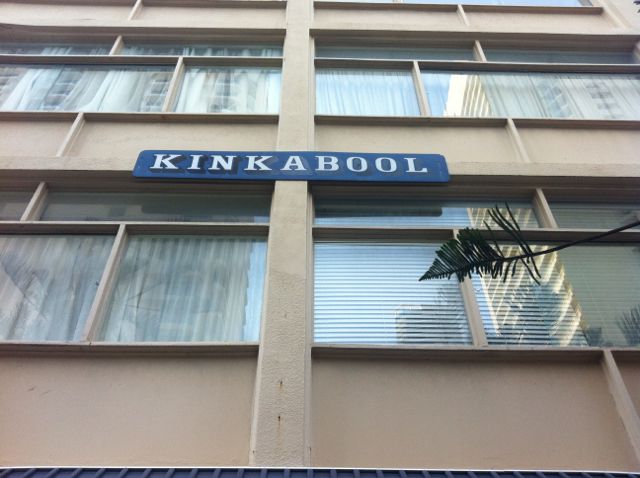
    Today high rise buildings are the norm on Queensland’s Gold Coast, but just over fifty years ago in Surfers Paradise, nine storey Kinkabool was the first of the breed to be built. Its condition today is a warning on how skyscrapers can turn into expensive liabilities for owners.

    ABC Open has an interview with one of the workers on the building and in the accompanying video Bob Nancarrow shows just how Kinkabool dominated the then sleepy seaside resort of Surfers Paradise in 1960.

    kinkabool-overshadowed

    A visit to Kinkabool today reveals a building struggling in the face of poor maintenance and an undercapitalised ownership. Luckily for the owners’ corporation,  the Queensland government pitched in to repair the roof but much of the rest of the complex is showing its age.

    kinkabool-lobby

    The rabbit warren lobby with its orange tiles indicate some of the building was upgraded in the 1970s but apart from a lick of paint, it hasn’t seen much love since.

    kinkabool-lift-lobby

    The lift is are where the building’s age and owners’ lack of investment really shows. An old, slow elevator that hasn’t been upgraded since the first residents moved in clunks its way up the building. Even Hong Kong’s Chunking Mansions – the world’s best example of a dysfunctional high rise – gets its lifts upgraded sometime.

    kinkabool-lift-interior

    Inside the lift, it’s a depressing scene and one wonders if the antiquated equipment would meet today’s building standards. Even if it does meet the regulations, the dispiriting ride on its own would knock a big chunk off the asking prices for buyers or renters.

    kinkabool-lobby-stairwell

    Stepping out of the lift, the view in the stairwell isn’t much better. The lack of maintenance or investment begins to show in old fittings, damaged glass and hints of painted over graffiti.

    kinkabool-stairwell

    While standing on the ninth floor, music from unit 1B drifts through the building – it’s lucky the occupant has a taste in cheesy 1970s music as some thumping headbanger music could to serious damage to the building along with the residents’ sanity.

    One wonders just how noisy the building would be with a party happening or a young, crying baby although it seems families aren’t really interested in these apartments or the central Surfers Paradise location.

    Though a very undistinguished building, it does have one touching little architectural feature in  the different tile patterns on each floor, although probably not enough to redeem it in the eyes of most people.

    kinkabool-tile-featurekinkabool-tile-feature-2

    Probably the saddest thing about Kinkabool is how a building that once dwarfed everything in the region is now overshadowed by its much bigger neighbours.

    kinkabool-neighbours

    Across the road, and blocking out most of Kinkabool’s sunlight, is the 1980s Paradise Centre.

    Time isn’t proving any kinder towards the Paradise Centre with the lack of maintenance beginning to show on the thirty-year old complex as this vent across the street from Kinkabool illustrates.

    kinkabool-neighbours-rusting

    Generally, if the landlord or owners’ corporation is too stingy to afford a coat of paint, then you can be sure there are more nasty surprises

    Both the Paradise Centre’s and Kinkabool’s declines illustrate a much more fundamental problem in an economy driven by property speculation and taxation allowances — there isn’t a lot of money to go around for maintaining older buildings.

    While Kinkabool’s residents can get by with a clapped out lift, inhabitants of larger and more modern complexes like the Paradise Centre will find the costs of running and maintaining their buildings an increasingly difficult burden.

    It could just turn out that Kinkabool, should it escape the wrecker’s ball, may well turn out the more desirable dwelling than its bigger, more modern neighbours.

    For the meantime though, Kinkabool marks the beginning of a far more sophisticated era in Australian and Gold Coast history. Whether that era became too sophisticated for itself remains to be seen.

    kinkabool-goodbye

    Similar posts:

  • Australia welcomes the multi generational mortgage

    Australia welcomes the multi generational mortgage

    At the height of the Japanese property boom in the 1980s, the hundred year mortgage came into being.

    Pushing payments onto children and grand-children was the only way home prices could continue to rise once they hit levels which the average Japanese worker could ever afford with a more traditional twenty or thirty year mortgage.

    Twenty five years later Australia finds itself in a similar position as parents guarantee their childrens’ mortgages.

    Repeating the Japanese mistake

    While the Japanese looked to sticking their mortgages onto their kids and grandkids, Down Under the kids are fighting back and getting mum and dad to underwrite their unaffordable loans.

    This weekend’s Sydney Morning Herald features in its property section the story of how Sharon and Graeme Bruce guaranteed their son’s and his fiance’s mortgage in Sydney’s inner suburbs.

    While the story isn’t clear on the size of the deposit (which isn’t surprising given the SMH’s shoddy editing), it appears the Bruces’ have guaranteed around $300,000 so his son and future daughter-in-law can grab a five bedroom, 1.45 million dollar mansion.

    One wonders what great businesses Matt and Hannah could build if mum and dad were prepared to stump up a similar amount to invest in a start up?

    Australia’s property obsession

    Sadly we’ll never know – in Australia, the smart money gets a job, pays off a mortgage and accumulates wealth through investment properties. What cows are to African tribesmen, negatively geared units are to the Australian middle class.

    The hundred year strategy hasn’t worked too well for Japan, with a declining population those mortgages entered into a boom level 1980s values now don’t look so attractive and are one large reason for the nation’s lost decades.

    In Australia, things aren’t likely to work so well either. The Baby Boomers and Lucky Generationals – those born from 1930 to 1945 – guaranteeing their kids’ and grandkids’ mortgages are relying on ever increasing property prices.

    This is understandable given that few of them have any experience of long term stagnation, let alone decline, of property values but it leaves them incredibly exposed should the Aussie housing market slump.

    Can an Aussie property decline happen?

    Many Australians, particularly those with vested interests, maintain such a decline can’t happen but the prospects aren’t good as the SMH story shows;

    The couple had attempted to buy a small terrace in Newtown but kept getting pipped at the post by other young professional couples. At a higher price point they had no competition.

    Despite his parents’ generosity he said he would still need to rent out a few of the rooms to help pay for the mortgage.

    So Matt can’t afford the mortgage. That’s not good starting point and one that could cost his parents dearly, which they don’t seem to care about much.

    ”Obviously my dad guaranteeing the loan was the only way we were going to purchase this,” Mr Bruce said. ”You need to have a 20 per cent deposit otherwise the banks want you to pay insurance … it’s a bit of a rort really.”

    It’s fair to call mortgage insurance a rort – as it certainly is – but its purpose is to protect the banks should a mortgagee default and the financiers find themselves out of pocket.

    With Matt’s parents getting him out of paying that insurance his bank has much better default protection, equity in his parents’ property.

    Guaranteeing risk and misery

    I’m not privy to the finances of Sharon and Bruce, but most of their contemporaries can ill afford to lose several hundred thousand dollars in home equity in their later years.

    That is where Australia’s multi-generational mortgages could turn very nasty, very quickly as older Australians find themselves having to deliver on the guarantees they gave on behalf of their over committed offspring.

    In Japan, it’s taken a long time for the population to realise their national wealth has been squandered on twenty years of propping up unsustainable property prices and economic policies.

    One wonders how long it will takes Australians to realise the same has happened to them and what the political reaction will be.

    Similar posts:

  • Economic cholesterol

    Economic cholesterol

    Australia’s productivity isn’t growing and it’s fashionable among business community to blame Australia’s productivity decline on high labour rates.

    While there’s an argument that the cafe worker earning $25 an hour is overpaid – although we don’t hear the same criticism of multimillion dollar packages paid to executives with at best mediocre track records – the argument is far more complex.

    In the McKinsey report linked to above, the mis-investment is put down to the recent resource boom, but is this really true?

    To really understand why Australia hasn’t performed well, we need to look at why the country is so reluctant to invest in assets that will increase our productivity.

    The role of property

    Underlying the recent Australian “economic miracle” is the property industry. The country’s domestic building sector is one of the most efficient job generators in the world. Stimulate the Aussie property market and job growth ripples quickly through the economy.

    This was one the lessons learned in the 1990s recession – successive governments and bureaucrats have learned the mantra “go early, go hard and go residential” when it comes to cutting interest rates and introducing home building incentives like the first home owners grants.

    It was no coincidence that when the Rudd Government was faced by the Global Financial Crisis they launched a wave of initiatives to boost the property industry and shore household wealth. Just as the Howard and Costello governments did in response to the Long Term Capital Bank collapse, Asian economic crisis or the 2001 US recession.

    While those stimulus measures have kept Australia out of recession for two decades, the failure to unwind the measures after the economic shock has passed leaves the nation’s property market remains “hyper stimulated” and over valued. That over investment in property has sucked funds away from other areas which affects the competitiveness of Aussie industry.

    The great property squeeze

    One of the great tragedies of the 1990s was Sydney’s East Circular Quay precinct which could have been one or two of the world’s greatest hotel sites, literally on the steps of the Sydney Opera House.

    Instead, high priced apartments were built on the site and Sydney’s tourism and convention industries are crippled by a shortage of top end hotel rooms.

    Tourism isn’t the only industry affected by the Australia’s obsession with residential property – across the country service stations, sports clubs and convention centres are being demolished to make way for high rise apartment developments. No economic activity seems to trump property speculation when it comes to attracting Australian investors.

    Ideological beliefs

    Adding fuel to the property obsession are the ideologies of the 1980s which are still closely held by the nation’s business and political leaders.

    Capital gains tax concessions introduced by the Howard government in the late 1990s made property and share speculation far more attractive that invention, innovation or entrepreneurship.

    To make matters worse, Australia’s social security policies and taxation laws favour capital gains – any Australian over thirty who has tried to build a business has plenty of mates who did far better out of negatively geared property than those who foolish enough to create new enterprises.

    For those older entrepreneurs facing retirement, they are in for a nasty shock if their businesses don’t sell for what they hope. They would have been far better staying in a safe corporate job and buy a few negatively geared investment properties.

    Again, this ideological belief that capital gains trumps wage or business income means investment is steered away from productive assets and into residential property that can be held for a capital gain.

    The Ticket Clipping Culture

    Australia’s failure to invest in productive assets is not just a feature of the household investor, the corporate sector has a lot to answer for as well.

    While good in theory, the superannuation system has been a failure in providing a capital pool for new and innovative businesses and productive investments.

    The superannuation trustees have largely focused on hugging the index, the ticket clipping funds management culture means that any real investment for productive assets is restricted to funding toll roads where fat management fees and guaranteed commissions mean an easy life for those fund managers.

    In a perverse way, the short term appearance of the ticket clipping might mean increased productivity as costs are cut to improve profits. In the medium and long term, the lack of investment in these assets means in the long term these assets too cease to add productive capacity to the economy.

    Of course there’s more to infrastructure investment than toll roads and airports with crippling parking charges, but the ticket clipping classes of Australia’s investment community don’t see a quick buck in that.

    Increasingly the boards of Australia’s major companies are appointed by those running the superannuation funds and these people have the generational bias away from productive investment. Instead they see slashing IT, training or asset investment as costs to be cut in the quest of boosting bonus delivering profits.

    More fundamentally, three decades of consolidation in most of Australia’s industries has seen a generation of Australian executives whose main expertise is that of maximising their market power at the expense of their competitors. Investing in productive capacity is not a major concern for those corporations.

    Fixing the problem

    Getting Australians – whether mom and dad property speculators or high paid fund managers parking money in the ASX 200 or plonking money in the latest toll road boondoggle – to change attitudes and invest in productive capacity is going to take a generational change.

    As long as the attitude persists that property is a safe investment that doubles in real value every ten years then Australians are going to continue to ply cash into apartments and houses.

    It is possible that a period of Australian Austerity that suppresses property prices may force that change in investment attitudes. An weak property market is one of the unspoken effects of the spending cuts advocated by many right wing commentators,

    The question is whether those commentators, or the political classes who derive their much of their policies from right wing ideologues, view have the stomach for disruption that will come when weaning Australians from the teats of corporate ticket clipping and property speculation.

    Similar posts: