A gigabit milestone for mobile networks

The rollout of Telstra’s gigabit 4G network is another step on way to the next generation of connected devices.

Yesterday communications vendors Qualcomm, Netgear, Ericsson and Telstra, unveiled their Australian gigabit LTE service that gives users high speed internet connections over the 4G mobile network.

Billed as a world’s first, Telstra will offer customers the Netgear supplied hotspots that can connect up to twenty devices over WiFi.

Listening to the Telstra spiel yesterday, it wasn’t hard to conclude the company is making a pitch for the market frustrated by the National Broadband Network’s tardy rollout and patchy service.

The service doesn’t come cheap though, as Finder’s Alex Kidman points out, an hour’s movie streaming on one device could easily cost $4500 dollars on Telstra’s current plans with one of the company’s executives emphasising the product is “aimed at the premium end of the market.”

Being aimed at the premium end of the market is shame for Qualcomm as their spokespeople were keen to show off the gaming, AR and VR potential of the Snapdragon CPUs driving these devices. It would be a brave or very affluent family that bought one of these devices for their kids given the data costs.

While the Telstra Gigabit LTE service might be an NBN replacement for deep pocketed customers, telco veteran John Lindsay points out the mobile network can’t support too many people doing so unless many more cells are deployed.

For the moment the Telstra service is going to be attractive for companies needing high speed. low volume connections in the central business district and as the gigabit LTE upgrades roll out across the country, it will be useful for travellers as well as frustrated NBN customers.

Ultimately the gigabit LTE product is another step toward the 5G networks that we’ll be seeing appear at the end of the decade, something that both the Ericsson and Telstra PR folk were keen to highlight.

The key message for consumers and businesses is the rate of innovation in the mobile communications market is not slowing and another generation of connected devices is coming that will change things as dramatically as the smartphone did.

Telecommunication’s lost tribes

In a changing world, telecommunications executives are struggling to find a clear and profitable vision for their businesses.

This week saw Australia’s telecommunications industry gather for the annual Comms Day Summit at Sydney’s Westin Hotel.

A constant in the telco industry is change and new technology – few industries have had to reinvent themselves in the same telephone companies have had to over the last 30 years.

For telcos, that period of change has been immensely profitable as the switch to mobile networks proved to be a river of gold for the industry as consumers enthusiastically moved away from fixed line networks and into lucrative products like SMS services.

Missing the passion

So it was notable how the Comms Day summit was missing a sense of excitement or vision about the approaching opportunities such as 5G networks, the Internet of Things and other new markets. Much of the conversations were mainly focused on the dysfunctional Australian industry and the flawed regulations that got it to where it is.

As an Australian event it’s not surprising that much of the focus would be on domestic failings – thirty years of misguided policy, political opportunism and schoolboy ideologies have left the nation facing the prospect of the “world’s most expensive broadband”  in the words of Megaport founder Bevan Slattery – however the stasis in the telecoms sector betrays a far deeper uncertainty in the global industry.

That uncertainty was on show at this year’s Mobile World Congress in Barcelona where most of the conference’s buzz was around virtual reality headsets and connected cars, areas where telecommunications providers are, at best, a ‘dumb pipe’.

We are not a utility

Being relegated to being a ‘mere utility’ is the fear of every telecommunications executive, which is why they spend so much on abortive Pay-TV, online and sports rights acquisitions. In the Australian context, Telstra’s acquisition of PacNet and Slattery’s own East Asian ventures are possibly the most interesting developments in the local industry yet they were barely mentioned at the Comms Day event.

While the Comms Day Summit told us much about the insular nature of modern Australian business – and the depressing mess three decades of poor regulation has left the local telecommunication industry – the bigger message is the global communications industry is struggling in a world of commoditised bandwidth where the opportunities to make huge profits is not immediately obvious.

It’s hard to see how telcos can be completely disrupted in the way media companies have been given how regulated their markets are – although the same was being said of the taxi industry five years ago – but it is clear their managements are struggling to find new business models.

Software ate the demonstration centre

A tour of Telstra’s consumer insights centre shows us the software driven business of the future

Yesterday Australian incumbent telco Telstra took the media on a tour of its showpiece  Customer Insights Centre in downtown Sydney.

The company is justifiably proud of the facility that includes  a 300 person auditorium, broadcast quality TV studio, a restaurant, workshop and collaboration spaces.

Welcoming visitors is the centre’s Insight Ring, a nine metre circle-shaped platform that surrounds guests with digital insights mined from Telstra’s information services. Leading off the reception area are a range of displays showcasing the company’s products and capabilities including wearable technologies, 3D printing and Ged The Robot.

Marking the centre as a modern facility the display spaces where Telstra and its partners can show off technologies to industry bodies and prospective clients.

Ged, the Telstra robot

The previous space two floors higher in the building was beginning to show its age after seven years and the fixed displays of technology in the older facility dated the centre, something that’s a disadvantage in an industry changing as quickly as telecommunications.

In the new centre, the demonstration facility is largely screen based so displays can quickly be adapted to show off the technologies aimed at whichever industry they are pitching.

The fast moving technology world
The software driven demonstration centre


Andy Bateman, Director of Segment Marketing at Telstra, who lead the tour was proud to show off the current display that had been set up to showcase the company’s banking products.

telstra_client_demonstration_consumer_insights_centre

Bateman described how the facility can be quickly altered to suit the needs of specific demonstrations, this was a degree of flexibility missing in the PayPal innovation center in San Jose, which is more comprehensive in its displays but requires a major fit out to change anything.

Venture capital investor Marc Andreessen stated that software will eat the world, Telstra’s Customer Insights Centre illustrates this starkly.

However software doesn’t always have the upper hand, just opposite the Telstra centre is the Sydney City Apple Store. In some ways, the two facilities opposite each other illustrate one of the big technological and market battles of this decade.

View of the Apple Store from the Telstra Centre

For most businesses, software will define the future way of working but for the smart hardware vendors will still be making good money.

Preparing for the mobile data explosion

Cisco’s Visual Networking Index predicts massive growth for mobile data use as smartphone use and the internet of things grows.

Late last month Cisco Systems released its annual Visual Networking Index that tracks the company’s predictions for the growth of global network traffic over the upcoming five years.

It’s no surprise this year’s report predicts global data traffic will grow at over fifty percent compounded each year with Cisco expecting 24.3 exabytes to be pushed around the world’s networks each month by 2019.

Most of that network traffic will come from tablet and smartphones with Cisco predicting data use will grow by up to a factor of five on those devices with devices like wearables growing fourfold.

This growth creates a challenge for telcos as they invest in capacity to deal with the increased traffic and Cisco sees half of all smartphone connections will be handed off to WiFi networks by the decade’s end.

Summary of Per-Device Usage Growth, MB per Month

Device Type

2014

2019

Nonsmartphone

22 MB/month

105 MB/month

M2M Module

70 MB/month

366 MB/month

Wearable Device

141 MB/month

479 MB/month

Smartphone

819 MB/month

3,981 MB/month

4G Smartphone

2,000 MB/month

5,458 MB/month

Tablet

2,076 MB/month

10,767 MB/month

4G Tablet

2,913 MB/month

12,314 MB/month

Laptop

2,641 MB/month

5,589 MB/month

Source: Cisco VNI Mobile, 2015

Handing half the growth in mobile traffic over to Wi-Fi connections, most of which will be connected to fiber or ADSL services will provide challenges for fixed line operators as well who will see the demand for capacity also explode over the rest of the decade.

Much of this explains the moves by companies like Telstra to roll out public Wi-Fi services to start locking users into their services. It also gives them, and consumers, an opportunity to understand how networks that mix both cellular and Wi-Fi behave.

Cisco_M2M_connections_to_2019

Another aspect of the Cisco VNI survey is the Internet of Things which is going to see exponential growth as industrial and household devices start being connected either directly through the telco networks, across unlicensed radio spectrum or over private Wi-Fi systems.

While Cisco predicts the bulk of that traffic as being generated by smartphones, the company sees connected devices as growing by 45% per year over the next five years with 3.2 billion sensors connected to the internet by the end of the decade.

Cisco-2015-VNI-M2M-connections

Notable in the prediction that Low Powered Wide Area (LPWA) networks – non cellular systems mostly operating in the unlicensed spectrum used by Wi-Fi networks – will provide nearly a third of the connections by 2019. At the same time we can expect many M2M deployments to consolidate traffic locally with much of the data processing down locally before the residual information being passed up the network.

As usual the Cisco VNI report underscores, and possibly understates, the growth in mobile data usage we’re going to see over the rest of the decade. For businesses, it’s time to plan for managing both the flow and application that smart devices are going to generate in our daily operations.

Towards the future mobile network

The 5G mobile communications standard is as much a vision for the society of the future as that of technology standards

What will the next generation of smartphones look like? Earlier this week the GSM Association released their roadmap for the future 5G network standard, the next generation of mobile communications that will start appearing towards the end of this decade.

The GSMA is the peak global telco industry body which includes amongst its membership most of the world’s telephone companies and the vendors who manufacture the network equipment, so the organisation’s view is a good representation of the industry’s long term vision.

Much of the future standard is actually an amalgam of existing technology and concepts such as heterogeneous networks where phones and mobile internet of things devices can switch from the phone network to private WiFi systems without users noticing the handover.

The GSMA sees eight main areas for the 5G standards;

  • data rates of 1Gbps down
  • latency of less than one millisecond
  • network densification in determining base station locations
  • improving coverage
  • making networks more availabile
  • reducing operating costs
  • increasing the field life of devices.

That latter point is particularly pertinent as battery life remains a major concern for smartphone users and getting power to internet of things devices is one of the greatest barriers to adoption.

With the 5G standard not expected before the end of the decade, it’s hard to imagine how much technology may have changed in that time, something the GSMA acknowledges; “Because 5G is at an early stage there may be many use cases that will emerge over the coming years that we cannot anticipate today.”

The report though does try to anticipate some of the applications we may see the 5G standard driving such as autonomous vehicles, cloud based offices and augmented reality technologies. All of these though are advancing rapidly under the existing fixed line, 3G and 4G telco networks.

For the moment rolling out the 4G standard remains the industry’s main game with the existing technology only making up five percent of the world’s mobile connections at present. This is the area the GSMA sees as being the big opportunity over the rest of the decade.

In another report the GSMA claims the 4G rollout in Europe, currently at less than 10% of connections but expected to be over half by 2020, will drive economic growth on the continent.

The mobile industry is playing a central role in supporting economic activity and recovery in the region, contributing 3.1 per cent to Europe’s gross domestic product (GDP) in 2013, equivalent to EUR433 billion4, including EUR105 billion generated directly by mobile operators. By 2020, it is estimated that the industry will generate a total economic value of EUR492 billion.

There’s no doubt telecommunications networks are to the 21st Century what the highways were to the Twentieth and the railways to the nineteenth. As with the construction of previous century’s networks one of the big challenges will be raising the capital to build the systems and making wise investment choices.

For the developing world raising the capital required for those networks might be the hardest task of all, however for those countries and regions not making the investments may leave them further behind the western nations than they are today.

Ultimately what eventually is included in the 5G standard will reflect many of the political and economic realities of the next five years; no international standard is free from political or commercial influences during its drafting. The job for the standards bodies is not to get left too far behind market or technological advances.

In describing a vision for the sector’s future the GSMA 5G report lays out many of the opportunities and challenges facing the telecommunications industry over the rest of the decade. With these technologies becoming the centre of our working and home lives, what happens won’t just determine what smartphone we own in 2020 but the shape of our societies.


A tale of two telcos

The contrasting fortunes of Australia’s Telstra and China Telecom tell us much about the two nation’s economies

Last Thursday saw China Mobile and Australia’s Telstra release their annual results.

Both have impressive numbers that illustrate how the telco industry is changing along with some stark differences between the two nation’s business culture.

For both companies their results show how voice and SMS are declining as the ‘rivers of gold’ for telecoms operators around the world; China Mobile’s voice revenues are down 6% while  Telstra’s fixed line voice fell by a similar amount.

In Australia, the incumbent telco (which sometimes advertises on this blog) continued its dominant position in its market with net profit rising nearly 15% on the back of 6.1% increase in income.

teslstra-revenue-2014

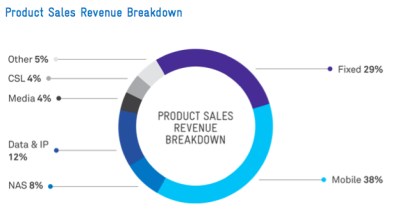
Telstra’s results also showed how the Aussie telecommunications market is now primarily a mobile sector; while the advantages of being the incumbent are substantial the real growth and profits in the business are in it’s non traditional sectors. It’s little wonder the company is happy to give away its legacy copper systems to the government’s troubled National Broadband Network.

In the PRC, the news wasn’t so good with China Mobile’s net profit for the first half of the year falling  8.5 per cent as its traditional voice and messaging businesses faced continued pressure from social media firms, despite revenue being up nearly five percent.

China Telecom is under pressure from competitors while in Australia the incumbents are doing very well. This is true across much of the Aussie economy.

While China Mobile is staking its future on its 4G rollout, Telstra is seeing the Internet of Things and Machine to Machine (M2M) markets as being the key markets, despite Gartner flagging the IoT as being at peak of the Hype Cycle.

It may well turn out to be the other way round — Chinese businesses and governments are far quicker to embrace the IoT than their Australian equivalents while Telstra’s biggest competitive advantage against SingTel Optus and Vodafone is it’s far superior 4G network.

China Mobile’s and Telstra’s competing fortunes tell us much about each country’s telecommunications markets along with the direction of both nation’s economies.

People are the key to doing business in Asia

Pacnet’s CEO sees people as key to the future of Asian business

The first Decoding the New Economy for 2014 is an interview with Carl Grivner, CEO of Asian data center and communication company Pacnet.

Pacnet is unique in having an extensive Asian network of fibre links and data centres as well as having head offices in both Singapore and Hong Kong.

Having two head offices in cities as different as Singapore and Hong Kong presents a number of challenges along with some advantages as Carl explains.

The company’s combination of data centres and data links gives Pacnet an opportunity to offer some unique services in software defined networks, which Grivner describes as “the Pacnet Enabled Network”, that allows customers to create their own virtual networks.

What differentiates Pacnet in Grivner’s view are the company’s people – an asset essential in diverse Asian markets.

“What differentiates us are the people that we have in those locations,” says Grivner. “when you do business in Asia; doing business in Singapore versus Sydney versus Hong Kong everything is a little bit different, or a lot different for that matter.

“The physical assets are the physical assets but the people that get know how to get things done in each of those markets is what makes us unique.”

Grivner also explores the differences between Singapore and Hong Kong’s business cultures along with the diversity of the Chinese economy.

A soonologist’s view of the future

BT Futurologist Nicola Millard on being a futurologist and the future of the workplace, the open plan office and customer service.

“I think my job title is a little bit misleading,” says Nicola Millard of her role as BT’s Customer Service Futurologist. “Most people would imagine futurologists have a crystal ball that works and maybe talking about twenty to twenty five years out about a future where intelligent robots have taken over the world.”

“My horizon tends to be a bit shorter,” Nicola explains. “My time tends to start in about three weeks time and tends to extend to five years, so I’m more of an industrial futurologist and CEOs tend not think beyond the next three weeks.” “I guess more of a ‘soonologist’ than a futurologist.”

Nicola was talking to the Decoding The New Economy YouTube channel at BT’s London Demonstration centre where the time frame is somewhat more than the next three weeks as the company shows off the technology and product lines it believes are going to change the communication industry.

For BT and Nicola, much of the near future is focused in how consumer and workplace behaviour is being changed by IT and communications technology.

Nicola sees an interesting relationship between technology and people – technology can radically change peoples’ behaviour but it also can amplify existing behaviours. “It can certainly influence the way we work, rest and play, in the ways we approach the office and how we consume,” says Nicola.

“Behaviour changes are really fascinating when we give people people access to technologies that give them more choice and more information than ever before. It untethers us. All of these thing present opportunities to change that way we do stuff.”

The untethered office

Technology has also untethered the office, says Nicola. “In the old days we had to go to the office at nine o’clock in the morning and leave at five in the afternoon. We didn’t have any other options – we had a desk, we had big technology and we had masses of paper.”

“That’s all changed.” Workplaces have always struggled with collaboration and Nicola sees the open plan office as being a 1970s attempt to get workers to talk and work with each other rather than hiding behind closed doors. “By forcing people into open plan we hoped that by breathing the same air they would start to collaborate.”

“Now we collaborate with people that aren’t necessarily in the same place as us. The office itself has become a collaboration tool,” Nicola says. “We’re seeing the evolution of the office.”

Today’s technology tools and remote working have changed the role of the workplace with the office becoming a place for workers to collaborate and work together, however that nature of work has changed.

Working beyond the office

With improved connectivity the home office and mobile workers have come into their own with BT having around ten percent of their workforce operating from their residences and the company finds they achieve around a twenty percent improvement in productivity from those staff.

However home working isn’t for everyone. “I’m a terrible home worker,” Nicola says. “I tend to go mad so if I want to collaborate I go to the office but I want to work quietly I go to the coffice’, which is generally a third place outside the office or home.”

“There’s only four things I need to work; good coffee, good cake – these first two are non-negotiable –  good connectivity and then I need company. Not necessary office type company but just a buzz.“

The change to retailing

Today’s buzz extends to shopping, the shops are fuller on a Saturday afternoon than they have ever been before. The showrooming phenomenon – where customers use their smartphones to check prices and proudcts while in the shop – allows retailers to enhance their sales strategy as the same available to shoppers can also be used by sales assistants.

“Shopping is sometimes a contact sport,” Nicola observes. “the fact we are comparing and contrasting, the fact we are challenging the physical shop. Waving our mobile phone on the shopfloor.” “Retailers for a long time resisted showrooming, they split their online and physical spaces. We’re now seeing those physical lines blurring.”

Emerging trends

Nicola sees the biggest challenge facing business in the near future being agility – as cloud services expand, it’s easier for companies to scale which places pressure on many incumbent businesses.

Big Data also presents opportunities, “there’s always been big data, we’ve always had too much data, the analytics tools have changed.” For great challenge though for business is change and this is what will focus executive attention in the near future. “Businesses tend to be built to last rather than for change.”

Can mobile networks build Myanmar’s economy?

Myanmar, or Burma, is emerging from being a backward economy, can mobile networks help the nation’s economic development?

Fifty years ago Myanmar, or Burma, was one of Asia’s most affluent nations, but a succession of poor governments have seen the country become one of the world’s poorest. Can mobile phone networks be part of Myanmar’s econmic recovery?

The potential economic impact of mobile communications in Myanmar is a report prepared by Deloitte Consulting for network equipment vendor Ericsson claiming that rolling out cellphone networks across the nation will create 90,000 jobs in the emerging economy.

Myanmar is starting from a low base with only 2% mobile penetration rates, compared to over 40% in Timor-Leste and Laos while the average across South-East Asia is over 100%.

Myanmar lags south east asia mobile penetration rates

To address this the Myanmar Post and Telecommunications Department is looking a splitting the existing phone monopoly into three or possibly four licenses.

Ericsson’s report looks at the economic effects of rolling out these networks and some of the opportunities for local entrepreneurs and communities.

The biggest employment effect identified in the Ericsson/Deloitte report is through the reseller networks with 50,000 of the 90,000 jobs created by new mobile services being in the sales channel.

What’s striking about that prediction is how it doesn’t look at the broader effects of modernising the country’s phone network. The report’s authors do mention they believe the overall benefits could boost the Burmese economy by over 9% in a best case scenario but don’t fully delve into where they believe that growth will come from.

myanmar-gdp-effects-of-mobile-networks

It can be expected there’ll be many more indirect benefits as Myanmar’s communications networks jump into the 21st Century, the report itself has a chapter citing various benefits mobile networks have delivered to countries as diverse as Kenya, Chile and Bhutan.

Particularly interesting with Myanmar’s development will be the Chinese influence in rolling out these networks – the PRC is already the biggest foreign investor in the country having largely ignored western sanctions on the military regime and it can be expected players like Huawei and China Mobile will be well positioned in bidding for licenses and contracts.

For local entrepreneurs the complex Burmese language is a natural opportunity for app developers and programmers to develop localised versions of successful applications, the lack of English and Chinese language skills among the population – another terrible neglect by successive governments – will hamstring Myanmar’s digital media export opportunities.

Probably the biggest risk to Myanmar’s success though is the role of the military who are expected to get one of those mobile licenses.

Burma’s terrible economic performance over the last fifty years has been largely due to the incompetence, greed and corruption of various military rulers and, while their continued influence in the nation’s economy may be necessary to placate them and their cronies, the legacy of these people may act as a break on a really open economy or fair markets.

For Myanmar, the opening of cell phone networks is great opportunity. Hopefully the vested interests that have held this nation back for so long will resist the temptation to further damage the country’s prospects.

Burmese landscape image by ZaNuDa through sxc.hu.

What would you do if the computer screen went dark?

Warrnambool’s phone problems remind businesses of the importance of continuity planning

What would you do if the computer went dark? originally appeared in Smart Company on November 29, 2012.

One of the truisms of business is the more ways customers can pay; the more likely you are to make the sale.

This is particularly true when something goes wrong – the customer hasn’t any cash, the till is jammed or the EFTPOS system is down.

Exactly this happened to thousands of businesses across south-west Victoria last week when a fire burned down the Warrnambool telephone exchange.

Unfortunately for the people and businesses of the surrounding region, much of the telephone, internet and Telstra’s mobile network runs through the burned out telephone exchange, sending the district back into the pre-telephone days.

This presented real problems as customers couldn’t use EFTPOS or get cash out of ATMs, while businesses struggled to get payrolls done or place orders with suppliers who couldn’t comprehend that it wasn’t possible to place orders over the net or by fax.

A hundred kilometres north of Warrnambool in the Grampians town of Dunkeld, a cafe worker told the ABC, “suppliers say ‘send a fax’ and you’re like ‘we can’t’ and they’re like ‘oh, we don’t want to handwrite it’.”

Those suppliers are a good example of not having the systems or staff in place to deal with ‘out of the box’ situations.

Unexpected events like the phone network being down for a week, major floods, devastating bushfires or zombie invasions will test businesses and it’s why having a real Business Continuity Plan (BCP) is important for business.

A workable BCP is one that identifies all the critical failure points for the business such as not having the internet for a week, a flooded office or, as happened to one of my clients, their entire building collapsing into the construction site next door.

The various state business agencies have guides on what to consider in a Business Continuity Plan including a good one from the South Australian government.

Regardless of how comprehensive a plan your business has, the most important part is going to be your people. If your organisation is staffed or managed by people who like to say “computer says no,” then they are going to be particularly useless when the computer is stone dead.

As the Warrnambool outage shows, unexpected business disruptions can come from anywhere, so flexible thinking and initiative is what matters in a crisis. It’s something worth thinking about with your staff and systems.

How do communications networks stand up to real times of disruption?

We often say modern communications are disrupting society – but what happens when they themselves are disrupted?

One of the big problems during and after Hurricane Sandy was how the cell phone network fell over.

As the Wall Street Journal describes, many parts of New York and New Jersey still didn’t have mobile phone services several days after the storm.

Yang Yeng, a shopkeeper selling batteries, candles, and flashlights on the street in front of his still darkened shop in the East Village, said his T-Mobile phone was useless in the area. The situation, he said, reminded him of the occasional cellphone-service outages where he used to live, on the outskirts of a small city in southern China.

What’s often overlooked is that mobile networks are different products from a different era to the traditional landlines most of us grew up with.

The older landline phone systems used their own power and the batteries in most telephone exchanges had enough juice to supply the Plain Old Telephone Service (POTS). So in the event of a blackout most services kept running.

Of course POTS services could still be disrupted – a car could hit a pole on your street, those poles could burn down in a fire, your local exchange could be struck by lighting or a blackout could last longer than the telephone company’s batteries.

Most importantly, in times of major emergencies those exchanges would get overwhelmed by frantic callers trying to contact the authorities or their families.

All of the above would have happened during Hurricane Sandy, so it is somewhat unfair to single out the mobile networks for their ‘unreliability’.

There are some differences though with modern mobile and fibre based networks that shouldn’t be overlooked when understanding the reliability of these systems in times of crisis or disaster.

A hunger for power

Modern communications networks need far more power than the POTS network. Fiber repeaters, cell towers and the handsets themselves can’t be sustained in the way low powered rotary phones and mechanical telephone exchanges were.

The cost of providing and maintaining reliable batteries to these devices is a serious item for telcos and it’s no surprise they lobbied against laws mandating the use of them in cell phone towers.

Even if they were installed, the fibre connections to the towers are also subject to the same problem of needing power to connect them to the rest of the network.

Of course the problem of keeping power to your handset then kicks in. Many smartphones or cordless landline handsets struggle to keep a charge for 24 hours, further reducing their effectiveness during any outage that lasts more than a day.

Bandwidth Blues

Even if your cellphone does keep its charge and the local tower remains running and connected to the backbone, there’s no guarantee you can get a line out.

In this respect, the modern systems suffer the same problem as the old phone networks – there’s a limit to the traffic you can stuff down the pipe.

This isn’t news if you’ve tried to make a call on your mobile at half time at a sporting event or at the end of a big concert. If there’s too much traffic, then the system starts rationing bandwidth; some people get a line out while others don’t.

Prioritising traffic

Another way of managing demand during high traffic times is to ‘prioritize’ what passes over the network – voice comes first, SMS second and data a distant last.

This is why on New Year’s Eve you might be able to call your mum, but you can’t post a Facebook update from your smartphone and all your text messages come through at 5am the following morning.

During emergencies it’s fair to assume that if the mobile network stays up, social networks won’t be the priority of the operators and this is something not understood by those advocating reliance of social networks during disasters.

No best efforts

Probably most important to understand is the difference between the utility culture of the POTS operators and the ‘best effort’ services offered by ISPs and many mobile phone companies.

Under the ‘utility model’, the telco was run the same way as the power company and water board – largely run by Engineers with a focus on ensuring the network stays up for 99.99% of the time.

That four or ‘five nines’ reliability is expensive and the step between each decimal point means an exponential increase in costs and spare capacity.

Over the last three decades the utilities themselves have seen a reduction of reliability as the costs of maintaining a network that has a 24 hour outage once every three years (99.9%)* over three times a year (99%) interfere with a company’s ability to pay management bonuses.

ISPs and most cell phone networks never really had this problem as their services are based upon ‘best effort’. If you read your contract, user agreement or condition of sale you’ll find the provider doesn’t really guarantee anything except to do their best in getting you a service – if they fail, tough luck.

As we become more connected, we have to understand the limitations of our communications networks. The assumptions those systems will be around when we need them could bring us unstuck.

*the definition of uptime and what constitutes an outage varies, the definition I’ve used is a 24 hour blackout or suspension of supply in any given area.