Tag: agriculture

  • Hacking the connected vehicle

    Hacking the connected vehicle

    What happens when a vehicle manufacturer locks down their products’ software? John Deere’s customers are finding out as American farmers turn to Ukrainian software vendors for software to maintain their tractors.

    John Deere’s behaviour is extreme as almost every component of a modern tractor has a software component which leaves farmers at the mercy of the company’s dealers and authorised mechanics.

    So understandably the farmers are finding ways to hack their equipment to reduce downtime and costs, something permitted in the US after an exemption to the Digital Millennium Copyright Act (DCMA) was granted to vehicle software.

    Vendor control over connected vehicles is a bigger problem for consumers than just maintaining the software, as the information collected from these devices becomes more valuable who controls that data becomes more important.

    With global supply chains, increased regulatory requirements and demanding markets, the agricultural industries are probably leading the world in applying the Internet of Things and Big Data, so the challenges faced by farmers are things which will affect us all.

    As everything from toasters to motor cars become connected and dependent upon code, the conflict between proprietary software, open markets and user rights is going to grow.

    Consumers and the free market can only do so much to control the flows of data and who owns them. It’s hard to see how governments can’t become involved in how information is owned, traded and stored.
    Similar posts:

  • Not following the herd – Investors discover agtech

    Not following the herd – Investors discover agtech

    One of the most ignored industries when it comes to technology is agriculture, which is odd as farmers and their downstream supply chain are probably on of the most tech intensive industries of all.

    That may be changing though, New York analyst firm CB Insights reports Agtech deals jumped three fold last year following Monsanto’s acquisition of Climate Corporation.

    A $150 million a year in investments though is still quite small compared to some of the sectors investors are piling money into.

    That there is comparatively little attention paid to agricultural technology companies probably tells us much about the herd mentality of investors, it also suggests there’s some great opportunities for savvy business people.

    Similar posts:

    • No Related Posts
  • Putting machine learning into wine

    Putting machine learning into wine

    As we gather more data, the opportunities to apply it become wider. A good example of this is Seer Insights, a South Australian company started by pair of university students that calculates the likely grape yields for vineyards.

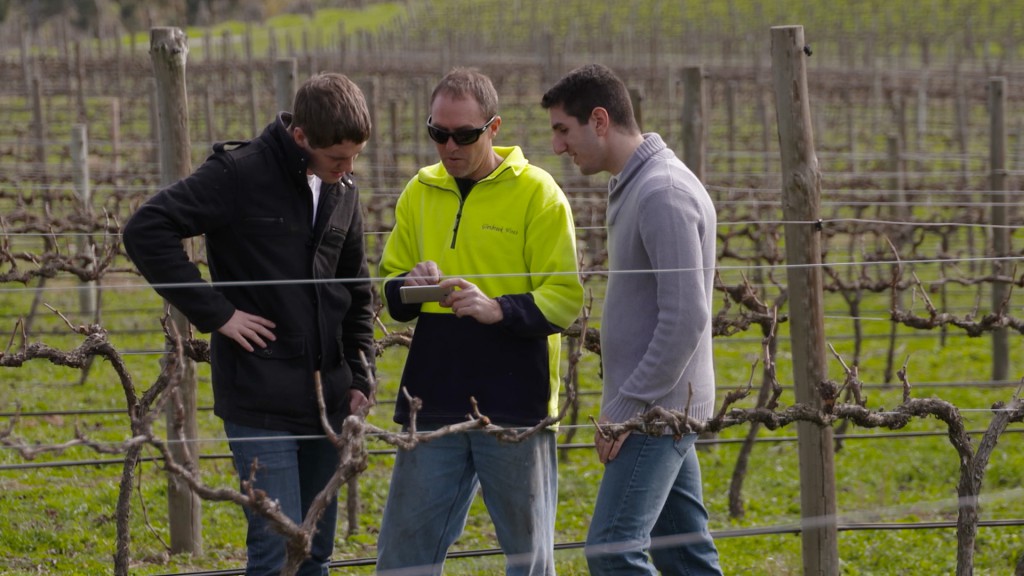
    Seer Insights’ product Grapebrain is made up of two components, a mobile app that the farmer uses to count the grape clusters on the vines and then a cloud service that analyses the data and produces web based reports for the farmers.

    The current methods are notoriously unreliable with Seer Insights estimating mistakes cost the Australian viticulture industry $200 million a year as harvests are miscalculated resulting in either rotting fruit or wasted contractor fees.

    Born in an elevator

    Seer’s founders, Harry Lucas and Liam Ellul, started the business after a chance meeting on their university campus. “We started off doing this after being stuck in a lift together,” remembers Liam. “Originally we were looking at the hyper-spectrum imaging for broadacre farming but when we started looking at the problems we ended up talking to wine organisations about this.”

    “The technology predicts how many grapes will be coming off the vineyards at the end of the season to enable people to sort out their finances,” Harry says. “The growth process grapes go through is difficult to model so we use machine learning to do that.”

    For both the founders having an off the shelf product, in this case Microsoft’s machine learning tools, to run the data analysis made it relatively easy to launch the product.

    As a winner of Microsoft’s Tech eChallenge, the startup has won a trip to the United States as well as being profiled by the company as a machine learning case study.

    Over time as these tools become more accessible to small companies we’ll see more businesses accessing machine learning services to enhance their operations.

    As companies face the waves of data flowing into their businesses over the next decade, it will be those who manage it well and gather valuable insights from their information that will be the winners.

    Similar posts:

    • No Related Posts
  • Automating the farm with drones

    Automating the farm with drones

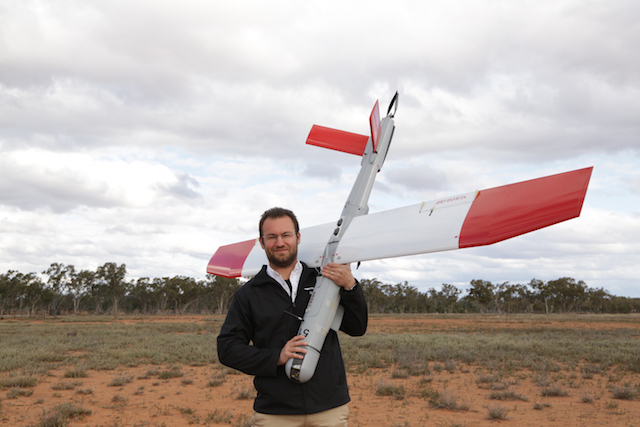
    Can unmanned aircraft solve Australia’s feral animal problem? Startup Ninox Robotics believes sending military-grade unmanned aerial vehicles (UAVs) into the country’s outback can help farmers control pests such as wild dogs and pigs on their sprawling properties.

    “Australian landholders and managers have been struggling against the problem of invasive pest species for decades, including feral dogs, pigs, deer and rabbits,” says the co-founder and CEO of privately owned Ninox, Marcus Elrich.

    Government steps in

    Regulatory requirements on commercial drones such as their only being allowed for line of sight operations during daylight hours and below 400m has limited the deployment of UAVs in large scale agricultural applications, particularly with feral animals that tend to come out at night.

    Ninox’s drones, supplied and operated by Israeli UAV supplier Bluebird, are licensed to operate in the dark and up to 50km from their base. They also have a detachable head that allows operators to switch cameras for different operations, allowing for normal cameras during daytime and infrared at night.

    The trial, being conducted by Ninox Robotics, is the most ambitious civilian drone trial ever conducted in Australian airspace. It utilises state of the art UAVs with advanced real time thermal imaging capabilities to detect invasive pests in rural areas.

    Currently Ninox only has approval from the Australian Civil Aviation and Safety Authority (CASA) to run three-week trials at selected sites in southern Queensland and northern New South Wales.

    Services to farmers

    Should the trials be successful and Ninox obtain a wider operating license from CASA, Elrich is looking at offering the service to farmers, government agencies and utility companies for operations ranging from pest control to asset and stock management along with search and rescue roles for emergency services.

    While the use of military drones is substantially more expensive than commercial drones with the costs currently around $3,000 per flight, Elrich believes the service is competitive with manned helicopter operations that many properties in rural Australia require.

    Should the drones be successful on Australia’s sprawling farms, it’s going to be another example of how the current wave of technologies is further automating agriculture. There’s a lot more labour to be saved with these devices.

    At present Elrich and Ninox see pest management as the initial application, but there’s many other ways farmers can be using robot technologies.

    Similar posts:

    • No Related Posts
  • Small business in the future workforce

    Small business in the future workforce

    While the discussion of the workforce of the future focuses, quite rightly, on the role of workers how employers and businesses fit into a changed economy is important as well.

    For businesses, the future of work affects not just the staff they employ but also the markets they cater for as those workers are also their customers. This is even truer for small businesses catering for local markets.

    The Committee for Economic Development Australia (CEDA) report issued last week describes some of those shifts in the economy and they are as important to businesses as workers.

    Where the money is

    The key thing from the report is that some communities are going to be more seriously affected by automation than others. The map of Australia that accompanied the CEDA report showing the likelihood of jobs being lost in across the nation underscores that imbalance.

    australia-likelihood-of-losing-jobs-to-automation

    In those areas expecting large disclocation, business is about to get tougher as workers find their skills are no longer valuable in the face of automation.

    Similarly, if local industries are becoming more automated then businesses servicing those industries are also going to need the skills to meet their customers’ more advanced needs.

    Consumer facing risks

    So small businesses in those districts of great disruption have to consider their markets; if they are consumer facing then their customer base could be shrinking while if they cater to other businesses then capital investment and finding skills in the new technologies are going to be required.

    Even there, the picture is cloudy as upstream industries will be affected. A town that serves as an agricultural centre, for example, will see smarter farms using less labor.

    In that town, those businesses servicing other businesses that serve local consumers will see their market getting thinner while those servicing the smarter farms and processors will need to buy new equipment and find workers with the skills to operate it.

    This isn’t a new phenomenon, it describes what’s happened to rural communities around the developed world as farming became industrialised through the Twentieth Century and the process is continuing as combines become self driving and automation replaces a lot of tasks currently done by labourers or manually operated machines.

    Challenging the commuter belt

    The question though is not just for rural enterprises, it applies for businesses everywhere as the workforce changes. It may well be the areas affected the most are commuter belt suburbs where white collar workers are displaced by artificial intelligence and algorithms creating problems for the local economy that’s based on services the needs of those middle class households.

    It’s difficult to say for sure and that’s why the CEDA measures are based upon probability. For business owners and managers though, they’ll need to watch shifts in their marketplaces closely and watch for the opportunities that will undoubtedly arise from a changing economy.

    Similar posts: