British public broadcaster the BBC has released the final details of its BBC Micro Bit project, a micro computer initiative intended to help British kids learn to code.
The device, a small computer similar to the Arduino or Raspberry Pi systems, is designed to help children understand programing and digital technologies.
Around the world the push to include technology topics such as computer coding into education curriculums is gathering pace and advocates for these subjects point out the underlying aim is to help children develop the logical thinking that will be required by many jobs of the future.
For the UK, the BBC Micro Bit may help their children compete. For all countries, figuring out the right skills to be taught in schools is going to be key for how nations fare in during the Twenty-First Century.
Nestled in a quiet wooded valley near the modern town of Telford in the English Midlands is the birthplace of the industrial revolution.
Today the three quiet villages — Coalbrookdale, Coalport and Ironbridge are quaint little communities but two hundred years ago they were the powerhouse of the Industrial revolution.
The hills around Ironbridge
Coal and ironstone mining in the district started in medieval times with the locals having a wide range of words to describe different types of coal — Lancashire Ladies, Randle and Clod being just a few terms.
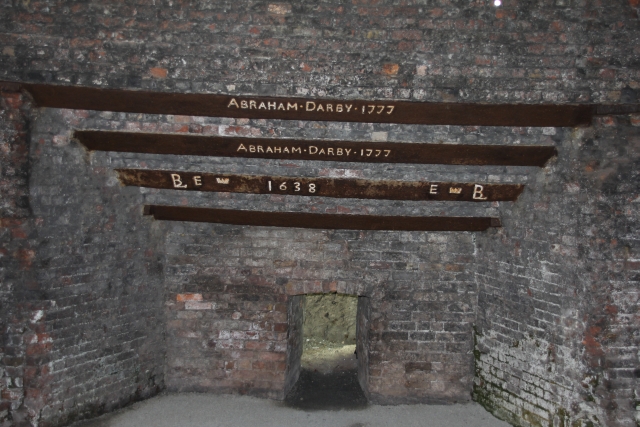
Iron had been smelted at Coalbrookdale from the late 16th Century however the arrival of potmaker Abraham Darby in 1709 that catalysed the industry with his method to reliably use coke for the blast furnaces.
Coalbrookdale by night – the Bedlam furnaces at their peak
Further downstream, the Madeley Wood smelter became infamous as the bedlam furnaces, named after the noise and confusion of London’s notorious asylum.
With the new reliable way to smelt iron and a string of blast furnaces along the valley, production skyrocketed and the valley’s natural advantages of accessible coal, iron and water meant it became the centre of the industrial revolution.
Increased production meant more workers and people flocked in from the surrounding agricultural communities — not in a dissimilar way to today’s experience in China.
That increased population meant more slums, what is today’s cute village was once sqaulid poverty, albeit an improvement on the life of an agricultural worker. Epidemics were common with 32,000 lives lost in cholera in 1831-2.
Despite the squalor of the workers’ quarters, the ironmasters were proud men and Coalbrookdale’s new bridge could only be build of one material — iron.
“This Bridge was cast at Coalbrookdale”
Ironmasters like John Wilkinson and Abraham Derby III were also ferocious promotors of their product and the bridge stands as a proud, strong advert for the strength of Coalbrookdale’s iron. Wilkinson himself built the first cast iron barge a few years later and was eventually buried in a cast iron coffin.
Boy and Black Swan cast iron statue
Eventually though the smelters of Coalbrookdale began to lose their competitive edge as mining and blast furnace technology improved, the ironmasters responded with moving into decorative and intricate cast iron features like the Boy and Swan statue that now graces the gardens of the Coalbrookdale Iron Museum.
The ruins of the bedlam blast furnaces at Coalbrookdale
Despite their successes, Coalbrookdale’s slide continued, with coal production peaking in 1871 and a steady decline over the following century.
Today, there’s not a lot of industry in Coalbrookdale except for one plant that keeps the area’s engineering tradition running.
For Britain, the question is how the nation’s economy continues it’s engineering traditions, 45 minutes drive away is a relic of Twentieth Century industry — the Austin motor works at Longbridge.
Today an assembly plant fills a small corner of the formerly sprawling factory site and over it flies the flag of it’s new owners. The People’s Republic of China.
Earlier this week I interviewed Vivek Kundra, the former US Chief Information Officer and now Salesforce executive, on innovation, technology and government with some of the Australian business perspectives run as a story in Business Spectator.
Something that stood out for me from the interview were Vivek’s views on the effects of governments making both innovations and information freely available.
“Two policy decisions that transformed the future of civilisation – GPS opening and human genome project through the Bermuda Principles.”
While it’s probably too early to draw conclusions on how the opening of the human genome data will change business, it’s certainly true the Global Positioning System has allowed whole new industries to evolve and it’s an important lesson on making technology available to the masses.
The Global Positioning System was, like the internet, a US military technology developed during the Cold War with the Soviet Union.
After Korean Airlines flight 007 was shot down by Soviet fighters in 1983, President Reagan approved civilian use of the GPS – then named Navstar – to prevent similar tragedies.
Such a decision was controversial, this was military technology being given over to the general population which could be used by enemy forces as well as airlines and truck drivers.
No doubt if the GPS technology was developed in the UK or Australia, there would have been demands to monetize the service. It almost certainly would have been sold off to a merchant bank that would have charged for the service and stunted its adoption.
By making GPS freely available, the US gained a competitive advantage which maintains the nation’s technological and economic lead over the rest of the world.
This openness isn’t just an advantage for technology companies. While US governments are no means perfect, the relatively open nature of local, state and Federal administrations is an advantage for the United States economy and society. As Vivek says,
Making data available provides three concrete functions; it allows citizens to fight corruption, it allows you to build the next billion dollar companies and it transforms government functions by breaking down silos.
When the default position of government is to classify everything as secret or ‘commercial-in-confidence’, there’s little chance of an entrepreneurial culture growing in that society – instead you have a business culture that favours connected insiders who can trade off their privileged contacts within government.
A culture of closed government reflects the business culture of a society and the reluctance of both the private and public sectors to openly share knowledge is why countries like Britain and Australia will struggle to emulate the United States.