Tag: china

  • Interesting times as the global steel glut bites

    Interesting times as the global steel glut bites

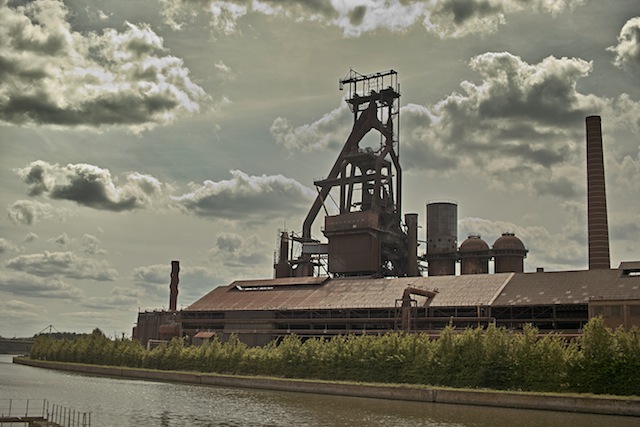
    For all the talk of digital disruption, who would have thought the old fashioned steel industry would be the industry causing the greatest upheaval in today’s economy?

    Globally the steel industry is in trouble. In China, the UK and Australia steelmakers are facing a painful time as chronic overcapacity bites.

    Beyond the immediate domestic problems of having a major part of its manufacturing industry shut down, Australia faces an added problem as the nation’s economic policies were based on a never ending Chinese demand for iron ore and coal.

    OECD “Excess Capacity in the Global Steel Industry" (2015)
    OECD “Excess Capacity in the Global Steel Industry” (2015)

    The impending collapse of Bohai steel shows the Chinese industrial boom is now in the past and the onus on Beijing’s rulers is to stimulate a domestic services economy.

    For the UK, the collapse of their steel industry adds further uncertainty to a nation that’s already putting its global role at stake with the referendum to move out of the European Union.

    Should Britain turn away from Europe, they will need to find some compelling reasons to be competitive in the global economy. Fantasies of some sort of Anglo-centric Commonwealth of Nations won’t be enough to sustain the Little Englanders and their high cost of living.

    In fact, the British problems of high costs and decades of underinvestment are common across the English speaking world – although Canada, New Zealand and Australia are particularly at risk in the current economic climate given their dependency on commodities and Chinese markets.

    That Chinese curse of may you live in interesting times is proving true again, we are about to enter a fascinating economic period. Our business and political leaders, along with our resilience, are about to be tested. The steel industry is the first test.

    Similar posts:

  • Building the internet of rice cookers

    Building the internet of rice cookers

    Are domestic appliances the next wave of connected devices? Chinese smartphone manufacturer Xiaomi hopes so.

    Xiaomi is best known for its cheap smartphones aimed at third world markets and the company’s move into connected kitchen devices marks an expansion into broader areas.

    Smartphones being the centre of Xiaomi’s product offerings seems to be the common factor in the expanded range of devices, with the company hoping their ecosystem will be a compelling point of difference in a crowded market.

    The idea the smartphone will be the centre of people’s connected lifestyles isn’t new but Xiaomi’s bet on low margin home appliances to drive smartphone sales and subscriptions to cloud services seems a brave move.

    It may work however, the business models of tomorrow look improbable today.


    Similar posts:

    • No Related Posts
  • China’s rocky economic pivot

    China’s rocky economic pivot

    As the Chinese economy adjusts to new economic realities, some of the costs are beginning to be felt.

    In China’s North-East where the economy is dominated by state owned enterprises in staid heavy industries, workers are moving to more promising regions and local leaders are worried.

    However with the Chinese economy pivoting, things aren’t doing so well in the more laissez-faire South Eastern provinces either with workers giving up their precious New Year’s holidays to protest unpaid wages and unfair treatment.

    For the Chinese government, this worker unrest is a serious problem. How the country’s leaders try to address the causes could well have global ramifications as the world’s economy faces the reality of massive economic overcapacity.

    Out of the box thinking is needed, but it may not be enough to overcome the fears and needs of ordinary, angry workers. What is clear is that an economic pivot is never smooth.

    Similar posts:

  • Silicon Valley and the rise of Chinese innovation

    Silicon Valley and the rise of Chinese innovation

    Silicon Valley could be soon surpassed by China warns Uber’s Travis Kalanick.

    While sceptics could dismiss Kalanick’s claim as his simply sucking up to his hosts in Beijing where he made the comment, or put the statement down to a PR campaign for his company’s renewed push into China, there may be a kernel of truth.

    If for nothing else, the Chinese diaspora across the Pacific Rim is known for its entrepreneurial drive. From Bangkok to San Francisco and Sydney, Chinese communities have a reputation for being full of smart and hardworking business people.

    Added to the Chinese cultural aspect is history. Fifty years ago car makers in Detroit and motorbike manufacturers in Birmingham, England, scoffed at the idea that their Japanese competitors could overtake them.

    Within a quarter of a century they were proved wrong.

    Another concern for Silicon Valley is that it could be losing its edge. As veteran journalist Tom Foremski points out, increasingly workers in the Bay Area live in a privileged bubble.

    Foremski discusses how younger, creative and innovative workers are finding opportunities in cheaper and more diverse American cities like New York’s Brooklyn.

    America’s diversity, and depth of its economy, will continue to be a strength for the foreseeable future but Americans, particularly those in the Bay Area, shouldn’t be resting on its laurels.

    Travis Kalanick’s warning might be dramatic, but it isn’t beyond the realms of possibility.

    Similar posts:

  • The risk of misunderstanding China

    The risk of misunderstanding China

    In the early 1990s I was working for a British company in Hong Kong and regularly commuting to Taipei. On a Cathay Pacific flight back from Taiwan one Friday afternoon, I found myself on the same flight as the organisation’s Asia-Pacific director who graciously got me into the lounge for a beer.

    Over that beer he told me how earlier in the year he’d been asked by one of the pukka English directors why he was bothering spending so much money in business development for ‘third world countries’ like Taiwan and South Korea.

    Jeff, as we’ll call the director, laid down a challenge to his board. “Come out and have a look for yourself,” he told them.

    Some of the UK based directors took Jeff up and flew out to Hong Kong, first class on BA of course, and then continued on to Taipei where they suitably amazed to be greeted by a first world city.

    “They genuinely believed they were going to fly in a DC-3 and be met by a bunch of rickshaw wallas,” laughed Jeff, a long standing English expat. “The Brits don’t get East Asia.”

    It seems things haven’t changed much as veteran venture capital investor Mike Moritz made a similar point at a speech in London yesterday that the West doesn’t understand China, particularly Europe.

    “People underestimate China, especially in Europe,” Business Insider quotes Moritz as saying. “They have very little sense of the size, strength, and scale of ambition of the leading Chinese technology companies.

    Moritz pointed out the fund he leads, Sequoia Ventures, is now placing over half its money in non-US companies with Chinese businesses being high on the list.

    The West’s misunderstanding of China goes beyond business, with The Economist warning that many nations are soon going to have to choose between the PRC and the United States as Beijing sets up its own network of global alliances and trade accords.

    So far the United States has responded to this with clumsy efforts like the Trans Pacific Partnership, an attempt to quarantine China’s influence in the Western Pacific that actually gives PRC  based businesses a competitive advantage over nations that enter the deal which does little more than strengthen US corporate interests.

    Already in Africa, the results of China’s economic efforts are being seen. A good example is the new Ethopian Railway where the Chinese were quick to fund a project that EU and World Bank lenders had dragged their feet on.

    Just as English businessmen in the 1990s misunderstood what was going on in East Asia, it seems ignorance of Chinese growth and intentions are even more widespread today. There may be some shocks coming for countries like Australia who assume today’s realities are tomorrow’s.

    Similar posts:

    • No Related Posts