Tag: design

  • Making the case for engineers

    Making the case for engineers

    “It’s important to keep the engineers under control as they don’t understand costs,” a tech industry commentator said to me last week.

    That was an interesting view and one that’s at odds with the core role of engineers – engineering is applied science where the job description is to create something within the sponsor’s scope, time and cost requirements.

    It’s rare that a project doesn’t have cost constraints and it’s a very junior engineer who won’t be aware of those and how expenses are tracking against forecasts during the assignment. It’s a core role of the job.

    Engineers as financial naifs

    How this view of engineers being financial naïfs has developed is interesting in itself; there’s three factors that drove that commentator’s view.

    The first factor is the financiers and accountants have hijacked project planning and management – sort of like how marketers have overrun the social media sector – so it is in their interest to portray their professions as being the only people who can be trusted to watch the books.

    Giving the power of managing projects to the financiers has tragic results for many projects; invariably the money men misunderstand the costs required to meet a project’s scope resulting in a substandard result or, paradoxically, the project running massively over budget.

    IT industry failures

    The IT industry’s behaviour is a second factor which in itself can be split into two; the startup community’s model and the ‘rob the client’ mentality of the major outsourcing companies.

    One of the greatest business failures of the last thirty years has been IT outsourcing where enterprises have essentially written blank cheques to the global outsourcing firms to save computing costs.

    Because most of those projects have been run by moneymen with little understanding – despite their hubris – of either the business’ needs or the role of information technology in the organisation the results have often been catastrophic for shareholder or taxpayers, although very good for the salespeople and managers of the global outsourcing companies.

    Usually a good indicator of project doomed to failure is when a CEO or minister announces the scheme with the justification it will save an improbably large amount of money for the organisation; tears usually follow.

    The startup community’s attitude to project management has also twisted the engineer’s role. While there are some ventures that keep a very canny eye upon costs and deliverables – these are often the successful ones – many of the high profile, big funded companies take the attitude that engineers should focus on code while costs are a concern for founders and financiers.

    In that view, the software engineers don’t have to worry about costs – it is none of their business.

    Finally there’s a cultural element and it’s notable that the commentator speaking to me was Australian.

    Australian mediocrity

    One of the traits of modern Australian management is the culture of mediocrity and unaccountability that has crept into the nation’s business leadership from the early 1990s onwards. Tolerance of over budget or failed projects has become the cultural norm.

    Probably the best example of this was the deeply troubled National Broadband Network currently struggling to stay alive in the face of a restructured management, government hostility and community indifference. Both the previous and current management have shown themselves to be particularly unsuited to meeting the engineering and contractual challenges of the project.

    Interestingly, the engineers get blamed for the management’s hapless inability to deliver the project on time, budget or within the project scope.

    The perverse, and tragic, thing about the NBN is had managers listened to wise voices from the engineering and construction communities in the early days the scheme would have had a chance of succeeding despite the political incompetence and bastardry that surrounded it.

    Squandered resources

    As the western world and developed economies move into more constrained times squandering resources on poorly thought out or badly managed projects is becoming an unaffordable luxury.

    Engineers need to make the case they are not just a bunch of technology obsessed geeks implementing unrealistic and uneconomic solutions. Getting projects built properly is too important to be left to the accountants.

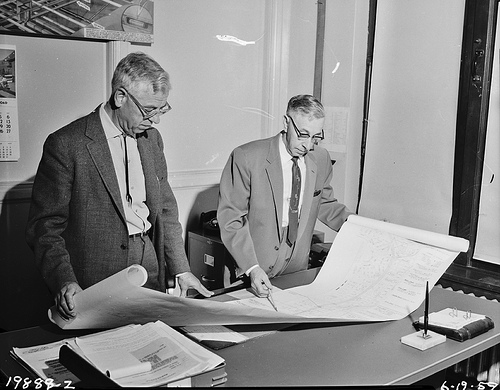
    Image from Seattle municipal archives image of Engineers planning a freeway through Flickr
     

    Similar posts:

    • No Related Posts
  • Spreading the good news – Canva’s Guy Kawasaki

    Spreading the good news – Canva’s Guy Kawasaki

    “My job is to spread good news,” says Guy Kawasaki of his role as Canva’s Chief Evangelist.

    Kawasaki was speaking to Decoding the New Economy about his role in popularising the online design tool which he sees as democratising force in the same way that Apple was to computers and Google to search.

    Democratisation is a theme consistently raised by startups and businesses disrupting existing industries and Kawasaki continues this theme.

    “The world is becoming a meritocracy; it’s not about your pedigree, it’s about your competence,” states Kawasaki.

    Falling barriers to entry

    What excites Kawasaki about the present business climate are the falling barriers to starting a venture. “Things are getting cheaper and cheaper, in technology you had to buy a room full of servers, have IT staff in multiple cities. Today you call Amazon or Rackspace and host it in the sky.”

    “Before you had to buy advertising for a concert, now if you’re adept at using social media – with Google Plus, Facebook,Twitter, Pinterest and Instagram – you have a marketing platform that fast, ubiquitous and cheap.”

    “What excites me is there are going to be more technologies, more products and more services because the barriers are so low.”

    Creating a valued and viable product

    For those businesses starting into this new environment, Kawasaki believes the most important thing a startup should focus on is getting a prototype to market; “at that point you will know you’re truly onto something.”

    “If you build a prototype that works you may never have to write a business plan,” says Kawasaki. “You’d never have to make a Powerpoint, you may never have to raise money as you could probably bootstrap.”

    Kawasaki view is the MVP – Minimum Viable Product – model of lean product development should have another two ‘V’s added for ‘Valuable’ and “Validated’.

    “You can create a product that’s viable, ie you could make money, but is it valuable in that it changes the world?”

    “Is your first product going to validate your vision? If it’s not then why are doing it?”

    The story Kawasaki tells is the tools to deliver valued and viable products are more accessible than ever before; that’s good news for entrepreneurs and consumers but bad for stodgy incumbents.

    Similar posts:

    • No Related Posts
  • Startups as a dream job

    Startups as a dream job

    “It’s my absolute dream job” says Melanie Perkins of her role as CEO and co-founder of online design app Canva in the latest Decoding the New Economy video.

    Since being set up ten months ago, Canva has grown to over a half a million people using the tool to create graphics for applications such as books, marketing banners and website logos.

    The idea for Canva came out of the difficulties Melanie found in using design software while lecturing at university and it’s growth has been as a result of the idea catching the imagination of investors like Lars Rasmussen, one of the driving forces behind Google Maps, and Guy Kawasaki, Apple’s original Mac evangelist.

    “We’ve got some great things coming in the next few months,” says Perkins. “So stay tuned.

    Similar posts:

  • The high cost of failing fast

    The high cost of failing fast

    It’s fashionable to talk about innovation and failing fast but exploring new technologies has always carried a great deal of risk as a BBC feature on failed aircraft design shows.

    Aviation, like automobiles, was a wonderful opportunity for early Twentieth Century tinkerers. With the added impetuous of two world wars, the development of aircraft saw some strange experiments.

    One of the things that drove aviation innovation was the evolution of materials science and manufacturing methods, sometimes with tragic results as we saw with the Comet jet liner’s fuselage failures and the DC-10s defective cargo door latches.

    In many ways, the early days of airliners was not dissimilar to today’s experiments with smart materials and 3D printing.

    Tragedies like the Comet and DC-10  should remind us that in some field the cost of failure is high.When a widget breaks, people can get hurt.

    As we experiment with new materials and manufacturing processes, we will make mistakes just as the aviation pioneers did. It’s an ethical aspect of innovation we need to keep in mind, there can be real costs to failing fast.

    Image of De Havilland Comet by Clinton Groves through Wikipedia


    Similar posts:

    • No Related Posts
  • Mixing brains, bravery and magic

    Mixing brains, bravery and magic

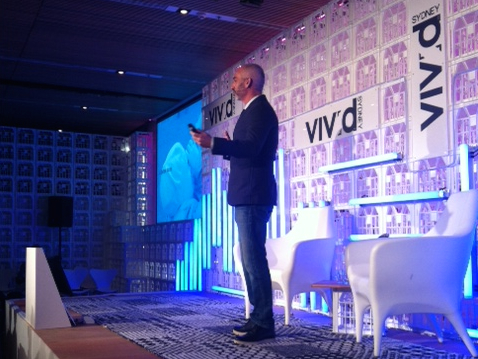
    A few weeks ago I interviewed Gadi Amit, principle of New Deal Design ahead of his visit to Sydney for the Vivid festival.

    Tonight his public talk for Vivid – Designing the Things We Love – didn’t disappoint, particularly his disdain for designing luxury goods.

    “I believe we should design things that help people live their lives; a $50,ooo watch doesn’t do that,” he told the audience.

    Through his presentation he showed his best known projects including the FitBit and Project Ara along with discussing some of his failures and why sometimes it’s best to part with a client should their philosophy differ with the designer.

    Gadi’s view is a refreshing take from the design and tech industries that are often fixated with celebrity and bling. The view also ties into the manifesto of New Deal Design – “We mix brains, bravery and magic.”

    Similar posts:

    • No Related Posts