Tag: robotics

  • The dangers of hands free driving

    The dangers of hands free driving

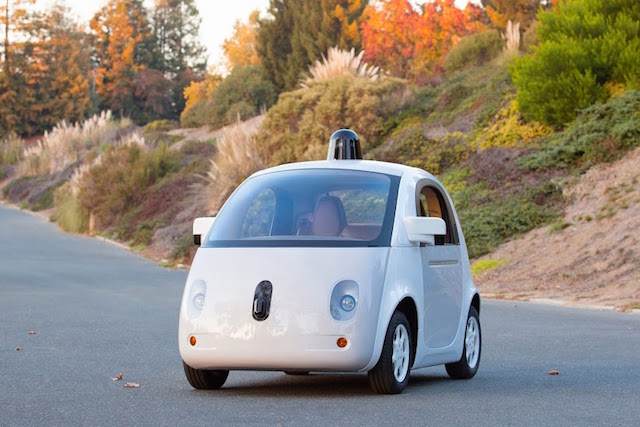
    Last May 7 45-year-old Joshua Brown was killed when his car hit a truck just outside Willston, Florida. His Tesla was operating in ‘autopilot mode’ and he was the first death in a driverless car accident.

    Now the investigation and the speculation into the Mr Brown’s unfortunate demise begin. It’s worth watching to see how the accident will change public perception and government regulation of autonomous vehicles.

    What’s notable is Tesla are careful not to recommend leaving the car to its own devices, as The Verge reports.

    Tesla reiterates that customers are required to agree that the system is in a “public beta phase” before they can use it, and that the system was designed with the expectation that drivers keep their hands on the wheel and that the driver is required to “maintain control and responsibility for your vehicle.” Safety-critical vehicle features rolled out in public betas are new territory for regulators, and rules haven’t been set.

    Another aspect that should concern users and regulators is Tesla’s software industry attitude towards liability and safety in dismissing the car’s flaws as being an unfortunate consequence of imperfect beta software. That may cut it in the world of Microsoft Windows 3.11 but it doesn’t cut it when lives are at stake in the motor industry.

    Similar posts:

    • No Related Posts
  • Employment and business in an era of ubiquitous robotics

    Employment and business in an era of ubiquitous robotics

    While robots threaten to take our jobs, they also promise to change the agricultural industry. That paradox describes how both the risks and opportunities in our increasingly automated word.

    Brian Halweil, an ag-tech writer, describes how small farmers are using specialist robots to automate their operations. He lays out how the miniaturization of farm machinery will help encourage small, diverse farms.

    The available of cheap, adaptable robots driven by almost ubiquitous and build in artificial intelligence is going to drive automation across most industries.

    Ubiquitous robotics though means we have to rethink employment and social security as the workforce adjusts to new methods of working. Inadvertently former McDonalds chief executive Ed Rensi touched upon this in his somewhat hysterical response to the campaign to increase the minimum wage across the United States.

    Rensi is right to point out that fast food restaurants will replace workers with robots where they can, indeed McDonalds led the way through the 1970s and 80s in introducing production line techniques to the food industry and the company will automate their kitchens and ordering systems regardless of minimum wage levels.

    That relentless automation of existing jobs is why there is now a world wide push to explore the concept of a guaranteed minimum wage. We seem to be at the same point we were almost a century ago where the ravages of the Great Depression meant societies had to create a social security safety net.

    As we saw with the Great Depression, the jobs eventually came back but in a very different form in a much changed economy. We’re almost certainly going to see the same process this century, hopefully without the massive dislocation and misery.

    For businesses and industry, Halwell’s point about much smaller and adaptable robots giving rise to more nimble businesses is almost certainly true. For investors, managers and business owners adapting to that world will be key to avoiding being on the minimum wage themselves.

    Similar posts:

  • What happens when machines start to learn

    What happens when machines start to learn

    Computer programming is one of the jobs of the future. Right?

    Maybe not, as Japanese industrial robot maker Fanuc demonstrates with their latest robot that learns on the job.

    The MIT Technology Review describes how the robot analyses a task and fine tunes its own operations to do the task properly.

    Fanuc’s robot uses a technique known as deep reinforcement learning to train itself, over time, how to learn a new task. It tries picking up objects while capturing video footage of the process. Each time it succeeds or fails, it remembers how the object looked, knowledge that is used to refine a deep learning model, or a large neural network, that controls its action.

    While machines running on deep reinforcement learning won’t completely make programmers totally redundant, it shows basic operations even in those fields are going to be increasingly automated. Just knowing a programming language is not necessarily a passport to future prosperity.

    Another aspect flagged in the MIT article is how robots can learn in parallel, so groups can work together to understand and optimise tasks.

    While Fanuc and the MIT article are discussing small groups of similar computers working together it’s not hard to see this working on a global scale. What happens when your home vacuum cleaner starts talking to a US Air Force autonomous drone remains to be seen.

    Similar posts:

    • No Related Posts
  • Seppuku for the health care sector?

    Seppuku for the health care sector?

    It turns out Seppukuma is a parody and I fell for it. My apologies.

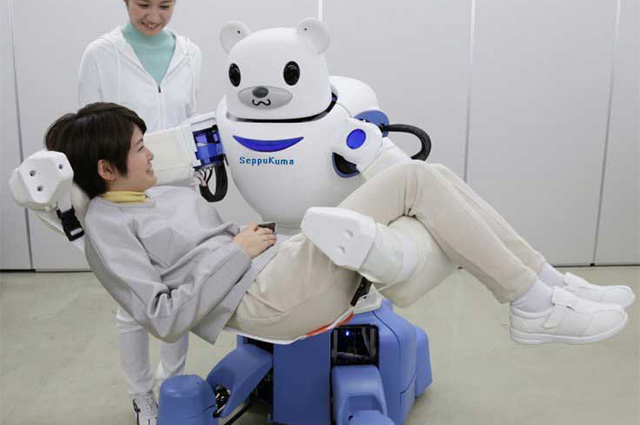
    Continuing the theme of Japanese robotics meet SeppuKuma, the friendly robot bear that might be the last thing you ever see.

    When we look at the future of work, health care comes up as one of the fields that is least vulnerable to automation. Seppukuma shows we shouldn’t take that for granted.

    Seppukuma is also an interesting example of how technology can subvert laws. Banning assisted suicide means little when a robot can be programmed to it.

    As cheap and accessible robotics become commonplace so too do devices like suicide assisting androids which raise a whole range of legal and ethical issues.

    Even though Seppukuma is a joke, the technology is feasible. We need to consider the issues and risk these devices will raise.

    Similar posts:

    • No Related Posts
  • Making seniors mobile

    Making seniors mobile

    One of the understated benefits of automation and robotics is it allows the elderly and disabled more mobility.

    Facing an aging population, the Japanese are unsurpringly ahead of the rest of the world in understanding this and, as the Wall Street Journal reports, researchers are investigating how driverless cars can help the elderly get around.

    While autonomous vehicles of all sizes promise greater mobility to many people currently restricted in their access, robotics also promises to extend our working lives just as mechanisation has over the past two hundred years.

    Similar posts:

    • No Related Posts