Across the city’s stations, ticket machines were disabled and access gates were opened, resulting in free rides that many, including this writer, took advantage of.
While the Muni’s management are claiming public safety and customer information wasn’t compromised, it is a very public reminder of the weaknesses in the Internet of Things and smartcity technologies.
Given the complexity of smartcity technologies it’s inevitable that hackers and malicious actors will find their way into Internet facing networks. The range of vendors involved and the vast diversity of devices, old and new, in the systems guarantees there will always be weaknesses.
The great challenge for the Internet of Things industry and smartcity advocates is to secure these diverse systems. The stakes are high for the communities using these technology.
Three years ago we interviewed Barcelona’s deputy mayor Antoni Vives about the possibilities of the smart city. What was notable about his views was the emphasis on the social and ecological benefits of these technologies.
“Barcelona has to become a city of culture, creativity, knowledge but mainly fairness and well being,” Vives said. “I would love to see my city as a place where people live near where they work, I would love to see the city self sufficient in energy and it should be zero emission city.”
Vives’ point is essential in the smart cities discussion. While the gadgets and data analytics aspects are important, it’s the benefits to government and the city’s inhabitants that are essential.
Which is a problem for telecommunication providers and tech vendors looking to find new, high margin, markets as most of the products they are touting are the classic ‘solution looking for a problem’ that has been a future of the computer industry for decades.
Telcos are in a more difficult position as many of the smart cities are deploying their own wireless networks which compete with their own often expensive solutions, particularly M2M services that rely on devices having costly SIM cards fitted.
It’s hard not to think AT&T’s move is one of a desperate late comer to a party that’s already not living up to expectations, it will be interesting to see if their CES announcement sparks some life back into the smartcity discussion.
“What if we were to wire up every corner of Singapore?” Asked Steve Leonard, the Executive Deputy Chairman of Singapore’s Infocomm Development Authority, at the CommunicAsia 2013 Summit.
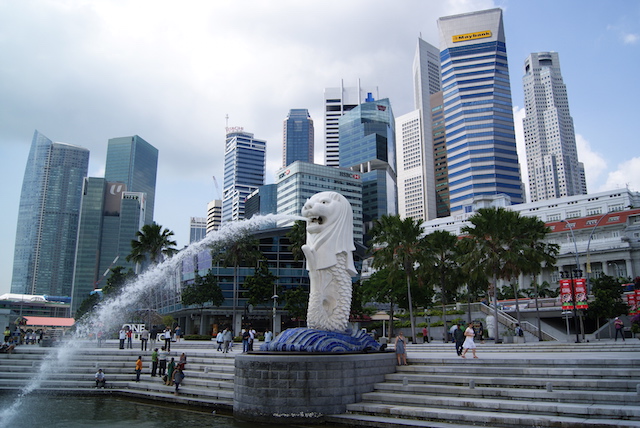
Two years later that question has been answered as the island state has covered the entire island with a fibre network, putting the country on course to create what Leonard describes as a ‘sensor fabric network.’
Speaking to Leonard ahead of his visit to Australia for the AIIA Internet of Things conference in Canberra later this month, it’s impressive what the IDA looks to do in building Singapore as a connected nation.
“We think we have an opportunity to use some of the natural advantages Singapore has,” Leonard says. “In this case being relatively small and an island. The idea that constraints mean creativity.”
One of the areas Leonard sees as an opportunity with the IoT is in the health care industry where chronic care care can be moved back into the community while hospitals and clinics can be used for acute patients.
One of the challenges for every city rolling out an IoT infrastructure is the plethora of standards, “we’re trying to think about IEEE standards and we’re trying to think about interoperable as possible with technology as it evolves.”
“Whether it’s East or West, Singapore wants to be a place where business can be done and people can be healthy,” says Leonard. “What we don’t want to do is develop a standard that might work for us but exclude us from something that originates in another part of the world. We want to be open to things that evolve.”
Becoming a connected city is key to being a leader in a connected world, “we’re always making sure we seek to have more wireless access points.” Leonard says, “we also have one gig ninety-five percent fibre coverage across the island. We also want to enhance our capabilities through 4G and Wi-Fi.”
“All of those things together in some sort of concert create that fabric that we’re working on.”
Historically Singapore’s place in the world has revolved around being a trading hub which has led it to being one of the world’s biggest cargo shipping ports.
With broadband internet access available pretty well throughout the island, it should open opportunities for entrepreneurs, businesses and government agencies to explore how ubiquitous internet creates opportunities.
As the world becomes moves from physical goods to bytes, Singapore is looking to becoming as much a technological centre as a goods hub. For Steve Leonard and the IDA the task is to make sure the city takes its place in the connected economy.