Tag: smarthome

  • Samsung pins its hopes on the Internet of Things

    Samsung pins its hopes on the Internet of Things

    South Korean industrial giant Samsung is struggling, in the last year its smartphone division reported a 75% drop in revenues while their handsets, while still the world’s most popular, lost ten percentage points of market share.

    The company’s smartphone division is stuck because mobile carriers in the western world are abandoning subsidies for handsets, with most developed markets now at saturation point for cellphone adoption there’s little point in chasing market growth for all but the most desperate telco.

    For Samsung that’s been a problem as their premium model strategy has been based upon western consumers ordering a new phone every 18 to 24 months as their mobile contracts were renewed, now those deals are not so common a key sales channel for the Korean conglomerate has been lost.

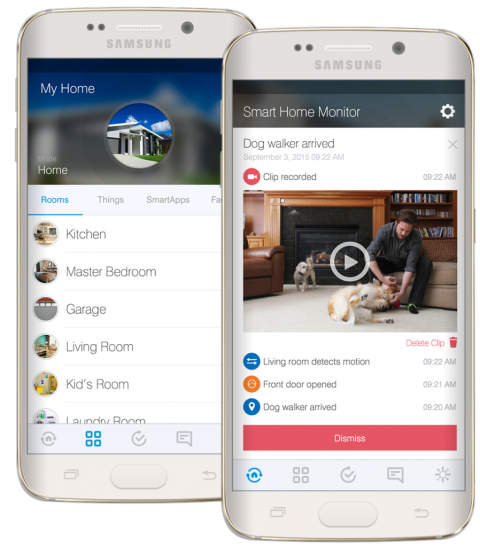
    This leaves Samsung looking for the next market and at this week’s IFA consumer technology event in Berlin, the company unveiled its Smart Things hub, a cylindrical device that connects with your TV, air conditioning, music system, and other home appliances.

    Smart Things was an acquisition Samsung made last year to improve its IoT product line and the company has an open platform for connecting household devices with over 200 already certified.

    For Samsung with its range of domestic equipment this may well mark the future for the business. The interesting thing though is the smartphone is still integral in today’s vision of the connected home, so we won’t see Samsung leaving the handset market soon.


    Similar posts:

    • No Related Posts
  • How to make the IoT pay

    How to make the IoT pay

    How do companies sell the internet of things to consumers? This was the question at the opening panel of the Internet of Things World conference in San Francisco this morning.

    Belkin’s Chief Technology Officer Brian van Harlingen took the lead in the panel stating that the opportunity lies in making sense out of the IoT’s complexity. “With data comes complexity, we have to make it simple for the end user,” said Van Harlingen

    Van Harlingen’s view was backed up by Verizon’s Chief Data Scientist, Ashok Srivastava, who understandably sees the challenge of managing the information generated by masses of devices as being an opportunity for his company and data scientists in general.

    That masses of data is being generated isn’t surprising seeing the other member of the morning’s panel was Jason Johnson, Co-founder and CEO of  smart lock maker August. That the ordinary door lock may be generating masses of data indicates just how much information might be churning around the average smart home in the near future.

    Cut out the complexity

    It may well be that all of this data and complexity isn’t necessary as Joe Dada, the CEO and founder of smarthome company Insteon, point out. “Leave the network as quiet as you can,” is his advice. “People over-estimate the amount of data that needs to be pushed across the network.”

    Dada, a twenty-five year veteran of the smarthome industry, sees the over-complication of the IoT as being a weakness in many of the products and business models being touted today with his company selling their products on being convenient, safe and fun.

    While Dada has a successful business model, many of the other business don’t and exactly how to make money from the IoT wasn’t really answered by the panel.

    Capturing efficiencies

    It may well be that for many the answer lies in making existing products better, in talking to Cisco’s Brad Bechtold who runs the networking giant’s Oil and Gas Industry Transformation division estimates that there could be operational savings of up to 11% for the sector through implementing IoT technologies.

    With estimates of the oil and gas industry’s size being around four trillion dollars a year, that represents an opportunity of over a hundred billion dollars a year in the one sector alone.

    Selling the IoT

    So it may be that the way to sell the Internet of Things into the industrial sector is to point out the operational savings available. Should the promise of substantial cost reductions be realised then it may even trigger a new wave of capital investment as businesses decide it’s easier to upgrade equipment than retrofit it.

    The analytics and management aspect will turn out to be lucrative for many businesses as well, however the key to success is going to be demonstrating how these services add value for customers.

    For the consumer market however the key probably lies in Joe Dada’s advice – keep it easy, convenient, safe and fun.

    Similar posts:

    • No Related Posts
  • A series of weak links

    A series of weak links

    One of the ongoing discussions in the world of the Internet of Things are the security weaknesses in many devices that leave networks vulnerable to rogue devices or malicious hackers.

    A good example of this is Craig Hockenberry’s post on his Furbo.org site on how bugs in Apple’s Bonjour software messes with networks.

    While Apple won’t say what causes this issue – an ominous point in itself – Hockenberry surmises it’s due to older software in some devices that no longer have updates available, which is another problem facing the IoT.

    On top of Hockenberry’s story, a piece in Threat Post reports the Open Smart Grid Protocol has serious security issues.

    The writers of the package that’s installed on more than four million smart meters and similar devices worldwide decided to write their own encryption algorithm that has proved easy to break.

    So the smart home which might feature both a slew of Apple devices and one of these exposed smart meters has a range of security holes that the occupier has no idea about. This hardly breeds confidence.

    As the Internet of Things is rolled out, security is going to have to be at the front of developers’ and vendors’ minds. The stakes are too high for shoddy and ill thought out compromises or for vendors like Apple who rate secrecy over their customers’ security.

    Similar posts:

    • No Related Posts
  • Google moves deeper into the smarthome

    Google moves deeper into the smarthome

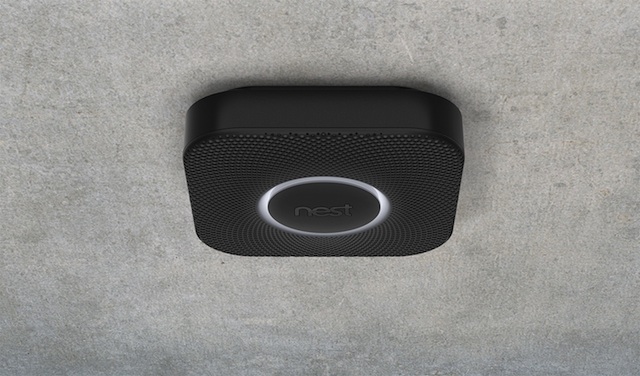
    Since Google bought smart smoke detector company Nest earlier this year it’s become apparent that the search engine giant sees the smarthome as one of its big marketplaces in the near future.

    Nest’s acquisition of smarthome automation company Revolv yesterday illustrates this and shows that Nest is Google’s smarthome division.

    As the smarthome becomes more common, the value of controlling the systems that run the connected home’s devices becomes greater. So the positions being taken by Apple, Google and Samsung are going to be important as the marketplace develops.

    The latter relationship — Google and Samsung — is particularly fascinating as Samsung’s smartphones and tablets are locked into the Google Android system which makes it harder for the Korean industrial giant to strike off in an independent path.

    All of this of course is based upon homeowners being happy with having their smarthomes locked into one vendor’s platform. We may yet see the market rebel against the internet giant’s ambitions to carve up the connected world.

    Similar posts:

    • No Related Posts
  • Jailbreaking the Internet of Things

    Jailbreaking the Internet of Things

    The news that hackers have turned their attention to Nest thermostats raises some delicious possibilities for the Internet of Things.

    Jailbreaking smartphones has been normal for years as people circumvent restrictions to add features or software and there’s no reason that this can’t be done to smart thermostats, light bulbs or kettles.

    Almost all the smart devices being deployed have processors and capabilities far greater than what’s needed to carry out their designed purpose, so an imaginative hacker can do some interesting things with a jailbroken home automation system.

    Using your kettle to control your lights or fridge to open your garage door is a bit of gimmick but there’s plenty of potential for doing some cool, and mischievous, things.

    While hacking the smart home for kicks might be relatively harmless, tinkering with industrial devices could have unintended and disastrous consequences. It’s another example why security is one of the top concerns as the Internet of Things is rolled out.

    Similar posts:

    • No Related Posts