Tag: AOL

  • Links of the day – redesigning the car and South China Mall.

    Links of the day – redesigning the car and South China Mall.

    The CES extravaganza continues in Las Vegas with a wave of announcement, most of which I’m ignoring, however the motor industry continues to show off new developments with Mercedes displaying their vision of how a driverless car will look.

    Other interesting links today include an analysis of the ill fated South China Mall’s flaws and how Amazon is reorganising its R&D efforts after the failure of the Amazon Fire.

    Mercedes redesigns the car

    A little while back I suggested that we could do better in redesigning the driverless carMercedes have gone ahead and done it.

    Mercedes’ redesign of the driverless car indicates just what can be done when we rethink what passengers will need in the vehicles of the future.

    Ford recalls a vehicle for a UI upgrade

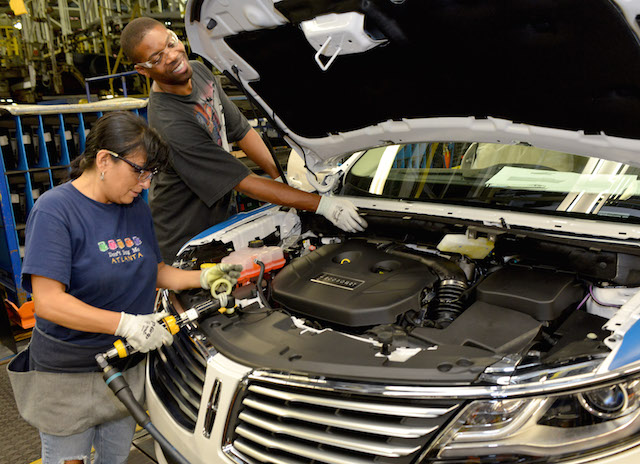
    Ford has recalled its Lincoln MKC SUV models for a software upgrade after discovering drivers were shutting down the cars by accident.

    What’s notable with this story is how software changes are now one of the main reasons for recalling vehicles and how design flaws in an automobile’s computer programs are relatively quickly discovered and resolved.

    We will probably find in the near future car manufacturers will carry out the upgrades remotely rather than ask owners to bring their vehicles into dealerships.

    A long running security flaw is exposed

    In August 2013 a security researcher warned UK online greeting card vendor Moonpig that its system exposed up to six million users’ account and financial details. Until Monday the company had ignored him. This is a tale of classic management disregard for customer security and one area where business culture needs to dramatically change.

    Rumours of an AOL – Verizon merger

    It’s a speculative story but if a merger between US telco Verizon and former internet giant AOL goes ahead it may mark another wave of telcos moving into content services, although it’s hard not to think that Verizon could spend its money more wisely.

    After a flop, Amazon restructures its R&D

    The Amazon Fire was by all measures a miserable flop as a smartphone however it seems the company learned some important lessons from the device’s market failures. Instead of abandoning its research efforts, the online behemoth is increasing it’s R&D budget and reorganising its development division.

    Design fails of the South China Mall

    South China Mall just south of Guangzhou has been the poster child of Chinese malinvestment during the nation’s current boom. In a blog post from 2011, a shopping mall expert visits the development and points out the major design faults in the complex which may well have doomed the project from the beginning.


    Similar posts:

    • No Related Posts
  • Lords of the digital manor

    Lords of the digital manor

    There is something fundamentally wrong with AOL’s media business states a Business Insider headline.

    What is fundamentally wrong is quite basic to anyone who has owned or managed a business – money.

    The problems at AOL illustrate the deep flaws in the “digital sharecropper” business model of putting free or cheap content on the web to harvest online advertising.

    Lords of the digital manor

    Sites like Demand Media and Huffington Post can’t make money from content if too many staff expect to get paid. Chris Anderson illustrated this in a rebuttal to Malcolm Gladwell where he examined the economics of his GeekDad blog and the work of its manager, Ken;

    So here’s the calculus:

    • Wired.com makes good money selling ads on GeekDad (it’s very popular with advertisers)
    • Ken gets a nominal retainer, but has also managed to parlay GeekDad into a book deal and a lifelong dream of being a writer
    • The other contributors largely write for free, although if one of their posts becomes insanely popular they’ll get a few bucks. None of them are doing it for the money, but instead for the fun, audience and satisfaction of writing about something they love and getting read by a lot of people.

    It’s almost touching to picture the modern day digital serf touching his flat cap and murmuring “thank you m’lud” on receiving a ha’penny from the lord of the digital manor before scampering back to working on becoming a well read, but unpaid writer.

    We don’t pay writers

    The business model of the Geek Dad blog or the Huffington Post relies upon these unpaid writers donating their work and time –the digital sharecroppers as described by Jeff Attwood.

    Low paid or free labour is essential to the success of these site, when the bulk of advertising income goes straight to the proprietors the digital aristocrats – Lord Chris of Wired or Duchess Arianna – can live well.

    The business model falls apart when management starts taking a cut of the profits; install a highly paid CEO and management team with their squadrons of Executive Vice Presidents or Group General Managers with the Medici-esque perks and entitlements these folk demand and the profits disappear.

    AOL’s problem is it has too many highly paid managers extracting wealth from the company’s cashflow.

    This is exactly the same problem print and television media empires have, once the rich rivers of gold allowed them to build up well paid management castes that are now crippling the businesses as revenues can’t support their financial burden.

    Paying for digital media’s future

    Over time, online media revenues are improving. As Morgan Stanley analyst Mary Meeker pointed out in 2010 that U.S. consumers spend 28 percent of their media time online, yet in 2010 only 13 percent of ad spending goes to the Internet. As advertisers follow consumers, publishing on the web will become more profitable.

    The risk for big media organisations is their money will run out before the digital renaissance arrives and when it does, they may have squandered their natural advantages by shedding quality journalists, experienced sub-editors and good editors in an effort to prop up executive bonuses.

    AOL’s management problem is part of a much bigger problem across markets and industries, we can call it managerialism – there are too many highly paid managers getting in the way of the writers, engineers, scientists, artists and tradesman who add real value to their organisations.

    Strangely, it may be Chris Anderson’s “free” model that kills the managerial culture as enterprises that can’t afford to pay product creators certainly won’t pay an Executive Vice President’s entitlements.

    Similar posts:

  • Greater fools and lesser fools

    Greater fools and lesser fools

    As Groupon struggles to get its public offering to the market and the startup mania continues in the tech sector, it’s worthwhile having a look at what underpins the modern Silicon Valley business model along with it’s limitations and risks for those who want to imitate it or invest in it.

    Distilled to the basics, the aim of the venture capital funded startup is to earn a profitable exit for the founders and investors. While there’s some exceptions – Apple and Google being two of the most notable – most of these businesses are not intended to be profitable or even sustainable, they are intended to be dressed up and sold onto someone else.

    This can be seen in what many of these companies spend investors’ money on; in an example where a startup receives 10 million dollars VC investment, we may see a million spent on developing the product, five million allocated customer acquisition and four million on PR. The numbers may vary, but the proportions indicate the investors’ and management priorities.

    Focussing on PR and customer acquisition is essential to attract buyers, the public relations spend is to place stories in the business media and trade press about the hot new business and spending millions buying in customers backs the narrative of how great this business is. By creating enough hype about a fast growing enterprise, the plan is prospective buyers will come knocking.

    But who buys many of these business? In some cases a company like Microsoft or Google may buy the startup just to get the talents of some smart developers or entrepreneurs, but in many cases it’s fools being parted from their money.

    Greater Fools

    The greater fool model the core tech start up model; two guys set up a business with some basic funding from their immediate circle; the friends, family and other fools. A VC gets involved, makes an investment and markets the company as described above.

    With enough hype, the business comes to the attention of a big corporation whose managers are hypnotised by the growth story and possibly feel threatened by the new industry or have a Fear Of Missing Out on the new hot, sector.

    Eventually the big business buys the little guys for a large sum, meeting the aim of the founders and venture capital investors. The buyer then steadily runs down the acquired business as management finds they don’t understand it and find it a small, irritating distraction from their main business activity.

    While there are hundreds of examples of this in the tech sector, the funny thing is the biggest examples are in the media industry with Time Warner’s purchase of AOL and News Corporation of MySpace.

    Lesser Fools

    As a bubble develops we start seeing the Initial Public Offering arrive and this is where the lesser fools step in.

    The mums and dad, the retiree, German dentists, the investment funds and all the other players of the stock market are offered a slice of the hot new business.

    Usually the results are interesting; the IPO is often underpriced which sees a massive profit for the initial shareholders and underwriters in the first few days then a steady decline in the stock price as the pie in the sky valuations and the realities of the underlying business’ profitability become apparent.

    Steve Blank, a Silicon Valley investor and entrepreneur, put the greater or lesser fool scenario well in a recent article asking Are You The Fool At The Table? Sadly too many small and big investors, along with big corporations, are the fools at the table ignoring Warren Buffet’s advice on avoiding businesses you don’t understand and finding themselves the patsies that the Silicon Valley startup model relies upon.

    The fundamental misunderstanding of the venture capital driven Silicon Valley model of building businesses is dangerous as our governments and investment mangers are seduced by the glamorous, big money deals. It’s also understandable funding from banks and other traditional sources is difficult to find.

    An obsession with this method of growing businesses means that long term ventures with profitable underlying products and services are overlooked as investors flock to the latest shiny startup. That’s a shame and something our economy, and investment portfolios, can’t really afford in volatile times.

    For business owners, the venture capital model might be a good option if your aim is a quick, profitable sale to a fool. If your driving reasons for running a business are something different, then maybe the Silicon Valley way of doing business isn’t for you.

    Similar posts: