Tag: gaming

  • A Chinese cure for internet addiction

    A Chinese cure for internet addiction

    Internet and electronic games addiction is a problem that regularly surfaces in the media. In 2015 a Taiwanese man died after three solid days of gaming while in 2010 a South Korean couple allowed their three month child to starve while they concentrated on playing with a virtual child.

    Some Chinese families have taken to dispatching their kids to boot camps to cure their addictions with the New York Times reporting how some are resorting to electrotherapy treatments to wean children off games and the web.

    Three years ago the Times posted a fascinating and somewhat distressing video story on those Chinese boot camps with tearful teenage boys writing letters home telling their parents how they felt betrayed.

    More telling are the comments by the Addiction Specialist Director of the Daixing rehabilitation camp, Tao Ran, who believes the parents are responsible for what their children’s addiction to what he calls ‘electronic heroin’.

    “One of the biggest issues among these kids is loneliness,” he tells a parent group. “Did you know they feel lonely? So where do they look for companions? The Internet.”

    The problem of internet and electronic game addiction is real – exacerbated by the incentives for developers and social media sites to maximise the time users spend on their platforms.

    It’s also not just an issue for parents and children. For adults and business owners the lost time, productivity and health issues of spending too much time behind the computer are immense – not to mention the distorted view of the world that comes from a narrow slice of information and opinion.

    While electroshock therapy certainly isn’t the answer, we do need to be asking questions about responsible and safe use of computers and the internet.

    The Chinese response is an extreme, and probably unworkable, solution to the problem of electronic addictions however we will have to find ways to manage it.

    Similar posts:

    • No Related Posts
  • ABC Nightlife: Pokemon Go and the end of the ideas boom

    ABC Nightlife: Pokemon Go and the end of the ideas boom

    This Thursday night join Tony Delroy and myself on ABC Nightlife to discuss Pokemon Go, how tech is changing the workforce and the future of Australia’s technology industry following the Federal election.

    It’s taken a while but we finally have a video game that gets people off the couch and onto the streets. For the last two weeks we’ve been hearing stories of how hundreds of people are dodging cars, invading police stations and stampeding across parks as they try to catch virtual reality animals in the Pokemon Go game.

    What is Pokemon Go and is this the future of augmented reality are two of the questions Tony and I will be discussing. We’re also looking at what the Federal election means for the government’s much lauded Innovation Statement along with the Moonhack record of the greatest number of kids programming at one time.

    Some of the questions we cover include;

    • What is Pokemon Go?
    • Isn’t Pokemon somewhat old school?
    • Why did it take off?
    • So we’ve heard a bit about augmented reality. Is this what it’s really about?
    • Beyond games, are there any useful purposes for AR?
    • Are we all going to have strange headsets strapped to our heads?
    • Can we expected Australia to provide many of these AR applications?
    • What sort of support is the government giving these developers?
    • Apart from what was already announced what did the Federal election mean to the Aussie tech sector?
    • After all the noise late last year, tech and innovation wasn’t really much of an issue during the election?
    • Does all this talk of tech really matter to the average Australian worker?

    Join us

    Tune in on your local ABC radio station from 10pm Australian Eastern Summer time or listen online at www.abc.net.au/nightlife.

    We’d love to hear your views so join the conversation with your on-air questions, ideas or comments; phone in on 1300 800 222 within Australia or +61 2 8333 1000 from outside Australia.

    You can SMS Nightlife’s talkback on 19922702, or through twitter to @paulwallbank using the #abcnightlife hashtag or visit the Nightlife Facebook page.

    Similar posts:

    • No Related Posts
  • Virtual reality hits the market

    Virtual reality hits the market

    After virtual reality viewers being the big item at both the Mobile World Congress in Barcelona and Las Vegas’ Consumer Electronics Show earlier this year, it’s not surprising they are appearing on the market.

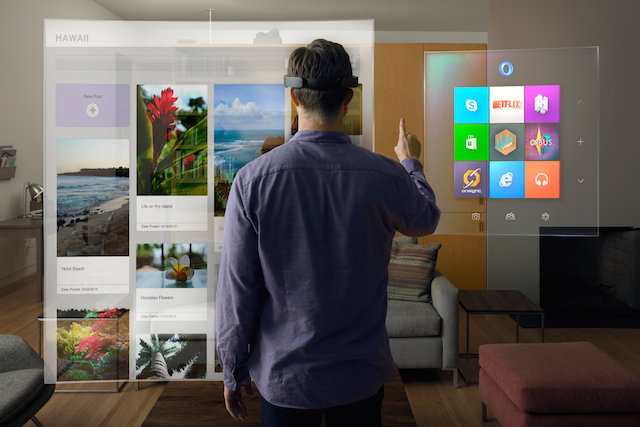
    Yesterday both Microsoft’s HoloLens and HTCs Vive were made available to the public. At $3,000 for the Microsoft viewer and $800 for the HTC device, these products won’t get much traction in the mass market.

    For those wanting a cheaper VR device, Google Cardboard has also come onto the market for $15 and while it depends upon a smartphone with the right software and lacks the features of more expensive and sophisticated devices, it is an affordable consumer product.

    Like all early stage technologies, the current crop of VR viewers are expensive and somewhat cumbersome but over the next few years we can expect the price of these devices to collapse and become far more usable.

    We’re in early times for the virtual reality industry. What we’re seeing today is laying the ground for much more exciting things.

    Similar posts:

    • No Related Posts
  • Throwing down the gauntlet

    Throwing down the gauntlet

    The interesting thing with Apple’s announcement of  the new iPhone and iPod was the emphasis on gaming with two demonstrations showing off the capabilities of the new devices.

    While the iPod and iPhone can’t compete with gaming consoles in a straight out hardware comparison, customers like the idea of being able to play advanced games on their handheld devices.

    More worryingly for the console manufacturers is the pricing in the App stores. The traditional gaming model of expensive games subsidising devices starts to fall over when 99 cent, or even $19.99 downloads kill the fat margins.

    It’s not just games companies threatened by the iPhone and Android smartphones, probably the biggest threat from today’s launch is to Microsoft.

    Last week’s botched Lumia 920 launch throws into stark relief how Windows Phone is struggling to meet its October release date.

    The pressure is now right on Microsoft to deliver, the continued evolution of the iPhone is also leaving Blackberry and Motorola increasingly looking flat footed and vulnerable in a market that’s leaving them behind.

    Similar posts: