Tag: history

  • Saving the records of our times

    Saving the records of our times

    The World Wide Web describes our times but it’s an incomplete document as sites, pages and posts are lost, deleted or edited. San Francisco’s Internet Archive aims to be the keeper of that history.

    As example of how fragile our online records are is illustrated by  the tale of Kevin Vaughan’s Pulitzer Prize nominated story describing a 1960s community tragedy for the Rocky Mountain News.

    The 34 part piece captivated the newspaper’s readership when it was published in 2007 but two years later, the Rocky Mountain News went broke and the story disappeared along with the rest of the website. The Atlantic Magazine describes Vaughan’s efforts to recover and republish his story.

    Vaughan’s efforts to recover his work are not unique, websites are constantly being shut down, accounts censored and social media posts deleted. In the Coweb, The New Yorker’s Jill LaPore describes how the Ukrainian militia leader responsible for shooting down MH17 promptly deleted the message showing the plane’s remains and how the Internet Archive preserved that damming post.

    Last week in San Francisco the Internet Archive held their Building Libraries Together event where director Brewster Kahle described their efforts to preserve as much of the web as possible for future generations.

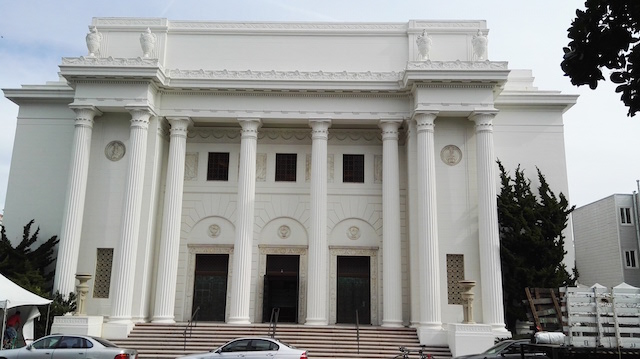
    The Internet Archive itself is in a restored church that seems almost custom built for the organisation. In her New Yorker piece, essential reading for those wanting to understand the project, LaPore describes Kahle’s affection for the building.

    He loves that the church’s cornerstone was laid in 1923: everything published in the United States before that date lies in the public domain. A temple built in copyright’s year zero seemed fated. Kahle hops, just slightly, in his shoes when he gets excited. He says, showing me the church, “It’s Greek!

    For the Building Libraries Together event, the Internet Archive had spread out a series of exhibits on the organisation’s activities that range from trawling the web through to scanning books, digitising movie reels, saving old video games and collecting TV news broadcasts.

    One of the important functions the Archive does is create collections around major events – the capture of the MH17 shoot down was part their Ukrainian War collection – which illustrates the problem of ‘link rot’ as many sites set up around events such as the Occupy movement or the Ferguson protests are now dead or occupied by cybersquatters.

    Running a service like the Internet Archive is labor intensive and in an expensive city like San Francisco where almost all the staff could be paid substantially better working in the tech sector and the pay isn’t exactly stellar.

    Internet_archive_statues

    Kahle jokes “because we can’t pay stock options, those who stay three years here get a statue made of themselves.

    The statues line one side of the old church hall that also doubles as an event space and the server room. At the back of the auditorium are the computers themselves quietly flashing away each time the archive is being read.


    mde
    mde

    For the presentations, Kahle bubbles away with his thoughts on the importance of preserving the Internet and Kalev Hannes Leetaru‘s presentation on data visualisation raised some important topics on copyright and communications which this blog intends to explore deeper in the future.

    The final part of the night’s presentation was an award to the Grateful Dead’s lyricist, John Perry Barlow, for his work in trying to keep intellectual property open and accessible.

    At the end of the night, the crowd left with their gifts and t-shirts and the exhibits had packed up.

    One of the stand out exhibits was the virtual reality stand where an old lady tried an Oculus Rift headset for the first time, “this is wonderful. I just want to reach out and touch everything,” she cried.

    Old Lady on Oculus Rift

    Preserving that wonder and the promised possibilities of our time is possibly the most important thing The Internet Archive can do. In an era where many talk of open information but few genuinely practice it, we run the risk of leaving an information dark ages for future generations.

    How we preserve a record of our times for future generations is a pressing concern. The Internet Archive is one step to solving that problem.
    Similar posts:

    • No Related Posts
  • Australia and Alan Bond

    Australia and Alan Bond

    Last week convicted fraudster and one time Australian national hero Alan Bond passed away. In many respects Bond’s rise, fall and comfortable dotage tells us much about Australia today.

    Originally born in England, Bond was a ‘ten pound pom’ – like this writer and two of Australia’s last three Prime Ministers – whose family took advantage of subsidised immigration programs to leave the cold climate and dismal British economy for sunnier, more prosperous parts.

    Building the Australian dream

    In Australia Bond prospered. On leaving school he became a sign writer and set up a business where he quickly gained a reputation for sharp practices and cutting corners. However as with much of his generation real wealth was to be made in property speculation.

    As Australian cities expanded through the 1960s, developers and speculators were at the forefront of the nation’s economic growth. Perth, Bond’s home town, doubled in size between 1961 and 71 and the once dodgy sign maker made his mark as a wheeler and dealer as he traded properties and build his fortune.

    As the 1980s began a cashed up Bond was ready to take advantage of the economic orthodoxy of the time that to compete internationally, Australian businesses had to consolidate domestically to gain the scale required to be global players.

    Bond added to his claims in 1983 when he wrested the America’s Cup out of the cold dead hands of Long Island’s Newport Yacht Club. Suddenly businessmen were the national heroes and Australians, particularly politicians, fell over themselves to bask in the glow of the nation’s entrepreneurial summer.

    Dancing on the world stage

    Around the time of the America’s Cup win the newly elected Hawke Labor government deregulated the Australian banking industry providing a ready supply of hungry financiers prepared to fund the global ambitions of Bond and his contemporaries.

    The rest of the decade saw Bond leading a wave of Australian entrepreneurs using easy money to build international empires. Bond himself ended up building one of Australia’s brewery duopoly, holding prime Hong Kong property, buying the nation’s most popular TV station and owning a Chilean telephone company.

    Naturally much of his money ended up in Switzerland and Lichtenstein, something that would work in his favour early in the 1990s.

    The larrikin streak

    Bond’s disregard for the law, investors and anyone unfortunate to get between his cronies and a bag of money – politely described as a ‘larrikin streak’ by many – continued as regulators and governments indulged his behaviour.

    One good example of the free pass he received from Australian regulators in the 1980s were his insider dealings with his then mistress Diana Bliss, the latter of whom exquisitely timed a purchase of a small energy exploration company stocks in 1988 a week before Bond Corporation announced a take over offer.

    Regulators at the time dismissed any claim of insider trading after being assured that neither Bond nor Bliss would ever countenance such behaviour, the Sydney Morning Herald later reported.

    When the luck runs out

    Eventually the 1980s Australian economic miracle and the entrepreneurs leading it proved to be chimeras based upon property valuations. When the 1990 downturn hit, the rampaging Aussie business heroes all quickly fell as their overindebted empires collapsed.

    Bond’s personal fortune however survived thanks to his judiciously salting away assets controlled by loyal advisors. His 1994 bankruptcy hearing ended in farce when he successfully convinced the court he was suffering dementia and couldn’t remember anything of his business dealings.

    He couldn’t stay too far ahead of the courts however and ultimately Bond served two prison terms totalling four years for dishonestly pillaging companies to keep his operation afloat.

    At the same time Bond was being chased through the courts, Australia’s banks were licking the financial wounds incurred from their irresponsible exposure to the nation’s entrepreneurs. The lessons they learned define modern Australia.

    Bearing the brunt

    The country’s small business community eventually bore the brunt of the Australian banks’ losses as lenders’ balance sheets were rebuilt through high interest rates, massively increased fees and charges and tightened lending criteria. Many of those high fees and rates continue to cripple Australian business twenty-five years later.

    Adding to the Aussie small business sector’s woes, the 1998 Basel I Accords were coming into force favoring property lending over business finance. Increasingly it became harder for any Australian businessperson to raise money from local banks while property speculators were welcome.

    Over the next twenty years the result was stark. One chart from the Macrobusiness website illustrates the huge growth in Australian residential property lending and the stagnation of business finance since 1991. Only at one stage, in 2008, has business lending matched the levels of the late 1990s.

    Egan_Soos_australian_debt_ratios

    That shift to an economy based upon property prices, particularly speculation on residential accommodation, has served Australia well with the nation not experiencing a recession since the 1990s downturn.

    The Australian economic miracle

    Australia’s success allowed Reserve Bank governor Glenn Stevens to sneer in 2010 that Microsoft founder Bill Gates’ warnings about the Australian economy lack of diversity were misguided and foolish – the mining boom coupled with never ending property price growth guaranteed the nation’s prosperity.

    In this respect, all Australians have become Alan Bond. Just as the bold riders of the 1980s boom based their future on property valuations so too have Australian households and the entire economy thirty years later.

    Hopefully for Australians in general it will end better than it did for Alan Bond in 1996.

    One though should not weep too much for Alan Bond, after being released in 2000 he quietly rebuilt his empire and in 2008 BRW magazine estimated his wealth at $265 million and named him among the 200 wealthiest people in Australia.

    Time will tell if Australians share the deceased tycoon’s luck but in a way we’ve all become little Alan Bonds now in our dependence upon the valuations of our real estate holdings and the indulgence of those financing our lifestyles.

    It may well be having a few bob hidden away in Switzerland might the best way for Australia’s indebted homeowners to protect their future.

    More reading on Alan Bond

    http://theconversation.com/alan-bonds-lesson-for-australia-we-get-the-fraudsters-we-deserve-42897

    https://twitter.com/Mick_Peel/status/606703668658765827/photo/1

    http://www.macrobusiness.com.au/2015/01/australian-private-debt-and-dont-skimp-on-the-pate/

    https://news.google.com/newspapers?id=GjZWAAAAIBAJ&sjid=6-cDAAAAIBAJ&dq=diana%20bliss%20petro&pg=3849%2C5089408

    http://www.abc.net.au/news/2015-06-05/ian-verrender-on-alan-bond/6525132

    http://www.smh.com.au/business/comment-and-analysis/alan-bond-a-dealmaking-dynamo-gone-wrong-20150605-ghhc52.html

    http://www.smh.com.au/business/obituary-alan-bond-19382015-20150605-ghgnia

    Similar posts:

  • Reading the golden records – can we avoid a digital dark age?

    Reading the golden records – can we avoid a digital dark age?

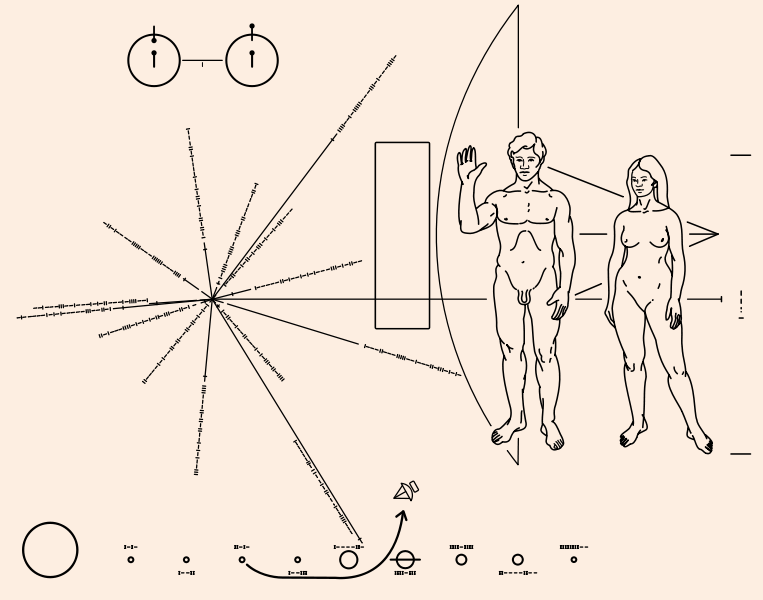
    In 1977 NASA’s Voyager mission launched from Cape Canaveral to explore the outer solar system, included on the vessel in case it encountered other civilisations were a plaque and a golden record describing life on Earth.

    The record was, is, “a 12-inch gold-plated copper disk containing sounds and images selected to portray the diversity of life and culture on Earth.” It containing images,  a variety of natural sounds, musical selections from different cultures and spoken greetings in fifty-five languages.

    Most American households in 1977 could have listened to the sounds on Voyager’s golden disk but were the spaceship to return today it would be difficult to find the technology to read the record.

    This is the concern of Google Fellow and internet pioneer Vint Cerf who told the American Association for the Advancement of Science’s annual meeting in San Jose this week we are “facing a forgotten century” as today’s technologies are superseded rendering documents unreadable.

    A good example of ‘bit rot’ is the floppy disk – the icon used by most programs to illustrate saving files is long redundant and few organisations, let alone households, have the ability to read a floppy disk.

    For corporations the problem of dealing with data stored on tape is an even greater problem as proprietary hardware and software from long vanished corporations becomes harder to find or engineer.

    As the Internet of Things rolls out and data becomes more critical to business operations, the need for compatible and readable formats will become even more important for companies and historical information may well become a valuable asset.

    With libraries, museums and government archives having digitised historic information, this issue of accessing data in superseded formats becomes even more pressing.

    It may be that important documents need to be kept on paper – although there’s still the problem of paper deteriorating  – to make sure the 21st Century doesn’t become the digital dark ages and our golden records remain unread.

    Similar posts:

    • No Related Posts
  • Living in a changing world

    Living in a changing world

    “We’re looking at a future where every aspect of our lives could be utterly different to how it is now,” declared ABC Radio host Linda Mottram in our semi-regular technology spot on Monday.

    Linda’s concern was based around our talk on 4D printing and the future of design and she’s absolutely right – life is going to be totally different by the end of this century.

    We won’t be the first generation to experience such massive change to society and the economy, our great grandparents at the beginning of the Twentieth were born into a world without electricity, the motor car or antibiotics.

    Those who survived the two world wars and lived to a ripe old age in the 1970s saw life expectancy soar, childhood mortality rates collapse and the western economies shift from being predominately agricultural to mainly industrial and service based.

    From our position, it’s difficult to comprehend just how radically life changed in western countries during the Twentieth Century.

    When we wonder where the jobs of the 21st Century will come from, it’s worth reflecting that many careers we take for granted today didn’t exist a hundred years ago and the same will be true in a hundred years time.

    The technology we’re using may be new, but adapting to massive change isn’t.

    Similar posts:

  • Into the ruins of Bedlam – visiting the industrial revolution’s birthplace

    Into the ruins of Bedlam – visiting the industrial revolution’s birthplace

    Nestled in a quiet wooded valley near the modern town of Telford in the English Midlands is the birthplace of the industrial revolution.

    Today the three quiet villages — Coalbrookdale, Coalport and Ironbridge are quaint little communities but two hundred years ago they were the powerhouse of the Industrial revolution.

    ironbridge-wooded-valley
    The hills around Ironbridge

    Coal and ironstone mining in the district started in medieval times with the locals having a wide range of words to describe different types of coal — Lancashire Ladies, Randle and Clod being just a few terms.

    coalbrookedale-blast-furnace-hearth

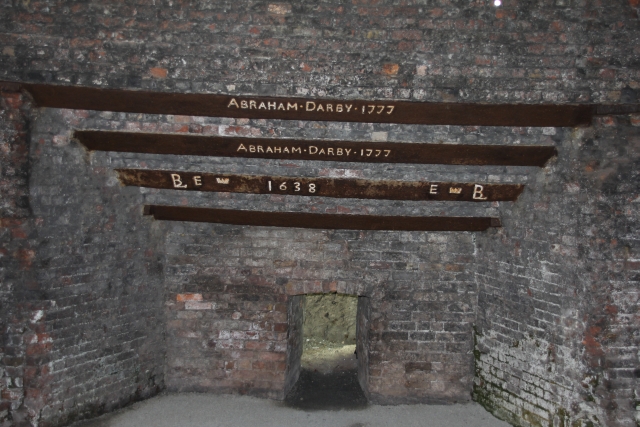
    Iron had been smelted at Coalbrookdale from the late 16th Century however the arrival of potmaker Abraham Darby in 1709 that catalysed the industry with his method to reliably use coke for the blast furnaces.

    coalbrookdale-by-night
    Coalbrookdale by night – the Bedlam furnaces at their peak

    Further downstream, the Madeley Wood smelter became infamous as the bedlam furnaces, named after the noise and confusion of London’s notorious asylum.

    With the new reliable way to smelt iron and a string of blast furnaces along the valley, production skyrocketed and the valley’s natural advantages of accessible coal, iron and water meant it became the centre of the industrial revolution.

    Increased production meant more workers and people flocked in from the surrounding agricultural communities — not in a dissimilar way to today’s experience in China.

    quiant-streets-old-slums

    That increased population meant more slums, what is today’s cute village was once sqaulid poverty, albeit an improvement on the life of an agricultural worker. Epidemics were common with 32,000 lives lost in cholera in 1831-2.

    ironbridge-iron-bridge-industrial-revolution

    Despite the squalor of the workers’ quarters, the ironmasters were proud men and Coalbrookdale’s new bridge could only be build of one material — iron.

    ironbridge-cast-iron-coalbrookdale
    “This Bridge was cast at Coalbrookdale”

    Ironmasters like John Wilkinson and Abraham Derby III were also ferocious promotors of their product and the bridge stands as a proud, strong advert for the strength of Coalbrookdale’s iron. Wilkinson himself built the first cast iron barge a few years later and was eventually buried in a cast iron coffin.

    boy-and-black-swan
    Boy and Black Swan cast iron statue

    Eventually though the smelters of Coalbrookdale began to lose their competitive edge as mining and blast furnace technology improved, the ironmasters responded with moving into decorative and intricate cast iron features like the Boy and Swan statue that now graces the gardens of the Coalbrookdale Iron Museum.

    ruins-of-bedlam-at-ironbridge
    The ruins of the bedlam blast furnaces at Coalbrookdale

    Despite their successes, Coalbrookdale’s slide continued, with coal production peaking in 1871 and a steady decline over the following century.

    modern-use-of-ironworks

    Today, there’s not a lot of industry in Coalbrookdale except for one plant that keeps the area’s engineering tradition running.

    For Britain, the question is how the nation’s economy continues it’s engineering traditions, 45 minutes drive away is a relic of Twentieth Century industry — the Austin motor works at Longbridge.

    Today an assembly plant fills a small corner of the formerly sprawling factory site and over it flies the flag of it’s new owners. The People’s Republic of China.

    Birmingham-MG-car-works-PRC-flag

    We live in interesting times.

    Similar posts: