Tag: hospitality

  • Automating the world of pizza making

    Automating the world of pizza making

    First they came for the pizza makers.

    Alex Garden, a former head of production of online game developer Zynga, is the co-founder of Zume. His company is automating pizza making.

    “It’s going to be a long time before machines can do everything people can do, probably not in my lifetime,” he tells Bloomberg.

    Pizza making though isn’t already untouched by automation. A visit to the local Pizza Hut or Domino’s shows how the process is already standardised and partly automated at many fast food chains.

    Like coffee making, the machines are supplanting many skilled tasks and service industry jobs that were once thought to be beyond automation. The nature of work is changing and in turn invalidating many of the assumptions about employment held by policy makers.

    Those with a 1980s view on how service sector industries will be the drivers of employment may have to reconsider their theories.

    Zume and Gaden may have some way until they fully automate the pizza supply chain, but humans will increasingly be a smaller part of it.

    Similar posts:

  • Why websites are important to small business

    Why websites are important to small business

    Imagine you were overcharged by four dollars for a home delivered Chinese meal. Would you harrass the restaurateur and demand extra payments?  The story of Ben Edelman and Boston’s Sichuan Gardens Chinese restaurant illustrates the importance of a business having an up to date website.

    Boston.com describes the saga of when Edelman ordered a delivery of $53 worth of Chinese food, on checking the bill he found he had been charged four dollars more than the restaurant’s website indicated.

    Edelman, an associate professor at Harvard Business School, didn’t take this injustice lying down; he contacted the restaurant and when the proprietor, Ran Duan, admitted the prices on the website were out of date Edelman demanded twelve dollars — in line with the typical damages awarded against overcharging businesses under Massachusetts state law.

    Update: Since posting this, Ben Edelman has apoligised to Ran Duan and Sichuan Gardens.

    Keeping things current

    While the matter between Edelman and the Sichuan Gardens remains unresolved the dispute illustrates why it is so important for small businesses to keep their website current.

    At least Sichuan Gardens has a website as many Australian hospitality establishments don’t bother and, when they do, often neglect the basics like opening hours, location, telephone number and other contact details. It costs business as potential customers can’t find them.

    To be fair to Ben Edelman many of us who’d been overcharged four dollars would probably not bother contacting the restaurant, we’d be more likely to order from someone else next time we felt like having Chinese delivered. At least the professor let the establishment know they had a problem.

    For those restaurants and cafes who do have a website, often the menus or rates are out of date and are in formats — usually PDF documents — that can’t be indexed by Google, meaning potential customers searching the web for ‘braised fish fillets with and Napa cabbage with roasted chili’ might be missing out. Menus should be on the site as their own web page in HTML format that search engines can read.

    Once a menu is published on a website, it’s necessary to keep it up to date. Having out of date prices on menus is just as much a breach of Australian consumer laws as it is in Massachusetts, so there’s legal aspects to having current information on the site as well.

    Losing customers

    Probably the biggest risk for most restaurants and cafes though is lost business because those potential customers can’t find you. Wasting hours arguing with angry customers like Ben Edelman is also a genuine cost to the business as well.

    With most proprietors and managers in the hospitality industry being chronically short of time, it’s essential websites are easy for staff to access and update; the days of complex updating tools or paying your web guy a couple of hundred dollars every time you want to change a page are long gone. Systems like WordPress, Blogger or Wix offer free services which are adequate for getting the basics up on line quickly.

    Social media listing are important too, with most customers searching on their smartphones for venues; having a basic Google My Business page and a Facebook listing are the least you can do to help your customers find your establishment.

    Ultimately none of us want fights with our customers, so letting them know who you and what you charge is plain good business sense. With so many other businesses not having a basic web presence also gives you the advantage over the competition.

    Similar posts:

    • No Related Posts
  • Tipping and mobile payments

    Tipping and mobile payments

    This post is the second in a series of four sponsored stories brought to you by Nuffnang.

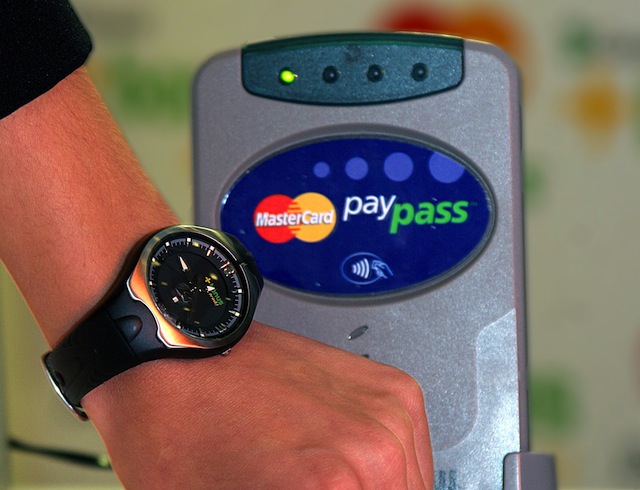
    During the recent switch over to chip and pin payments, many in the restaurant industry feared that tips would fall and waitstaff would lose jobs, the reality is somewhat different claims PayPal.

    Last week I had the opportunity to tour the PayPal Innovation Centre in San Jose where they showed off the work they are doing in the retail and hospitality industries to change payment systems.

    One of the products they showed was their Pay At Table app that integrates into a café or restaurant’s point of sale system and allows customers to pay their bills immediately.

    The immediate reaction to this has been resistance from restaurant managers who were worried customers to skip without paying. For waitstaff, the worry was they could be replaced by an app.

    It turns out the technology has had a different effect, the productivity of floor staff in the establishments where the app has been trialled has improved substantially.

    “In a typical café it takes around ten minutes to get the check,” says the lead demonstrator of the Innovation Center, Michael Chaplin. “We find that freeing waitstaff up to help customers and letting them pay their bills faster means everybody is happier.”

    With that ten minute per table improvement, management have found customers’ satisfaction has improved and the waitstaff have seen tips improve – partly because diners are happy and also because the tipping is integrated into the payment, calculating an appropriate gratuity is always a hassle in the United States.

    That ease of payment from mobile phone and table apps is rolling across industries, it’s not just limited to the hospitality sector. Increasingly these technologies are being used by tradespeople, retailers and across the service industries

    Increased productivity is more than just saving money and reducing staff numbers, it’s about giving the customer a more seamless and easy experience.

    All business need to think carefully about how they can use technology to improve their service and increase revenues.

    Similar posts:

    • No Related Posts
  • Everyone is a critic on the internet

    Everyone is a critic on the internet

    “Everyone’s a critic” is the old saying. Today this is truer than ever as anyone can post a review online.

    One of the notable things about business in the internet age is how sensitive people are to criticism.

    A good example of this is a story going around the web this week of a Dallas chef, John Tesar, who had a magnificent breakdown over a review of his restaurant in the local newspaper.

    This set off a chain of claims and counterclaims including some truly bizarre pieces on various blogs about ‘chefs winning the war against critics.’

    Probably the strangest thing with this whole debacle is the review by Leslie Brenner in the Dallas Morning News is actually quite constructive and certainly no AA Gill style demolition of the establishment.

    This silly little spat illustrates how business people, not just temperamental chefs, have glass jaws. Another story going around the web this week is of Union Street Guest House in Hudson, New York, that fines guests for bad reviews

    Tesar’s response is pretty typical of many business owners – attack the critic instead of addressing the problems. Given Tesar threw the Twenty Rules of Social Media – which apply to businesses as much as social media – out the window, he was lucky not to find his reaction backfiring horribly on him.

    What business owners have to understand is that you will get criticism, unfortunately most of it you will never know about as unhappy customers tell their friends and relatives.

    If you get the opportunity to hear that criticism, then you have the opportunity to fix the problem.

    This is something business owners need to understand about review sites and social media; it’s an opportunity to get some honest feedback about how things are going.

    So start listening to what your customers are saying online and stop being so defensive.

    Similar posts:

  • Small business’ essential online ingredient

    Small business’ essential online ingredient

    A Virginian restaurant, the Serbian Lion, went out of business because its Google Places listing was hacked, reports Wired.

    The proprietor of the Serbian Lion, Rene Bertagna, wasn’t aware his online listing showed the restaurant as being closed on weekends and as a result customers stopped showing up, he alleges in a law suit against Google.

    As a result of result of the drop in earnings, the restaurant entered a death spiral of falling service standards, declining customers and further cuts until the place closed down.

    While it’s difficult to judge how true Bertagna’s claim is – it’s quite possible the listing was a mistake by Google’s data scrapers or an oversight by a customer putting the data into the services – the story does illustrate how important getting the correct information into online services like Google Places, Microsoft Bing and Yelp.

    Bertagna himself appears to be a classic case of roadkill on the information superhighway with his claims not to be a computer or internet user.

    Bertagna immigrated to the U.S. from northern Italy when he was young. He’s 74 now, and, he says, doesn’t own a computer—he’d heard of the Internet and Google but used neither. Suddenly, a technological revolution of which he was only dimly aware was killing his business. His accountant phoned Google and in an attempt to change the listing, but got nowhere. Bertagna eventually hired an Internet consultant who took control of the Google Places listing and fixed the bad information—a relatively simple process.

    The sad tale of Rene Bertagna and the Serbian Lion illustrates just how important it is for operators in the hospitality industry to be on top of their listings and online presence. This is where the customers are.

    Sadly, this story isn’t news – that customers are using the web to find local businesses and read reviews of neighbourhood establishments has been the case for a decade, the move to mobile has been obvious for over five years.

    For all local businesses, it’s a core responsibility to make sure online listings are correct along with having an up to date website. If you don’t, you only have yourself to blame if the customers don’t show up.

    Similar posts:

    • No Related Posts