Tag: m2m

  • Revitalising the telco smartcity party

    Revitalising the telco smartcity party

    AT&T is expected to announce a new smartcity strategy at next week’s Consumer Electronics Show in Las Vegas.

    Three years ago we interviewed Barcelona’s deputy mayor Antoni Vives about the possibilities of the smart city. What was notable about his views was the emphasis on the social and ecological benefits of these technologies.

    “Barcelona has to become a city of culture, creativity, knowledge but mainly fairness and well being,” Vives said. “I would love to see my city as a place where people live near where they work, I would love to see the city self sufficient in energy and it should be zero emission city.”

    Vives’ point is essential in the smart cities discussion. While the gadgets and data analytics aspects are important, it’s the benefits to government and the city’s inhabitants that are essential.

    Which is a problem for telecommunication providers and tech vendors looking to find new, high margin, markets as most of the products they are touting are the classic ‘solution looking for a problem’ that has been a future of the computer industry for decades.

    Telcos are in a more difficult position as many of the smart cities are deploying their own wireless networks which compete with their own often expensive solutions, particularly M2M services that rely on devices having costly SIM cards fitted.

    It’s hard not to think AT&T’s move is one of a desperate late comer to a party that’s already not living up to expectations, it will be interesting to see if their CES announcement sparks some life back into the smartcity discussion.

    Similar posts:

    • No Related Posts
  • Engineering for change – the ethics of the new economy

    Engineering for change – the ethics of the new economy

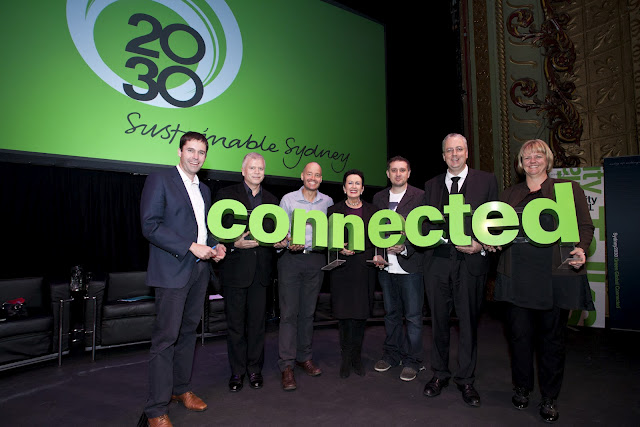
    Technologies like the internet of things, cloud computing, 3D printing and big data are changing our industries and society. At the ACI Connect event today, I gave a presentation on some of the opportunities, risks and ethical issues facing technologists and engineers in the connected economy.

    While many of the engineering principles underlying these technologies aren’t new, their scale and the power they give businesses and governments means there are serious ethical, security and societal issues we have to consider.

    This presentation explores some of those issues and the technologies and trends driving them.

    Entering the Data era

    A conceit among technologists is that we’re in an unprecedented era of change. This is not true.

    The Twentieth Century saw massive restructuring of our society as the telephone, mains electricity, the motor car and television changed our society. Many of today’s settled industries came out of the huge technological steps forward over the last hundred years.

    Just as cheap energy – delivered to us through the motor car and mains electricity – defined the Twentieth Century, this century will be defined by easily accessible and abundant information.

    Those changes over the last hundred years give us some hint as to where we are going; the shifts that saw coal carters, newspaper sellers and night soil men eventually become extinct, along with a shift from a largely agricultural workforce to industrialised employment, is going to be repeated this century as information becomes abundant.

    Harnessing the Internet of bees

    Cheap and small sensors mean it’s easier to put a chip on something. In this case we have a CSIRO project tracking bee activity where Tasmanian scientists have put tracking devices on bees.

    Those tracking devices would have weighed several hundred grams and cost hundreds of dollars ten years ago but today they are small and cheap enough to fit onto the backs of bees.

    Being able to deploy these sensors means we can fit them to things we couldn’t have imagined a few years ago and the data they generate is going to give us insights into patterns and behaviours we couldn’t have contemplated.

    However not all of this data is useful or necessary and some may even be damaging to individuals and groups. One ethical question we have to ask ourselves is whether it is in the community’s interests to collect this information.

    Another aspect of connecting devices, or even animals and people, to the Internet or a network is it opens the possibility of hacking, as we’ve seen in the recent Jeep case where engineers showed they could control a vehicle remotely. The security and privacy aspects of the IoT are critical and something designers and product engineers can’t overlook.

    Decoding the data

    It’s often said that Data is the New Oil. In truth it isn’t, data is increasingly cheap and easy to access. Being able to analyse that information is where the power lies.

    Data analytics is probably going to be one of the most important fields in an information rich economy and already we’re seeing companies springing up to help farmers estimate crop yields, truck drivers plan their routes and even organisations like the Royal Flying Doctor Service using cloud services to better plan their operations.

    Again these services plan a lot but there’s also downsides as inappropriate data matching risks breaching consumers’ privacy and even drawing false conclusions from confusing correlation with causation. A good example of this is Facebook being used to judge credit worthiness.

    Removing the human element

    Automation – whether it’s through robotics, machine learning or algorithms – will change many industries and the workforces employed by them.

    One understated field is management where many white collar supervisor jobs are at risk from business automation. It may be that the executive suites are the next sector to be decimated by computers and robots.

    Similarly, many services industry jobs such as taxi drivers and baristas are at risk from robotics while large scale 3D printing of buildings threatens to put many building trades under pressure.

    No more truck drivers

    Driverless vehicles have a whole range of applications, in logistics were seeing them put forklift drivers out of work while mining companies are rolling out massive dump trucks in their new mines that don’t require $200,000 a year drivers.

    One study estimates that half the police workforce in the United States would become redundant as law abiding driverless cars become common.

    Similarly electric cars will have a massive impact on government revenues. Currently Australian governments raise $17bn a year from fuel excise and has ramifications for businesses involved in the supply chain for service stations.

    Once driverless vehicles become commonplace we may well see them changing industries like daycare, public transport and couriers as it becomes possible to summon an autonomous vehicle, put the kids or the luggage into it and then send it off to its destination. If you’re worried, you can track the progress on an app.

    The effects of the driverless car show how we have to think laterally about the effects of new technologies on our businesses, sometimes the effects of a new way of doing things could indirectly hurt our business or create new opportunities.

    Squeezing out inefficiencies

    One of the great promises for the IoT, Big Data and business automation is to remove inefficiencies from industry. Cisco believe that up to 14% of the Oil and Gas industry’s costs could be stripped away with today’s technologies. That in itself is worth over a 100 billion dollars a year in cost savings.

    GE are deploying their technologies into a diverse range of industrial equipment ranging from jet engines to railway locomotives and wind turbines with spectacular results in reducing costs and improving productivity.

    The effect of these improvements means less downtime and maintenance costs which are good news for customers and shareholder of these companies, but bad news if you’re a maintenance business. It also means the speed of change in business is accelerating.

    Skilling the future workforce

    In summary the skills needed today are very different to those of 1915 and 1965 and those of the next fifty years will be even different.

    As a society we have to decide what skills we are going to give not our children but those currently still in the workforce who are going to be working longer and later into their lives as the workforce ages.

    We also have to consider what sort of ethical compass we have. While the technology we have today is powerful and capable of great things, it’s also capable of great harm. We need to have an understanding of what the effects and limits are of our actions with the Internet of Things, Big Data and analytics.

    Ultimately we need to ask what value we as individuals can add to our communities and society.

    Similar posts:
  • Management embraces M2M tech

    Management embraces M2M tech

    Companies are increasingly embracing machine to machine technologies, the 2015 Vodafone M2M Barometer reports.

    Interviewing  over 650 executives across 16 countries and seven industries, Vodafone’s report looks at how companies are using M2M technologies in their organisations.

    The most enthusiastic industry adopting M2M is the energy and utilities sector with 37% of respondents claiming they’ve implemented machine to machine projects followed by the automobile and retail sectors.

    Slightly behind the leading three sectors is the consumer industry and we can expect to see that grow as wearable technologies become more common and more household devices come with connectivity built in.

    Globally, the Asian region is driving M2M adoption with governments in China, South Korea and Singapore in particular driving the market growth as they mandate more connected technologies.

    Vodafone concludes the report by stating the question for businesses is not whether to adopt M2M, but how best the technologies can be used to drive business. As organisations find new ways to gather data and apply the insights they find from that information, the business case for adopting machine to machine technologies will get stronger.

    Similar posts:

  • How Google could be about to disrupt the telco industry

    How Google could be about to disrupt the telco industry

    Google are in talks with Hutchison Whampoa for the Hong Kong based conglomerate to provide global roaming for Google’s proposed mobile phone network reports the London Telegraph.

    Hutchison, who recently agreed to buy UK operator O2 for £10.2 billion from Spain’s Telefonica, are one of the quiet global telecommunications players with services in East Asia, Europe and Australia. An international roaming agreement with Hutchison would give Google a substantial global headstart.

    While the mobile phone angle is the obvious service for a global cellular network, another attraction for both Google and Hutchison is the Internet of Things. Being able to offer a worldwide machine to machine (M2M) data service fits very well into Google’s aspirations with products like Nest.

    For the mobile phone operators, the prospect of Google entering their market can’t be comforting with the search engine giant having three times the stock market capitalisation of the world’s biggest telco, China Mobile.

    It may well be however communications companies have little choice as the software companies start to take the telcos’ profits just as they have done with many other industries.

    Should the story be true about Hutchison and Google being in talks it will probably be the start of a massive shift in the global communications industry and one that will see many national champions threatened.

    Google’s global network ambitions could change the future of the Internet of Things industry.

    Similar posts:

    • No Related Posts
  • How the Internet of Things could overtake the law

    How the Internet of Things could overtake the law

    Last March the Australian internet industry celebrated twenty years of commercial operations with the Rewind/Fast Forward conference that looked at the evolution of the online economy down under and its future.

    Naturally the Internet of Things was an important part of the discussion looking at the internet’s future and one of the panels examined the effects of the IoT on industry and society.

    During the session chairman of the Communications Alliance industry association, John Stanton, raised an important point about how the IoT creates problems for existing laws and the regulators as a wave of connected devices are released onto the market place.

    The risks are varied, and Stanton’s list isn’t exhaustive with a few other aspects such as liability not explored while some of the issues he raises are a problem for other internet based services like cloud computing and social media.

    Roaming rules

    Having fought many regulatory battles over roaming charges and access between networks, it’s not surprising Stanton and the Communications Alliance would raise this as an issue.

    Dealing with roaming devices will probably be a big challenge for mobile Machine to Machine (M2M) technologies, particularly in the logistics, airline and travel industries. We can expect some bitter billing battles between clients and their providers before regulators start to step in.

    Number schemes

    Again this is more an issue for mobile M2M consumers. Currently every SIM card has its own phone number once the service is activated.  It may be that regulators have to revise their numbering schemes or allow providers to use alternative addressing methods to contact devices.

    Data sovereignty

    Where data lives is going to continue to be a vexed issue for cloud computing consumers, particularly given the varied laws between nations.

    Short of an international treaty, it’s difficult to see how this problem is going to be resolved beyond companies learning to manage the risks.

    Identity management

    Data integrity is essential for the IoT and accurately determining the identity of individuals and devices is going to be a challenge for those designing systems.

    Over time we can expect to see some elegant and clever solutions to identity management in the IoT however masquerading as a legitimate device will always be a way malicious actors will try to hack systems.

    Privacy

    For domestic users, the privacy of what remains in data stores is going to be a major concern as domestic devices and wearables gather greater amounts of personal information. We can expect laws to be tightened on the duties and obligations of those collecting the data.

    Access Security

    Who can do what with a networked device is another problem, should a malicious player or a defective component get onto the system, the damage they can do needs to be minimised. What constitutes unlawful access to a computer network and the penalties needs to be carefully thought out.

    Spectrum allocation and cost

    Governments around the world have been reaping the rewards of selling licenses to network operators. As the need for reliable but low data usage IoT networks grows, the economics of many of the existing licenses changes which could present challenges for both the operators and governments.

    Access to low cost and low data access networks

    Following on from the economics of M2M networks, the question of mandating slicing of scarce spectrum for IoT applications or reserving some frequencies becomes a question. How such licenses are granted will cause much friction and many headaches between regulators and operators.

    Commercial value of information

    How much data is worth will always be a problem in an economy where information is power and money. This though may turn out to be more subtle as information is only valuable in the eyes of the beholder.

    Where information becomes particularly valuable is in financial markets and highly competitive sectors so we can see the IoT becoming part of insider trading and unfair competition actions. These will, by definition, be complex.

    Like any new set of technologies the internet of things raises a whole new range of legal issues as society adapts to new ways of doing business and communicating. What we’re going to see is a period of experimentation with laws as we try to figure out how the IoT fits into society.

    Similar posts:

    • No Related Posts