Tag: m2m

  • Building safer roads and cars

    Building safer roads and cars

    Yesterday’s blog post considered how we might design a driverless car without the legacies of today’s vehicles.

    In the meantime we have to deal with our own human failings on the road and already tomorrow’s technologies are helping us drive better today.

    The day when driverless cars are the norm on our roads may be a generation, possibly further, away but many of the technologies that make autonomous vehicles possible are available today and are appearing in many new models.

    Last year the MIT Technology Review looked at BMW’s driverless car project and made the point that the technologies are still some years away from being adopted, the features being incorporated in today’s vehicles are already reducing accidents.

    Thanks to autonomous driving, the road ahead seems likely to have fewer traffic accidents and less congestion and pollution. Data published last year by the Insurance Institute for Highway Safety, a U.S. nonprofit funded by the auto industry, suggests that partly autonomous features are already helping to reduce crashes. Its figures, collected from U.S. auto insurers, show that cars with forward collision warning systems, which either warn the driver about an impending crash or apply the brakes automatically, are involved in far fewer crashes than cars without them.

    This fits in with the vision described last year by Transport For New South Wales engineer John Wall who described how Australian roads can be made safer through the use of smarter cars, roadside sensors and machine to machine technology.

    As the MIT story illustrated, many of the technologies Wall discussed are being incorporated into modern cars with most of the features needed for largely autonomous driving being common by 2020.

    Comparing smart car technologies

    Like many of the things we take for granted in low end cars today most of the advanced features will be appearing in top of the line vehicles initially, we can also expect the trucking and logistic industries to be early adopters where there’s quantifiable workplace safety improvements or efficiency gains. Eventually many of these features will be standard in even the cheapest car.

    One thing is certain, while the driverless car is some way off we’re going to see the roads become safer as new technologies are incorporated into cars.

    Similar posts:

    • No Related Posts
  • Customer service and the internet of things

    Customer service and the internet of things

    Improved customer service is the main reason for companies investing in the internet of things reports the Harvard Business Review.

    Having surveyed 269 businesses for their Internet of Things: Science Fiction or Business Fact?  report commissioned by US telco Verizon, the Harvard Business Review team found 51% of companies expected improved customer service as being the main result from their IoT deployment.

    Of those who have deployed IoT technologies, 62% reported they had seen improved customer responsiveness with authors citing jet engine manufacturers, share car services and stock feed companies having benefiting from their investments.

    Tying together technologies that until recently have been stand alone is the key part of the returns realised by companies, allowing older monitoring systems to work better together and increase the value of the data they gather.

    IoT can enable “an incredible unlocking of information about processes that companies never had before,” said Vernon Turner, senior vice president of research and IoT executive lead at International Data Corp. (IDC). Companies that take the time to review and analyze these workflows will quickly find that there are significant opportunities to be found, such as increased efficiency. But the biggest change IoT brings to consumer companies is the increased contact with customers, Turner said.

    Of the IoT investments, the main area nominated for companies in the next year is asset tracking with 36% of respondents saying that will be their main focus. Combined with the 19% looking at fleet management, it shows that sector will probably the most lucrative for businesses servicing the IoT market.

    Risks in the IoT

    While tying together these technologies brings a lot of opportunities there’s no shortage of risks as devices that were never intended to be connected to the net are suddenly part of the global network. The survey shows some managers are aware of the risks that the IoT presents to their businesses with 46 percent citing privacy and regulatory compliance as being risks.

    Another challenge facing IoT deployments is a lack of skills with two out of five respondents flagging they can’t find workers with the skillsets needed to leverage IoT data. The task of managing the volumes of data also worries a third of the managers surveyed.

    The Verizon and HBR survey shows that managers and businesses are still in the early days of understanding the tasks and challenges presented by the internet of things — one suspects that were managers fully across the privacy and security implications the number of respondents flagging concerns would be close to one hundred percent.

    For companies like Verizon who are catering to the M2M and IoT marketplaces this survey is a handy roadmap that lays out the market opportunities for the next two years.

    Similar posts:

    • No Related Posts
  • Can the Internet of Things survive a tumble?

    Can the Internet of Things survive a tumble?

    That the Internet of Things is posed to fall into the depths of the trough of disillusionment according to Gartner’s latest Hype Cycle should come as no surprise to those following the industry.

    For the industry, such a fall might not be a bad thing. During the upswing to the Peak of Heightened Expectations technologies attract the hot, dumb money along with the motley collection of shysters and opportunists a gold rush always lured in by the prospect of easy returns.

    When a product, technology or industry falls into what Gartner calls the trough of disillusionment it’s usually the time when its real value is discovered. Without the distractions of hype or dumb money distorting the market, the industry finds a way of using a product that’s become somewhat passe.

    For the Internet of Things, it won’t be a bad thing if the sector tumbles into the abyss. The sooner it happens, the faster industry will figure out where the real value and benefits lie.

    The only damage might be to some of the more prominent boosters’ egos and the hip pockets of some of the more over eager investors.

    Similar posts:

    • No Related Posts
  • The race to build smartcities

    The race to build smartcities

    For the last decade city administrations have been jostling for the title of being a ‘smartcity’ – a metropolis that brings together technology, creativity and business to grow their local economy. Now the competition is getting fierce.

    While the concept has been around since British Prime Minister Harold Wilson coined the phrase the Great White Heat of Technology fifty years ago, the arrival of the Internet of Things, cheap sensors and accessible wireless broadband have made wiring up a city far more easier than a decade ago.

    So now we’re seeing a race to set up smartcities with just the last week seeing Kansas City join the Cisco Connected Communities program, a consortium of  UK technology groups announced Milton Keynes will be wired up and French machine to machine (M2M) network provider Sigfox launched its plan to add San Francisco to the cities it’s covering.

    Kansas City is a particularly interesting location being the first town to recieve Google Fiber and  its designated Innovation Precinct along the new street car route the city is building. The Connected Cities scheme will cover that corridor.

    Kansas City’s Innovation Corridor isn’t a new idea, it’s not dissimilar to the Digital Sydney project I put together a few years ago. The difference is it has both government commitment to it and a business community energised around the possiblities. Whether that’s enough to make it a success remains to be seen.

    What is clear though is that today’s technologies are changing cities, just as roads and electricity did in the Twentieth Century and steam traction, railways and town water did in the Nineteenth.

    That’s why the race to build smart cities is so important for communities that care about where they want to be in the 21st Century economy.

    Similar posts:

    • No Related Posts
  • The Internet of Racing Machines

    The Internet of Racing Machines

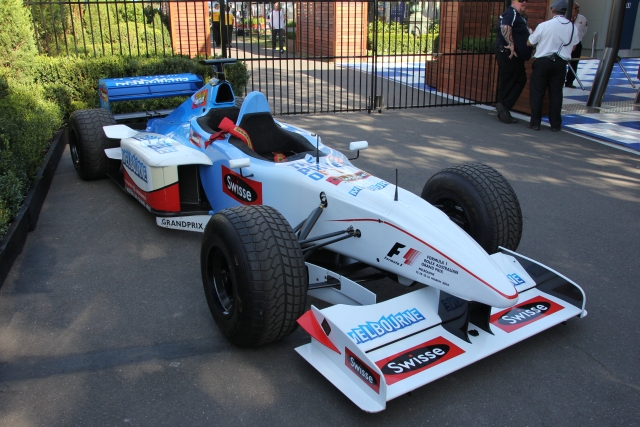
    For the Formula One racing circuit, the financial crisis of six years ago was an opportunity to reinvent the sport; today the teams use a combination of technologies to gain an advantage over their competitors.

    “A few years ago you wouldn’t have been here today,” Francois Puentes, Head Of Account Management at Team Lotus told a group of journalists ahead of this week’s Melbourne Grand Prix. “F1 was a completely different sport.”

    The 2009 financial crisis was the catalyst for the changes Puentes says; “we all sat down as teams at the same table to make the sport more sustainable, this obliged us to run the sport as a business.”

    “Before we didn’t know what the unit cost was for a part. We would very often produce two of the same parts without even knowing what was going on.”

    To tighten their management systems, Lotus bought in a range of cloud based business software such as Microsoft Dynamics and also accelerated its adoption of computerised manufacturing techniques.

    Speeding up development

    Lotus employs over 500 people to keep its two cars on the road and most of the vehicles parts are designed and manufactured at its headquarters in Oxford, England. During the season the team’s workshop may produce up to five hundred replacement or redesigned components each week.

    This brings together a number of technologies including Computer Aided Design, 3D Printing and cloud computing.

    The internet of racing machines

    Massive rule changes have also accelerated Formula One’s adoption of in car technology with information being gathered from sensors throughout the vehicles.

    During races data is transferred from the vehicles’ sensors by radio for the teams’ crews to analyse performance. This includes information like gear box temperature, tyre condition, and aerodynamic performance data.

    Following the race larger volumes of data are downloaded from the vehicle for engineers to tune the car for the next event.

    While Lotus has teamed with technology companies like Microsoft and EMC, rival team Caterham partnered with GE whose Global Research team worked to integrate the technologies demanded by the new F1 rules.

    Global technology

    Caterham’s cars use intercoolers developed in Germany, carbon fibre composites and fibre optic sensors from the United States, and big data analysis techniques developed in India.

    Key to gathering that data are sensors throughout the vehicle that capture a constant stream of data about forces acting on the car during the race, transmitting this information in a far more efficient way than traditional methods which relied on load sensors attached to the suspension.

    The result is massive volumes of raw data. On the track, Caterham cars generate 1,000 points of data a second from more than 2,000 data channels. Up to 500 different sensors constantly capture and relay data back to the team’s command centre for urgent analysis.

    Learning from Big Data

    By applying what the company has learned from its Industrial Internet projects, GE was able to help Caterham cut its data processing time in half, leaving the team in a stronger strategic and tactical position.

    Thanks to these analysis techniques, the Caterham team can look at slices of its data across an entire season, pinpoint setups that were particularly effective, and identify reliability issues earlier.

    Inside the vehicle, GE has also found a way to replace metal pipes with carbon fibre, reducing the overall weight of the vehicle.

    These technology developments will continue to find applications beyond the 2014 Grand Prix season.

    Carbon composites are being used extensively in the aviation industry and big data analysis is playing an important role in the renewable energy sector.

    Lewis Butler, Caterham’s chief designer, says working with GE is helping the team deepen its skills base.

    “GE are working with Caterham to help with the manufacturing process and knowledge transfer, and giving Caterham F1 Team the capability to manufacture its own parts,” he says.

    All the Formula One teams are using Internet of Things technologies to gather information on their vehicles, Big Data tools to manage that information along 3D printing to accelerate their research and manufacturing processes.

    The Formula One world is a glimpse into the future of business as various technologies come together to change the way industries operate.

    Paul travelled to the Melbourne Grand Prix as a guest of Microsoft and Team Lotus.

    Similar posts:

    • No Related Posts