Category: Big Data

  • Privacy’s still beating heart and the social media challenge

    Privacy’s still beating heart and the social media challenge

    “I’m not a very public person,” twenty-two year old Walter Woodman tells the New Yorker in How A Relationship Dies on Facebook.

    One of the assumptions of the social media industry is that digital natives, those born after 1990, have little if any expectations of privacy. The New Yorker story challenges that idea.

    Much of the New Yorker’s background is taken from the Pew Centre’s May 2013 report Teens, Social Media and Privacy which interviewed 802 US teens and their parents to identify young adults’ attitudes towards privacy.

    As the Pew Centre’s Mary Madden wrote in a follow up post to that report, US teenagers aren’t about to about to abandon Facebook yet but they are concerned about privacy and the work involved in managing an online persona.

    While some of our teen focus group participants reported positive feelings about their use of Facebook, many spoke negatively about an increasing adult presence, the high stakes of managing self-presentation on the site, the burden of negative social interactions (“drama”), or feeling overwhelmed by friends who share too much.

    This suggests a far more mature, and complex, understanding of privacy by teenagers than many of the social media boosters assumed when declaring that privacy is irrelevant in the Facebook era.

    Like their parents, teenagers and young adults know there are consequences for sharing too much online which challenges the social media platforms that have built their businesses around users spilling everything about themselves into the big data pot.

    It turns out digital natives are just as conscious of the risks as their parents, although how they handle it may manifest in different ways, and the assumptions of many social media businesses aren’t quite as robust as they appeared not so long ago.

    Similar posts:

    • No Related Posts
  • A trillion points of data

    A trillion points of data

    Last night, current Affairs program Four Corners had a look of the risks to families in the age of Big Data.

    Earlier in the day I had the opportunity to speak on ABC 702 Sydney with the program’s reporter, Geoff Thompson, to discuss some of the issues and take listeners’ calls about Big Data and security.

    What stood out from the audience’s comments is how most people don’t understand the extent of how data is being shared. The frightening thing is the Four Corners program itself understated the extent of how information is being distributed around the internet.

    Looking beyond social media

    Social media sites like Facebook are an obvious and legitimate area of concern with most people not understanding the ramifications of the terms and conditions of these services, however Big Data is a far more that what you share on LinkedIn or Instagram.

    A major point of the program was how the New South Wales police force’s Automatic Number Plate Recognition (ANPR) equipment stores photographs of car license plates.

    One of the applications of ANPR shown during the program was how an officer can be warned that a vehicle has owned by someone potentially dangerous or used in a suspicious situation, allowing them to be more cautious if they decide to pull a car over. Probably the greatest application is getting unregistered, uninsured or unlicensed drivers off the road.

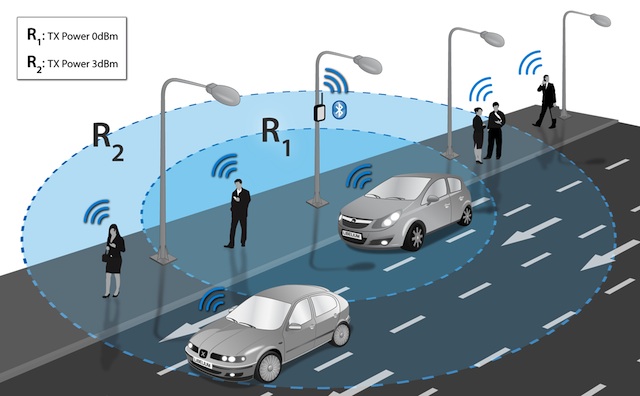
    Those sorts of usage is the positive side of Big Data and its role in reducing the road toll, the example also illustrates how data points are coming together with the internet of machines as traffic lights, road signs and cars themselves are communicating with each other and those police databases.

    When that information is put together there’s a lot valuable intelligence and that’s why people are concerned that the NSW Police are storing millions of apparently useless images of car number plates with the time and location of the photographs.

    These technologies aren’t just being used in shopping centres; instore mobile phone tracking combined with the same numberplate recognition the police use watching who is entering the carparks makes it possible to predict buying patterns and target offers to shoppers.

    Couple that information with store loyalty cards and add in rapidly developing facial recognition, retailers have a very powerful way of monitoring how their customers behave.

    “What instore analytics does is it takes the same kind of capablities that e-commerce sites have had for more than a decade and apply them to brick and mortar stores,” says Retail Next’s Tim Callen. Using the store’s CCTV system the company applies facial recognition software to track shoppers’ behaviour.

    Securing the data feeds

    The immediate concern is the security of this data, we’ve covered the hackable baby monitor and the Four Corners program examined Troy Hunt’s exposure of security flaws in Westfield Shopping Centres’ Find My Car App. Similar security concerns surround government databases like the NSW Police’s numberplate store.

    As we’ve seen with the repeated data breaches of 2011, the management of big and small organisations like Sony or Stratfor don’t take security seriously. It’s hard to recall any senior public servant being held accountable for a security breach by their department.

    A billion points of data

    On their own, each of these data points means little but for a motivated marketer, tenacious police officer or determined stalker pulling those separate information sources together can pull together an accurate picture of a person’s private information, habits and beliefs.

    Almost all the collectors of this data claim this information is anonymised or isn’t personal information, unfortunately there’s mismatch between the definition of private data and reality as number plates and mobile phone MAC addresses are not considered private, however they provide enough insight for an individual to be identified.

    That aspect isn’t understood by most people, the final caller to the ABC Radio spot asked why she should be bothered worrying about privacy – it doesn’t matter.

    As French politician Cardinal Richelau said in the Seventeenth Century, If you give me six lines written by the hand of the most honest of men, I will find something in them which will hang him

    Today we each have six million points of data that can hang us, in a decade it could easily be a billion. We need to understand and manage the risks this presents while enjoying the benefits.

    Similar posts:

    • No Related Posts
  • Realising value from the internet of everything

    Realising value from the internet of everything

    How much opportunity does connecting all our machines to the internet really offer businesses and society?

    Cisco’s Internet of Everything index released last week looks at one of the great opportunities facing today’s managers in realising business value in these new technologies .

    On Cisco’s calculations, the internet of everything is worth over $14.4 trillion to the world economy and nearly half the business benefits are going wasted.

    Germany and Japan lead the pack and, as discussed yesterday, Australia wallows between China and Russia.

    Cisco comparison of countries
    Cisco comparison of countries

    Despite German businesses being the leaders, Cisco estimates $33bn, or nearly 40% of the potential gains, isn’t being realised even in that country.

    How different industries are using the internet of machines is notable as well, with Cisco claiming the biggest benefits currently being realised by the IT industry while the greatest potential lies in the service, logistics and manufacturing industries.

    cisco-internet-of-everything-value-index-by-industry
    Internet of everything value by industry

    If anything, these projections could be on the conservative side with Cisco estimating fifty billion devices connected to the net by 2020. Given the rate of smartphone being sold and everything from vending machines to clothing being online, it may well be ten or even a hundred times that number.

    The real challenge for businesses in all these projections is how individual organisations can realise this value in their operations.

    For some businesses, there’s plenty of existing opportunities with well established services in areas like field services and logistics tracking the locations of staff and packages. These are relatively simple to incorporate into existing operations.

    In other applications, businesses will find things more complex as the connected devices will tie into analytics and Big Data plays. These won’t be simple.

    One particularly important area for the workforce as a whole in business process automation where many tasks currently done by humans can be carried out by machines talking to each other.

    This is already happening in fields like fast moving consumer goods and hospitality where stock levels can be automatically monitored and replacement stock ordered in without staff being involved. As the technology becomes more widespread this will threaten the roles of many previously well paid managers.

    Many of those managers though will be challenged anyway unless they’re prepared to deal with the changes that internet of things is bringing to their businesses.

    How do you think the internet of everything will change your business?

    Similar posts:

  • Coming to your city – the internet of machines

    Coming to your city – the internet of machines

    An intriguing infographic from Spanish sensor manufacturer Libelium – which to Australian ears sounds like a new age defamation law firm – illustrates how the internet of things is being used in all walks of life from shipping containers to park benches.

    The notable thing about the diagram is pretty well all of the sensor applications have been available for years – in some cases decades – and its only with the arrival of cheap sensors and pervasive internet access that widespread monitoring has becoming possible.

    Libelium smart world infographic

    With affordable, even disposible, sensors coupled with internet projects like Google Loon and Australia’s National Broadband Network, these networks are now possible at a price that won’t sink a government’s budget.

    In fact these sensor networks will probably improve councils’ and governments’ budgets as they promise to improve the efficiency of services like rubbish collection and street repairs.

    The real challenge is managing all the data this equipment gathers, that’s going to be one of the big jobs of the next decade.

    Similar posts:

  • 702 Sydney – Green computing and how we’re being watched online

    702 Sydney – Green computing and how we’re being watched online

    This morning on 702 Sydney I’m talking to Linda Mottram about Internet spying and green computing.

    How Green is the internet looks at the claims from Google and other companies about cloud computing’s energy use.

    The Internet snooping story broke two weeks ago with The Guardian NSA files.

    An early part of the story was abot the use of the telephone company metadata – information about phone calls, not the actual content which intelligence agencies and law enforcement can use to draw a picture from.

    For Australians, there’s additional cause for concern as the Telecommunications Act gives government agencies the powers to access anyone’s information.

    If you’re worried about the way data is being collected about you online. Duck Duck Go is a secure, private browser and Box Free IT has some great suggestions on securing cloud computing services.

    For those who want to seriously cover their online tracks, the Tor project and PGP encryption are more advanced privacy tools.

    We’d love to hear your views so join the conversation with your on-air questions, ideas or comments; phone in on 1300 222 702 or post a question on ABC702 Sydney’s Facebook page.

    If you’re a social media users, you can also follow the show through twitter to @paulwallbank and @702Sydney.

    Similar posts:

    • No Related Posts