Tag: trade

  • China goes on the tech offensive

    China goes on the tech offensive

    The most important economic relationship in today’s economy is that between China and the United States, despite bellicose chest thumping by both sides their wealth and well being of their industries is inextricably linked.

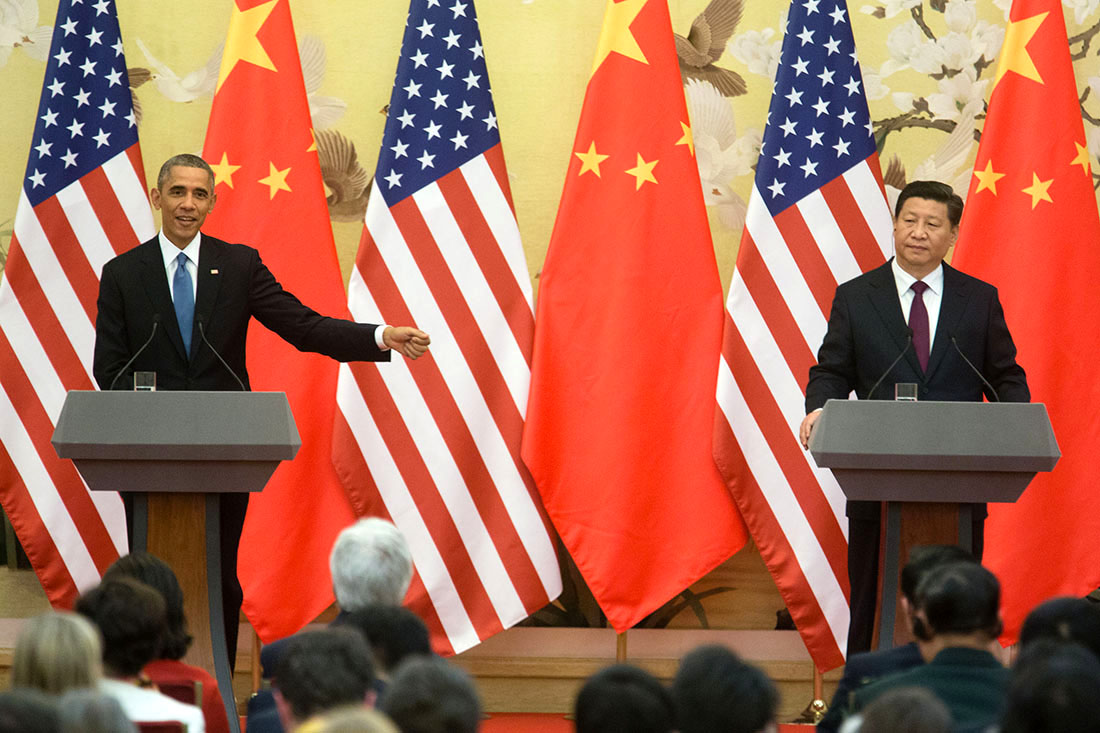
    Against the backdrop of that chest thumping and a slowing Chinese economy, the Chinese and US Presidents are due to meet in two weeks time where trade and security relations between the two countries are at the top of the agenda.

    China’s leaders though plan to emphasise their nation’s tech prowess and its importance to the US’s sector, something the New York Times reports has irritated the Obama administration.

    What would almost further irritate the US leadership is that US tech giants including Apple, Facebook, IBM, Google and Uber have been invited to attend a Chinese tech summit hosted by Microsoft and the PRC President will be dining with Bill Gates before flying to Washington to meet Obama.

    Redmond gets on board

    Microsoft’s role in the China Forum is interesting, the company is extending the hand of friendship not just to nations but also to companies that were fierce rivals in the past, just last week the company announced a partnership with VMWare despite deep rivalry in recent years and CEO Satya Nadella is due to appear at next week’s Salesforce conference.

    Coupled with Microsoft’s battle to keep offshore customers’ email records out of the reach of US legal jurisdiction, it’s clear Microsoft are playing a long global game with their business plans so the support of China’s initiatives isn’t surprising.

    Given China’s strength as an emerging tech powerhouse and its administration’s ambition to move the economy up the value chain, it’s also not a surprise that other US technology companies are reluctant to join the politicians’ games.

    Choosing Seattle

    The choice of Seattle is interesting as well, while the city is a major tech centre with companies like Amazon and Microsoft based there, it’s far more integrated with the Pacific Rim economies than San Francisco and Silicon Valley. Again this is a loud message to the US tech community.

    For China, the success of showing off their technological strengths is an important in sending a message to its East Asian neighbours and the US that the nation is diversifying and shouldn’t be underestimated, a process that Chinese Premier Li described as “a painful and treacherous process” at a World Economic Forum event in Dalian today.

    The meeting between Xi Jinping and Barack Obama in two weeks time, and the associated events in Seattle, could well prove to be the marker of where China moved into the next phase of its economic development and its relationship with the  United States.

    Similar posts:

  • Rewriting the Silicon Valley playbook

    Rewriting the Silicon Valley playbook

    Silicon Valley’s lean startup model may not be relevant to most regions warns writer and entrepreneur Steve Blank.

    The lean startup model is based on getting the minimum viable product into the marketplace and should users be enthusiastic seeking investor funding to develop the business further.

    Guy Kawasaki described this in an interview last year where he described the minimum viable valuable product idea of getting the most basic service to market at the lowest cost and then getting users and investors on board.

    However it might be that model only works where “startup entrepreneurs have full access to eager and intelligent business customers, hosts of industry angels and venture capitalists with money to burn,” reports Canada’s Financial Post.

    Blank came to that conclusion on a trip to Australia where he met with sports tech startups: “Meeting with a coalition of entrepreneurs in the tech and sports space, he realized the lean startup framework didn’t account for the vagaries of local economies. Australia sports-tech entrepreneurs trying to scale their businesses would find that their major customers are in the U.S., halfway around the world. And unlike most Valley startups, the Aussies would need to source manufacturing expertise — which means budgeting for several trips to China.

    The problems facing Australia’s entrepreneurs probably extend further as the nation’s investors are notorious risk averse and the high cost of doing living means the burn rates for startups are much harder.

    Blank’s recommendation is any region looking at establishing a startup community should identify its own strengths and advantages then build its own playbook.

    That it’s difficult for other regions to copy Silicon Valley shouldn’t be surprising, since the start of civilisation each industrial or trade hub has risen and fallen on its own strengths and weaknesses.

    We can be sure the next Silicon Valley – be it in the US, China, Europe or anywhere else in the world – will have different strengths than the Bay Area today.

    Similar posts:

  • Toilet trade wars

    Toilet trade wars

    Chinese luxury goods buyers are upset that their top end toilet seats aren’t manufactured in Japan reports the Wall Street Journal.

    It turns out these technologically advanced toilet seats are largely made in China – like many other Japanese, and American, products.

    Which creates a problem for those Chinese advocating a boycott of Japanese goods warns the China Youth Daily.

    “Japanese goods have permeated every aspect of our lives. If you want to boycott everything, I’m afraid you’ll have to throw away your identification cards, cellphones, land-line phones, elevators, some of which have Japanese components.”

    Such are the complexities of globalisation.

    Similar posts:

    • No Related Posts
  • We’re crazy, not stupid

    We’re crazy, not stupid

    “We’re crazy, not stupid” is how Jack Ma describes his Alibaba team in an interview at the World Economic Forum in Davos, Switzerland, yesterday.

    Much has been written about Jack Ma and the spectacular success of Alibaba and the WEF session with Charlie Rose is an opportunity for Ma to flesh out the story and destroy some of the myths.

    One of the fascinating anecdotes Ma tells is how US cherry growers are preselling their harvests to Chinese customers through Alibaba and cites various other primary producers doing similar campaigns as how American small businesses can sell into the PRC market.

    Ma’s interview is a fascinating snapshot of how global trade is going through a radical period of change, the shifting of China’s economy and where the future lies for many industries.

    Similar posts:

  • Walking Spaghetti Junction’s canals

    Walking Spaghetti Junction’s canals

    One of the most maligned places in Britain is Spaghetti Junction, an interchange on the M6 Motorway just north of Birmingham’s city centre in the centre of the nation.

    Despite its poor reputation, Spaghetti Junction though has a story to tell — a tale of how physical trade routes change slowly with the motorway being the latest of five major junctions in the area.

    Courtesy of Wikipedia
    Courtesy of UK Highways Agency and Wikipedia

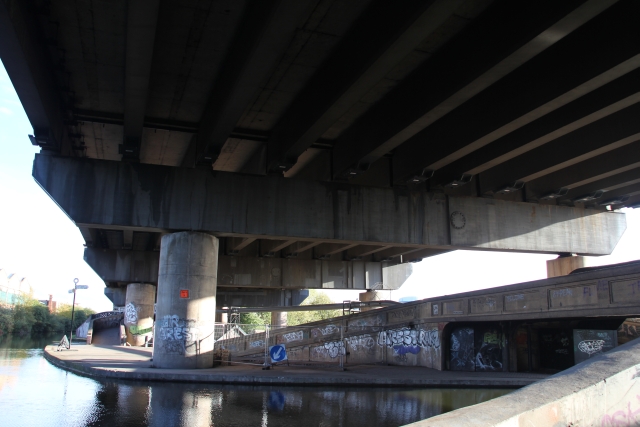
    Immediately below the motorway are the major roads, connecting these and Birmingham were the reason for building Spaghetti Junction in the late 1960s.

    Below those are the canals and it’s notable that just as Birmingham lies at the centre of Britain’s motorway network, it also formed the core of the industrial revolution’s canal network and much of the railway system.

    birmingham_spaghetti_junction_canal_intersection

    Wikipedia describes how critical Spaghetti junction is for the nation’s infrastructure.

    Underneath the motorway junction are the meeting points of local roads, the river Tame‘s confluences with the River Rea and Hockley Brook, electricity lines, gas pipelines, the Cross-City and Walsall railway lines and Salford Junction, where the Grand Union Canal, Birmingham and Fazeley Canal and Tame Valley Canal meet.

    Despite it’s importance the area is dingy and it’s not a good idea to hang around too long, particularly when you have an expensive camera, but it’s worthwhile to linger for a few minutes to appreciate how important these links were to the industrial revolution.

    birmingham-canal-route

    Following the canals away from Spaghetti Junction gives a feeling of the post-industrial nature of Birmingham’s economy something that the city, like most of Britain, is still struggling with.

    Birmingham-gas-basin-canal-junction

    Eventually the canal ends in the city’s convention centre district where a tourist can get a safer, and better, appreciation of Britain’s canal system at the Gas Street Canal Basin.

    While the basin is a bit twee and touristy it does also give a friendly overview of the canal network that replicates closely the railway system that replaced it and today’s roads.

    How these trade routes evolve in the digital economy will be interesting, the recent PayPal survey on the new electronic spice routes illustrates how economies are changing.

    Whether our descendents will wander the abandoned motorways and freeways in two hundred years and wonder at our industrial might is something we might want to ponder. Whether what replaces them is another layer of infrastructure is another question.

    Similar posts: