Category: design

  • Designing and the IoT

    Designing and the IoT

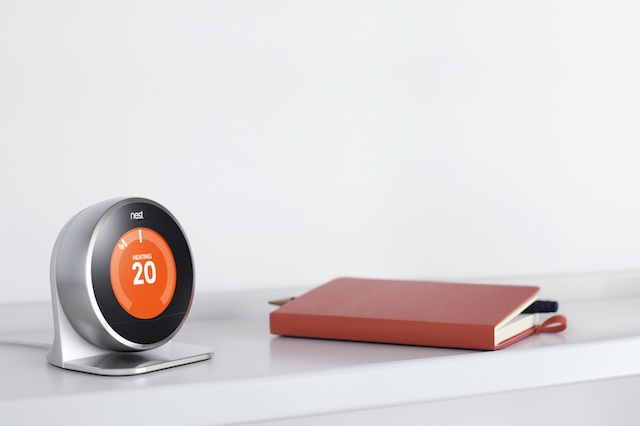
    A piece I wrote for IoT hub looks at how the design industry is changing as every day devices, even clothes, can start communicating with the world.

    In researching the piece, it was interesting just how broad the possibilities are, particularly when we start considering main devices will be able to change their roles depending on the commands they receive or the environment they detect.

    What’s clear is the design industry is facing a world of opportunities, and challenges, as not only do objects start talking to each other, but also new materials and manufacturing processes start changing how we think ordinary items should be made and used.

    Similar posts:

    • No Related Posts
  • Designing a secure IoT ecosystem

    Designing a secure IoT ecosystem

    Ensuring the next generation of IoT devices is secure and a good citizen of the wider ecosystem will be one of the challenges facing the next generations of designers.

    Diego Tamburini, Manufacturing Industry Strategist of design software company Autodesk, spoke to Decoding The New Economy about how the IoT will change the design industry. “We’ve been designing equipment to connect to the internet for a generation,” he said. “What’s changing is that now the addition of software, electronics, networking and communication is breeding into objects that were purely mechanical.”

    Melding the physical and software worlds doesn’t come without risks however, something that worries Internet pioneer Vint Cerf who foresees headlines like ‘100,000 fridges hack the Bank of America’ in an interview with Matthew Braga of Motherboard Canada.

    Apart from the fact it could be a hundred million, Cerf has good reason to be worried. Most consumer IoT devices are hopelessly insecure and the recent stories of hacked cars only emphasises the weaknesses with connected household items.

    Cerf and Braga make the point the ‘I Love You’ worm of the year 2000 became a crisis because the world had reached the point where personal computers were ubiquitous. A similar piece of malware in a world where everything from kettles to wristwatches are vulnerable would be exponentially worse.

    These risks put a great onus on product designers, even more so given much of the functionality is based upon those devices communicating with others across the internet and cloud services, something that Tamburini emphasised.

    “One important thing that is happening with thing being connected is we are not just designing things that function in a vacuum, we’re increasingly designing members of a larger ecosystem.” Tamburini states, “now we have to think of how the product will have to connect to other products and how they will collectively perform a function.”

    Part of that risk is that should those devices malfunction, either deliberately as part of a botnet or malware attack, or accidentally as we saw with the connected home being disabled due to a defective smart lightbulb flooding the network with error messages, then the wider community may be affected in ways we may not expect.

    Cerf believes it’s going to take a big, catastrophic hack on a grand, connected scale before a shift in security begins to happen, and before people begin to even consider that such a vulnerabilities even exist.

    If that’s the case, it will be that society has ignored the clear warning signs we’ve seen from events like the Jeep hack and the Stuxnet worm, not to mention the massive privacy breaches at Target and Sony. For designers of these systems hardening them is going to be an essential part of making them fit for today and the future.

    Similar posts:

    • No Related Posts
  • How design will change the world of business

    How design will change the world of business

    “I always believe small companies usually illustrate big shifts faster than larger companies. In many ways big companies are responding to the shifts being driven by smaller businesses,” says Andrew Anagnost, the Senior Vice President of Industry Strategy and Marketing at Autodesk.

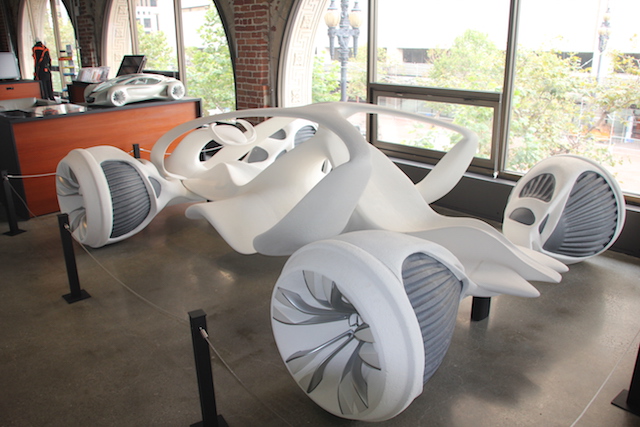
    Anagnost was talking the Dreamforce media contingent after a tour of his company’s San Francisco Gallery where possibilities of today’s design and manufacturing tools are displayed.

    Those possibilities are changing business, not just in design but across most industries as the means of financing and building new projects changes along with consumer demand as production methods change.

    Anagnost breaks these changes into four major trends – the way things are designed, how they are produced, the nature of demand in a world where things can personalised and the very notion of what a product is.

    “What people expect in from products today is very different.”

    A supercomputer at your fingertips

    “Every generation brings something new to design,” says Anagnost. “Imagine the generation that grew up with social media, online gaming, all the things that previous generations did not grow up with.”

    This generation will be more collaborative and the idea of working in fluid, unstructured groups where many of the members will never physically meet anywhere.

    Cloud computing is the other factor Anagnost sees as changing design as “it puts a supercomputer behind every screen”, which brings to the desktop great power in testing designs. “The designer gets a chance to explore options they couldn’t access before.”

    That supercomputer at your fingertips changes all businesses, giving them processing power to carry out complex analytical tasks and modelling in all industries.

    Financing the change

    Another change to the production process is how people are financing their products. Increasingly platforms like Kickstarter are creating new ways for entrepreneurs to raise funds and also to test the market for a product before investing money and time.

    “Before people would have to pitch their ideas to a larger manufacturer, an investor or a VC but now they can pitch it to anyone,” says Anagnost. “The means of financing products is now changing.”

    The new means of production

    ‘Fabless manufacturing’ promises to change manufacturing by reducing the need for massive factories as micr0-factories start to change the economics of making products. These miniaturised robot factories are easily configurable and can be located locally rather than across the country of oceans.

    Coupled with 3D printing, again it becomes cheaper and quicker to bring products to market and changes the dynamics of getting goods to market. “When it gets cheaper to deliver a complex product, the field gets levelled and more people can deliver innovative products to market,” says Anagnost.

    The other trend within manufacturing is prefabricated assembly. While nothing new, improved design tools and manufacturing methods are making it easier and more efficient to assemble things like buildings onsite, coupled with 3D printing this is going to see massive changes in sectors like the construction industry.

    Generational changes

    Changing manufacturing and designs creates changed consumer expectations, as design becomes more accessible and personalisations easier customers are increasingly going to want products that meet their specific tastes and needs.

    Another aspect to this is generational change, where younger consumers expect personalised products and don’t identify the same way with major brands as their grandparents and parents did.

    “We’re going to see a move from rampant consumerism to a more selective consumerism,” says Anagnost.

    This means markets are going to be far more volatile as the brand loyalty erodes in the face of a demanding customer. You’re only as good as the last conversation you had with your customer and if they aren’t happy they’ll go elsewhere.

    Connected devices

    The final factor Anagnost sees is the world of connected devices, increasingly consumers will demand products that have online functionality built in.

    Increasingly we’re seeing this with motor cars and in the near future we’ll be seeing devices as diverse as motorcycle helmets and light bulbs being shipped with networked capabilities.

    “Everything in your home is going to be connected in some way and people are going to have that expectation they will be,” says Anagnost. “Sensors are getting cheaper and cheaper and cheaper. There’s an assumption of connectivity.”

    What Anagnost and Autodesk are flagging is business is changing, barriers we thought were unsurmountable are increasingly falling. For every industry, easily accessible computing and manufacturing power is changing the competitive landscape.

    Paul travelled to San Francisco as guest of Salesforce.

    Similar posts:
  • Project Ara starts looking lonely

    Project Ara starts looking lonely

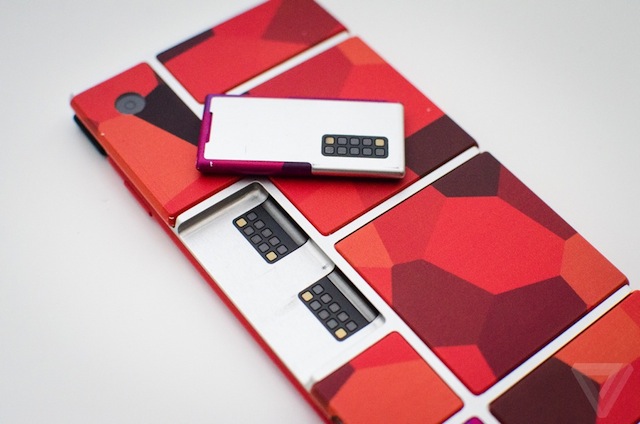
    Two years ago this site interviewed New Deal Design’s Gadi Amit about Google’s Project Ara.

    Project Ara is an experiment in creating a modular phone where users can customise their devices by adding or removing components.

    PC World now reports the mooted soft launch for the Project Ara phone in Puerto Rico has been cancelled.

    While Google aren’t saying the project has been shut down, the sporadic and cryptic messages around Ara don’t bode well given the way the company loses interest in and then abandons products.

    If it is being abandoned, it will be interesting to see where the intellectual property from the project ends up.

    Similar posts:

    • No Related Posts
  • Facebook’s and Google’s enlightened self interest

    Facebook’s and Google’s enlightened self interest

    Over the last few weeks much has been written about Google’s mobile search update that went live on Wednesday, some said it would be the death of small business on the internet while others claimed it would be the end of corporates online.

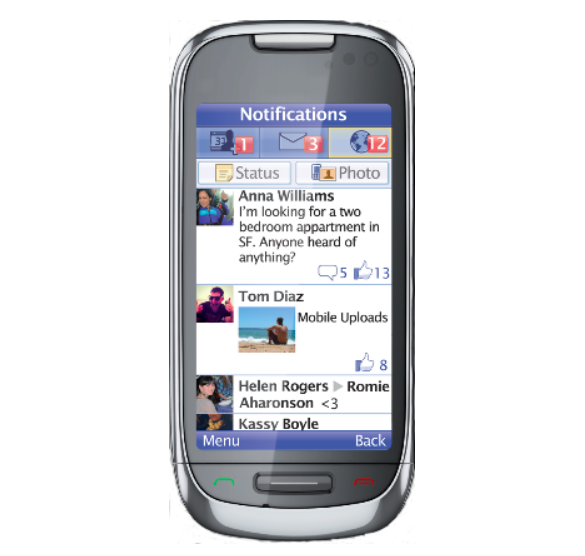
    While all the focus has been on Google’s search changes Facebook quietly made a change that will probably be more vexing for many businesses.

    Both Facebook and Google are struggling with making their services more useful for users, with the Google changes the intention is to make search on mobile devices more useful in giving preference to websites that work on smaller screens.

    In a post on Google’s webmaster blog, Developer Programs Tech Lead Maile Ohye answered the basic questions about the search engine changes which dispelled much of the hysteria and myths about the update. The main point of Ohye’s post is that Google want to show users useful information.

    Facebook have a similar problem, they have to balance the often competing interests of their users and advertisers with the main aim being keeping visitors on their site for as long as possible.

    The objective of keeping users engaged is the reason for a series of tweaks Facebook announced this week that change the newsfeed visitors see.

    The goal of News Feed is to show you the content that matters to you. This means we need to give you the right mix of updates from friends and public figures, publishers, businesses and community organizations you are connected to. This balance is different for everyone depending on what people are most interested in learning about every day. As more people and pages are sharing more content, we need to keep improving News Feed to get this balance right.

    Facebook are putting their users priorities first in making sure the news feed is interesting and relevant, which the company believes will entice visitors to spend longer on the site and make advertising more attractive.

    If it works then it’s a win for Facebook, their users and those who pay to advertise on the site. Again though, the losers are the companies and brands not advertising who thought they could get views by the quality of their content.

    Unless the content is very good, those companies not paying Facebook are in for more disappointment as their reach collapses even further than its current pathetic rates.

    Google’s change too is something that puts users first; rather than dumping mobile web surfers onto an unreadable page, they are making sure people get to sites that are useful.

    In many ways Google is only encouraging what has been best practice for at least five years, that every site should work equally well on mobile devices as they do on desktop computers.

    What Facebook and Google are showing us is the value of putting users’ needs first. If your guests are happy then your business model has a much better chance of succeeding, regardless of who the eventual customer is.

    Making business more user friendly should be a priority for all companies in a competitive world.

    Similar posts:

    • No Related Posts