Tag: automobiles

  • Smartcars and sports tech – ABC Nightlife April 2015

    Smartcars and sports tech – ABC Nightlife April 2015

    Paul Wallbank joins Tony Delroy on ABC Nightlife nationally from 10pm Australian Eastern time on Thursday, April2 to discuss how technology affects your business and life.

    For the April 2015 program Tony and Paul look at Tesla founder Elon Musk’s prediction that driverless cars could be on US roads by the middle of the year.

    Another industry that’s currently being disrupted by technology is sports. On the field, in the stadium and at home how games are played and watched is being changed.

    Join us

    Tune in on your local ABC radio station from 10pm Australian Eastern Summer time or listen online at www.abc.net.au/nightlife.

    We’d love to hear your views so join the conversation with your on-air questions, ideas or comments; phone in on 1300 800 222 within Australia or +61 2 8333 1000 from outside Australia.

    You can SMS Nightlife’s talkback on 19922702, or through twitter to @paulwallbank using the #abcnightlife hashtag or visit the Nightlife Facebook page.

    Similar posts:

    • No Related Posts
  • Imagining a world with fewer cars

    Imagining a world with fewer cars

    Last weekend Uber founder Travis Kalanick told a tech conference in Munich, Germany how his company wants to take 400,000 cars off Europe’s road by the end of the year.

    On Monday, the Australian Bureau of Statistics reported the nation’s car sales were at best flat, a trend that’s been apparent for two years and one being repeated around the world as younger adults turn away from automobiles.

    The technology that defined the Twentieth Century was the motor car; it reshaped our cities, changed our lifestyles and drove the consumer economy.

    Now that economy is changing and the motor car, and consumerism in general, is in decline.

    Which leads to the thought of what our communities will look like if the motor car isn’t the defining feature?

    A challenge for governments

    One obvious answer is we won’t need as many roads and carparks so governments will have to shift their priorities towards public transit and shared car services.

    Governments are also faced with voters wanting more services closer to centres as the 1950s model of dad driving an hour to work or the 1970s model of the family driving to the shopping mall are no longer valid. This has serious ramifications for communities were land use has been zoned based upon twentieth century assumptions, not to mention their taxation bases.

    That zoning problem has ramifications for property developers as well, it’s possible to argue this is already happening as pressures mount to turn over more inner city areas to high rise buildings.

    Redefining retail

    For retailers, it means the end of suburban big box stores and more focus on smaller stores with delivery services – a trend we’re already seeing in larger cities.

    The finance industry as well is affected by the shift away from personal ownership of cars as automobile loans and leases have been a lucrative business for the last fifty years. If people are no longer fussed about owning a car then then there’s little demand for easy payment plans.

    With the motor car not being as important to people, we start to see a society with very different economic underpinnings to that we became used to in the late Twentieth Century. How do you think our communities and businesses will look in a world without cars?

    Similar posts:

  • Daily links

    Daily links

    Today’s links are somewhat more upbeat; starting with Apple extending its lead over Android in smartphone activations, a teenager’s view on social media and Google’s declining market share.

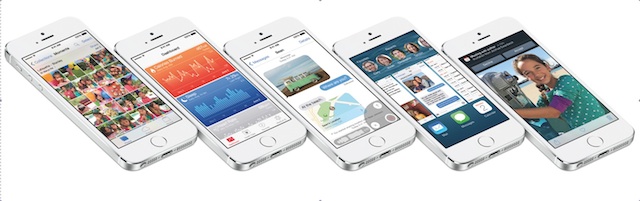
    Apple takes the lead in smartphone activations

    In their regular survey of mobile phone activations, research company Kantor found that Apple have taken the lead back from Android phones.  The Kantar Worldpanel ComTech global consumer panel monitors the brands of phones being connected through selected apps to give them an idea of what’s going on in the smartphone marketplace.

    While not an absolute numbers, and one that was inflated by the new range of Apple iPhones released late in the year, it’s clear Apple are by no means out for the count when it comes to the smartphone market.

    What teenagers think of social media

    I’m not sure how accurate or scientific this story is, but it illustrates how complex the social media industry is and how dangerous assumptions are with what age groups use new media channels for.

    How boring can driverless cars be?

    Another story points out driverless cars are actually quite boring to ride in. Maybe we’ll all catch the train insead.

    Google loses market share

    Since signing an agreement with Firefox to be the default search engine provider, Yahoo! sees its share of the marketplace spike upwards. Should Google be worried?

    So you thought a tech job was safe?

    Document service Evernote cuts jobs proving that even a job in the hottest parts of the tech sector isn’t safe. Notable in this story is the concentration of employment in two locations which shows Silicon Valley isn’t keen on remote working at all.

    Similar posts:

  • Links of the day – redesigning the car and South China Mall.

    Links of the day – redesigning the car and South China Mall.

    The CES extravaganza continues in Las Vegas with a wave of announcement, most of which I’m ignoring, however the motor industry continues to show off new developments with Mercedes displaying their vision of how a driverless car will look.

    Other interesting links today include an analysis of the ill fated South China Mall’s flaws and how Amazon is reorganising its R&D efforts after the failure of the Amazon Fire.

    Mercedes redesigns the car

    A little while back I suggested that we could do better in redesigning the driverless carMercedes have gone ahead and done it.

    Mercedes’ redesign of the driverless car indicates just what can be done when we rethink what passengers will need in the vehicles of the future.

    Ford recalls a vehicle for a UI upgrade

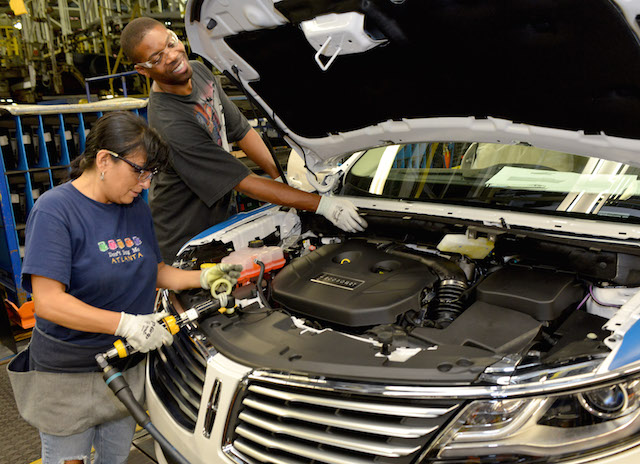
    Ford has recalled its Lincoln MKC SUV models for a software upgrade after discovering drivers were shutting down the cars by accident.

    What’s notable with this story is how software changes are now one of the main reasons for recalling vehicles and how design flaws in an automobile’s computer programs are relatively quickly discovered and resolved.

    We will probably find in the near future car manufacturers will carry out the upgrades remotely rather than ask owners to bring their vehicles into dealerships.

    A long running security flaw is exposed

    In August 2013 a security researcher warned UK online greeting card vendor Moonpig that its system exposed up to six million users’ account and financial details. Until Monday the company had ignored him. This is a tale of classic management disregard for customer security and one area where business culture needs to dramatically change.

    Rumours of an AOL – Verizon merger

    It’s a speculative story but if a merger between US telco Verizon and former internet giant AOL goes ahead it may mark another wave of telcos moving into content services, although it’s hard not to think that Verizon could spend its money more wisely.

    After a flop, Amazon restructures its R&D

    The Amazon Fire was by all measures a miserable flop as a smartphone however it seems the company learned some important lessons from the device’s market failures. Instead of abandoning its research efforts, the online behemoth is increasing it’s R&D budget and reorganising its development division.

    Design fails of the South China Mall

    South China Mall just south of Guangzhou has been the poster child of Chinese malinvestment during the nation’s current boom. In a blog post from 2011, a shopping mall expert visits the development and points out the major design faults in the complex which may well have doomed the project from the beginning.

    Similar posts:

    • No Related Posts
  • Building tomorrow’s markets

    Building tomorrow’s markets

    “If I’d asked my customers we’d have built a faster horse,” is a quotation often attributed, probably incorrectly, to Henry Ford.

    The point of the quote is that asking today’s customers about tomorrow’s market is pretty pointless when new products change consumer behaviour.

    Just as the farmer of 1906 had no inkling of how the motor car, truck and tractor would change their business, the cellphone user of 2006 had no idea of how the iPhone would change the way they used a phone and communicated with the world.

    Which brings us to Nokia.

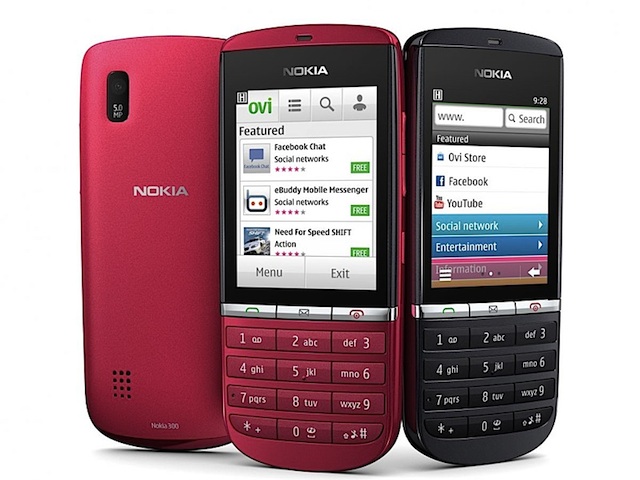
    The Sami Consulting blog discusses how Nokia lost their lead in the cellphone business as the market migrated the Apple and later Android smartphones.

    Nokia’s problem was they spoke to their customers about their existing mobile phone use rather than considered how the technology might evolve.

    When the inventors of the touchscreen approached Nokia, the company carefully evaluated the technology, consulted their customers and decided it wouldn’t work for their products.

    What does this story tell about foresight?  First, it shows that innovation creates futures that are fundamentally unpredictable. We do not have facts or data about things that do not exist yet.  When a mobile phone becomes an internet device with sensors, touch screens, and broadband access, it becomes a new thing.  If you ask your existing customers what they like, the answer will always be about incremental improvements.  When you ask about the future, the answer will always be about history.

    In many ways Nokia were the beneficiaries of a transition effect, they took advantage of a brief period of technological change  and were caught flat footed when the technologies evolved further.

    To be fair, it’s hard to see that change when you’re focused on incremental improvements.

    The motor car turned out to define the Twentieth Century – even Henry Ford couldn’t have foreseen how the automobile would change society and the design of our communities.

    Both the motor industry and smartphone industries are going through major change, particularly as the internet of everything sees the two technologies coming together.

    One thing is for sure, how we use our phones and cars over the next fifty years will be very different to how we use them today.

    Similar posts:

    • No Related Posts